Introduction: Mung beans, once hyped up to be worth several times their price a few years ago, are not the miracle cure as rumored. However, setting aside the exaggerated hype, they are still a nutritious and healthy ingredient. As long as used in moderation, besides being used to make sweet mung bean soup, they are also an excellent staple to keep at home.
These small mung beans are packed with great nutrition. Do you know how to use this healthy household staple? Mung beans are a super-secret weapon, so hurry up and learn a few tricks!
Nutritional Analysis of Mung Beans
Mung beans are highly nutritious and a great health food. The Ming Dynasty medical scientist Li Shizhen, in his "Compendium of Materia Medica," called mung beans "a truly beneficial grain for the world," indicating their extensive and significant effects and uses in people's lives.
According to measurements, every 100 grams of mung beans contains 22.1 grams of protein, 0.8 grams of fat, 59 grams of carbohydrates, and 332 kilocalories of energy. They also contain calcium, phosphorus, iron, and vitamins A, B1, B2, niacin, and peptides. The amino acid content is relatively complete, especially with high levels of phenylalanine and lysine. When consumed with rice, its nutritional value is enhanced. Therefore, when cooking mung bean soup, it's a good idea to add a small handful of rice to cook together. The soft rice will also improve the texture of the sweet mung bean soup!
What can you do with mung beans?
Mung Bean Cake
1. A dietary therapeutic treasure
In Traditional Chinese Medicine (TCM), mung beans are considered sweet and cold in nature, entering the heart and stomach meridians. They have the effects of clearing heat and detoxifying, relieving summer heat, promoting urination, and reducing swelling. Records in historical TCM literature and practical applications in folklore summarize the functions of mung beans as: clearing summer heat and quenching thirst, promoting urination, reducing swelling and relieving itching, astringing to promote tissue regeneration, improving eyesight and removing nebulae, and detoxifying from all kinds of food poisoning.
In the "Compendium of Materia Medica," it is recorded: Eating mung beans can reduce swelling and promote downward energy, clear heat and detoxify, relieve summer heat and quench thirst, balance the five organs, calm the spirit, replenish vital energy, and moisturize the skin. Mung bean powder can detoxify, treat sores and swellings, and heal scalds. Mung bean skins can clear heat-toxin and remove nebulae from the eyes. Mung bean sprouts can detoxify.
2. Boiled mung beans
An appropriate amount of mung bean skins boiled with fresh lotus leaf can be cooled and used as a summer heat-relieving herbal tea, and it can also help with prickly heat.
Mung beans boiled with licorice root can be consumed to relieve abscesses, sores, toxicities, and poisoning from medicine, alcohol, or food.
For patients with hypertension and hyperlipidemia, regular consumption of mung beans can help lower blood pressure and prevent an increase in blood lipids. A recipe called "Three Bean Soup" uses 15 grams each of mung beans, red beans, and black beans, boiled in 800 ml of water over a low flame with a little brown sugar. Drinking it regularly can clear heat and detoxify.
3. External application of mung bean powder
Mashing prickly pear and mixing it with mung bean powder to form a paste for external application can be effective in treating mastitis and parotitis.
Mixing mung bean powder with borneol for external application can relieve itching from eczema and dermatitis.
4. A good material for pillow cores
Folklore also suggests filling pillow cores with mung bean skins and dried chrysanthemums. This can clear internal heat, improve eyesight, and lower blood pressure, and it can also alleviate headaches and eye strain from overuse.
Teach you some useful secret weapons with mung beans
1. Painful urination, frequent urination, hot and dark urine, turbid urine: Crush 500 grams of mung bean sprouts, squeeze the juice, and mix with sugar to drink.
Summer-Relieving Mung Bean Soup
2. Blurred vision: Use 15 grams of mung bean skins, decocted in water for drinking.
3. Brown spots on the face: Regular consumption of mung beans and lilies can help fade them.
4. Heat-induced diarrhea with foul-smelling stools and a burning sensation around the anus: 60 grams of mung beans and 30 grams of plantain seeds, decocted in water and taken in two doses.
5. Food poisoning: Drink strong mung bean tea frequently to induce vomiting until the toxin is expelled.
6. Treating diarrhea and abdominal pain: Use equal parts of mung beans and Sichuan pepper, grind them into a powder. Take 5 grams each time, three times a day, with warm water.
7. Relieving prickly heat itch: Make a soup with mung beans, lotus leaves, and rock sugar to drink. For external use, apply cooked mung beans to the affected area for a noticeable effect in relieving itching and reducing swelling.
8. Treating eczema and skin itching: Decoct mung beans, kelp or seaweed, and rue (臭草) in water, add brown sugar, and drink.
9. Treating heatstroke: Drink mung bean soup, or add eight fresh looflower blossoms to the soup and drink it warm.
10. Treating breast sores, carbuncles, and swelling: 30 grams of mung beans, ground into powder. Take 10 grams each time with warm water.
11. Treating mumps and sprains/bruises: Use raw mung beans, grind them into a powder, and mix with rice vinegar to apply to the affected area.
Salted Egg Yolk Mung Bean Paste Pineapple Tart
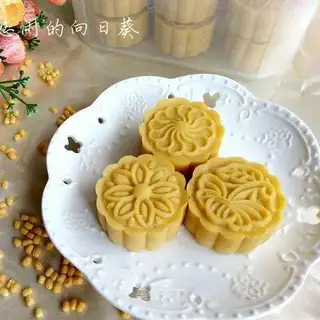 Green bean cake
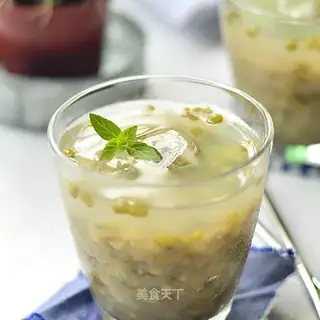 Green bean soup
 Salted eggs, green beans, pineapple