Introduction: Summer heat often dampens appetites, leaving many unable to eat. Today, we're recommending three "aquatic foods" that are not only delicious but also offer unique nutritional benefits when enjoyed in the summer heat.
Aquatic Delicacy - Water Bamboo
When it comes to water bamboo, what might come to mind most is the stir-fried dish of water bamboo and asparagus served during the 2009 state dinner for then-U.S. President Obama. This uniquely Chinese aquatic vegetable, paired with asparagus—a cancer-fighting vegetable favored in the West—creates a fresh and nutritious blend of Chinese and Western cuisine.
Water bamboo is as tender and fresh as bamboo shoots and as white as lotus root. Since ancient times, it has been a prized aquatic plant, known alongside water shield and mandarin fish as one of the "Three Great Delicacies of Jiangnan." It has a tender and soft texture with a delicious flavor due to its rich organic nitrogen content. Nutritionally, water bamboo is a high-fiber, low-fat, and high-potassium (209 mg/100g) vegetable.
Water bamboo has two harvests each year, with fresh produce available from May to June and October to November. Fresh water bamboo is plump, tender, and white as jade, making it very appealing. To prepare, peel the root ends of the asparagus and the outer skin of the water bamboo, then cut them into sections. Stir-fry in hot oil, add a little water, cover and simmer for two minutes. After stir-frying again, add a small amount of salt, then pour in a starch slurry. Stir-fry until the sauce thickens, and a healthy and delicious stir-fried water bamboo and asparagus is ready.
Tip: Always buy fresh water bamboo. Choose those with vibrant colors on the stalk and a soft texture at the root for the best cooking results.
Braised Water Bamboo
Aquatic Ginseng - Gordon Euryale Seed
Oval or round in shape and resembling a lotus seed, this is the seed of the aquatic herb Gordon Euryale, known as Gordon Euryale Seed. Hailed as "aquatic ginseng," it has the effect of strengthening the spleen and stomach, benefiting the kidneys, and securing essence, making it an excellent dietary food for the summer.
The kernel of the Gordon Euryale Seed has a brown outer membrane and a white, powdery interior inside. When stewed, it has a soft and glutinous texture. In summer, many people consume too many cold things, which can easily harm the spleen and stomach. Traditional Chinese medicine believes that Gordon Euryale Seed is most beneficial to the spleen and stomach, making it best to eat some sweets or congee made with it at this time. Its best pairings are often tremella, lotus seeds, Chinese yam, and hyacinth bean. A stewed tremella and Gordon Euryale Seed soup with rock sugar is a great choice. Wash and drain the lotus seeds and Gordon Euryale Seeds. Soak the tremella until soft, then tear it into small pieces. Place everything in a clay pot, add an appropriate amount of cold water, bring to a boil over high heat, then simmer on low heat for 20 minutes. Add the lotus seeds and Gordon Euryale Seeds and continue to simmer for another half an hour. Once the Gordon Euryale Seeds are tender, add rock sugar and cook for another 5 minutes. When eating Gordon Euryale Seeds, chew slowly and do not consume too much at once.
Tip: Gordon Euryale Seeds are divided into southern and northern varieties, with the southern variety being the best. Fresh Gordon Euryale Seeds are only available in the Jiangnan region from July to August. Most are dried products; choose those that are full, uniform, with a white powder and no debris on the cross-section, and a dry texture.
Chinese Yam, Coix Seed, and Gordon Euryale Seed Congee
Aquatic Peanut - Water Chestnut
Now is the time when water chestnuts are most tender. On the long vines, densely hang strings of green water chestnuts of various sizes, much like peanuts in the water. As the saying goes, to beat the summer heat, one should eat plants from the lotus pond. As one of the "Three Treasures of the Lotus Pond," water chestnuts are naturally indispensable (the other two being lotus root and lotus seeds).
Water chestnuts can be categorized by color—green, red, purple, or black—or by the number of "horns" on them (two, three, or four). The two-horned variety is what we commonly eat. Water chestnuts are rich in starch, protein, low in fat, and contain various vitamins and minerals, making their nutritional value comparable to that of nuts. Water chestnuts can be considered a staple vegetable, rich in starch, and can partially replace rice and flour when cooked.
Water chestnuts can be steamed, boiled, stewed, made into soups, or congee. I enjoy boiled water chestnuts. Soak the water chestnuts in clean water for half an hour, scrub them clean, then place them in a pot with enough water to cover them. Add spring onions, ginger slices, Sichuan peppercorns, star anise, and bay leaves. Bring to a boil over high heat, then reduce to medium heat and cook for 15 minutes. The cooked water chestnuts make a natural, fresh, and healthy snack.
Tip: Raw, tender water chestnuts are delicious to eat, but they may contain parasites, so it's best to cook them before consumption. When buying water chestnuts, check the color; if it's black, they are older and more suitable for boiling.
Colorful Pepper, Water Chestnut, and Beef Cubes
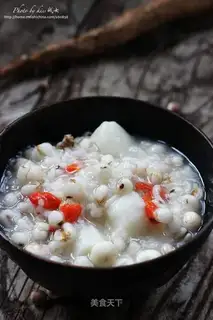 It's porridge
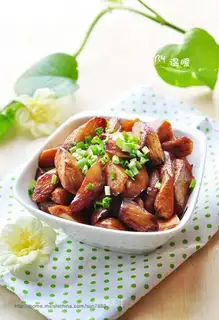 It's white
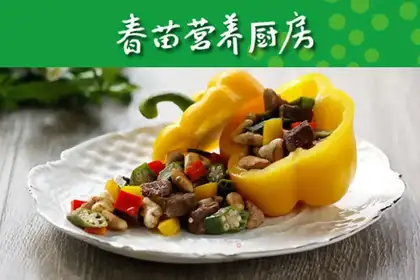 Piper pepper ostrich beef