What to eat for Yin deficiency and fire excess? Yin deficiency and fire excess is mainly manifested as dry mouth and throat, irritability, and a tendency to get angry, while the tongue coating also turns red, affecting health. So, what is good to eat for Yin deficiency and fire excess? Here are 10 recommended foods for you to take a look at.
1. Tremella mushroom
Tremella mushroom is sweet, bland, neutral in nature, and non-toxic. It has the effects of strengthening the spleen and whetting the appetite, as well as replenishing qi, clearing the intestines, and nourishing yin to moisten the lungs. It can not only enhance human immunity but also improve the tolerance of cancer patients to radiotherapy and chemotherapy. Rich in natural plant-based gelatin and having a nourishing yin effect, tremella is an excellent moisturizing food that can be taken for a long time. Modern research has found that tremella is rich in gelatin, various vitamins, 17 amino acids, tremella polysaccharides, and other nutrients. It is the most commonly used light-nourishing food in folk medicine, especially suitable for those with lung yin deficiency and stomach yin deficiency. Moreover, tremella is rich in vitamin D, which can prevent calcium loss and is very beneficial for growth and development; due to its rich trace elements such as selenium, it can enhance the body's anti-tumor immunity.
Coix seed and tremella soup with Euryale ferox
2. Pear
Pear is sweet and slightly sour, cool in nature, and enters the lung and stomach meridians. It has the effects of promoting fluid production, moistening dryness, clearing heat, resolving phlegm, and detoxifying alcohol. It is used for dry cough, thirst, and constipation caused by yin injury from heat diseases or yin deficiency, as well as for vexation, thirst, cough, asthma, and yellow phlegm caused by internal heat. "Ben Tong Xuan": "The cooked pear nourishes the yin of the five organs." "Chongqing Tang Sui Bi": "For warm-heat dry diseases, and for yin deficiency with blazing fire and scorched fluids, pounding it to drink juice has an immediate effect."
In addition to being eaten raw, pears can also be used to make wine, pear paste, preserved pears, and for medicinal purposes. For example, pear fruit treats hot cough; applying slices treats fire burns; drinking the juice moistens the lungs and calms the heart, and resolves sores and alcohol toxicity. Pear flowers can remove dark spots and acne; pear leaf decoction is taken to treat wind-cold and infantile hernia; and the bark can relieve knots, qi stagnation, and coughing.
Eight-treasure pear
3. Duck meat
Duck is a superior dish on the dining table and an excellent food for tonifying the body. The nutritional value of duck meat is similar to that of chicken. However, in Traditional Chinese Medicine, since ducks mostly eat aquatic organisms, their meat is sweet and cold in nature, and enters the lung, stomach, and kidney meridians. It has the effects of nourishing, strengthening the stomach, tonifying the kidneys, eliminating hectic fever from bone steaming, reducing edema, stopping dysentery from heat, and relieving cough and resolving phlegm. Duck meat is suitable for people with internal heat, and it is even more beneficial for those who are weak, have poor appetite, have a fever, dry stools, and edema. Folklore also claims that duck is a "holy medicine" for tuberculosis patients. "Compendium of Materia Medica" records: "Duck meat mainly greatly supplements deficiency and fatigue, best eliminates toxic heat, promotes urination, reduces edema, relieves bloating, benefits the organs, resolves sores and swelling, and relieves convulsions."
Marinated duck tongues with tofu eggs and dried bean curd
4. Mulberry
Mulberry has the effect of nourishing yin and enriching blood, and is best at nourishing the yin of the liver and kidneys. "Ben Shu": "Mulberry benefits yin qi, thereby benefiting yin blood." "Ben Jing Shu": "It is a medicine that cools the blood, enriches the blood, and benefits yin," and also says, "Thirst due to internal heat and insufficient body fluids, promoting fluid production therefore quenches thirst. The five organs all belong to yin, benefiting yin therefore benefits the five organs." It is most suitable for those with liver and kidney yin deficiency constitution who experience thirst, blurred vision, and tinnitus. Modern pharmacological research also shows that mulberry, when entering the stomach, can supplement the lack of gastric juice and promote digestion; when entering the intestines, it can stimulate the gastric mucosa, promote intestinal fluid secretion, and enhance gastrointestinal motility, thus having a strengthening and nourishing effect. Moreover, mulberry can also blacken hair and beautify the skin. In addition to containing a large number of nutrients needed by the human body, mulberry also contains a substance that can blacken hair, making hair dark and shiny, so it can be used for beauty.
Mulberry jam
5. Pork skin
Pork has the effects of nourishing yin and moistening dryness. The Qing Dynasty physician Wang Mengying said: "Pork nourishes kidney fluid, fills stomach juice, nourishes liver yin, and moistens the skin, quenching thirst." "Ben Bei Yao": "Pork, its flavor is mellow, eating it moistens the intestines and stomach, generates essential fluids, and beautifies the skin." Therefore, it is suitable for those with yin deficiency constitution, and pig skin has a better effect. Research has found that pig skin contains a large amount of collagen protein, which can be converted into gelatin during cooking. Gelatin has a network-like spatial structure that can bind a lot of water, enhance cell physiological metabolism, and effectively improve the body's physiological function and the water storage function of skin tissue cells, making the cells moist, keeping them in a hydrated state, preventing premature skin wrinkles, and delaying the skin's aging process.
Spicy pig skin and bean stew
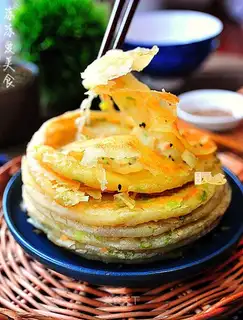 Onion waffles
 Bear almonds
 ♪ Carrot and chicken ♪
 The evaporation ribs
 Blue bean radish