Double mushroom meat paste louver bun
By MontanaHaag

The louver buns I ate thirty years ago are still eaten today, but I have made a fuss about the fillings and added shiitake mushrooms, coprinus mushrooms and day lily to make them taste more fragrant. They can be steamed and eaten directly, or they can be eaten in soup.
Recipe Recommendations
- meat emulsion appropriate amount
- day lily appropriate amount
- mushrooms appropriate amount
- Coprinus comatus appropriate amount
- Jiang appropriate amount
- onion appropriate amount
- salt appropriate amount
- pepper appropriate amount
- cooking wine appropriate amount
- sesame oil appropriate amount
- chicken essence appropriate amount
Steps for Double mushroom meat paste louver bun
1
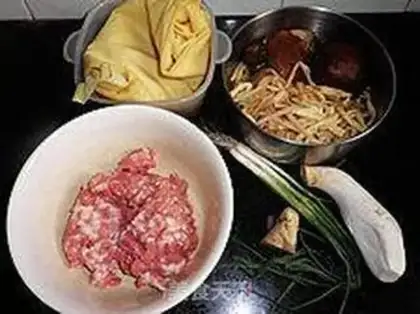
Prepare ingredients.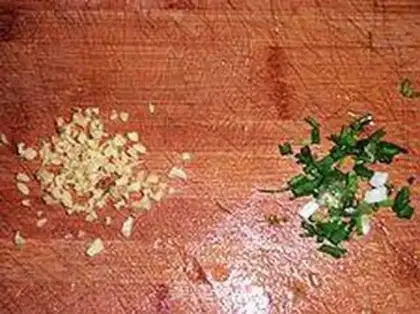
2
Wash the green onions and ginger and chop into the ground.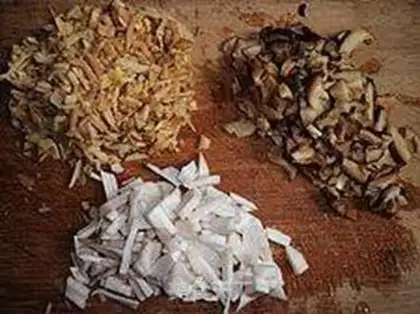
3
Wash the day lily and mushrooms, soak them up and chop them to the ground. Similarly, wash the coprinus mushrooms and chop them to the ground.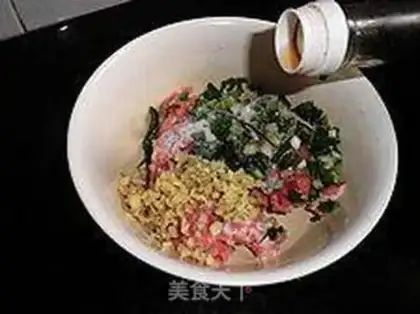
4
In the meat paste, add spring onions, ginger, salt and cooking wine.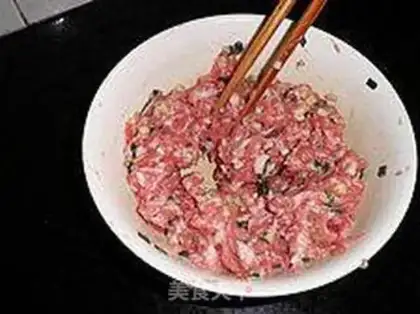
5
Stir well.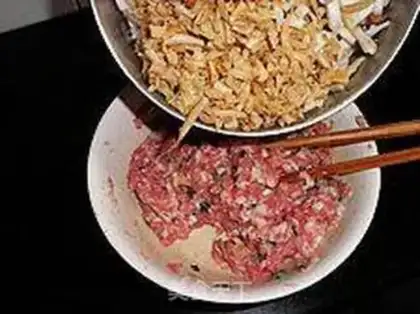
6
Then add the day lily, mushrooms and coprinus mushrooms.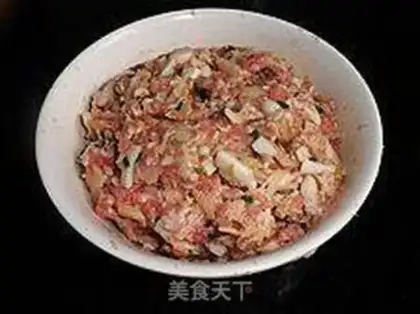
7
Add salt, pepper, sesame oil, and chicken essence, stir well, and the filling is ready.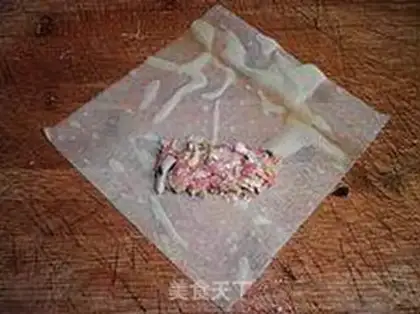
8
Divide one sheet of louver skin into eight portions, take a small sheet, and put the stuffing on it.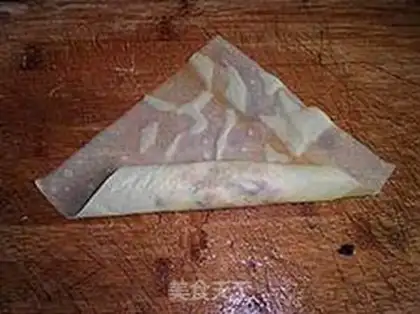
9
Press the scroll.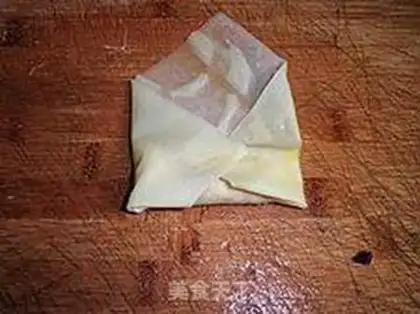
10
Fold both sides.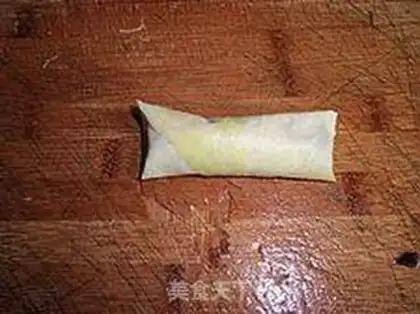
11
Then roll it all up.
12
Soon, all the shutter bags are wrapped up one by one, put on the pan and steam for 15 minutes, and then serve the pan.Double mushroom meat paste louver bun Make Tips
1. The fillings can be changed at will according to personal preferences. 2. After steaming, place it in the refrigerator and use it whenever you make soup. Of course, you can also eat it directly.