Homemade "sour horns and pickled peppers" are more delicious and hygienic than those bought outside, and preservatives and substances such as sorbic acid are never added.
"Sour horns" can be made into many dishes, such as "stir-fried sour horns with minced meat, pickled corner fish with chopped pepper, spicy tofu with sour horns" and so on.
"Pickled pepper" can be made into chopped pepper and used to stir-fry fish-flavored dishes. It can also be made into "chopped pepper fish head, chopped pepper stir-fried beef, chopped pepper spicy stir-fried cuttlefish", etc., all of which are very delicious.
Making "sour horns and pickled peppers" at home is very simple. The easiest way is to soak it in cold boiled water, salt and white wine. If it is slightly more complicated, you can add some spices, etc., which will taste better. The key is to use qualified kimchi jars to make it. Only by using kimchi jars to soak vegetables can we be sure that they will not deteriorate. The old soup soaked in vegetables is also very delicious. You can use it to make "sour soup fish". It is absolutely appetizing and delicious, and you will never get tired of eating it, hehe!
Making "sour horns and pickled peppers" is the same method as making kimchi, and the most taboo thing about making kimchi is the inclusion of miscellaneous fungi in it. When entering miscellaneous fungi, it will deteriorate, and the spoiled kimchi can no longer be eaten! "Kimchi jar" is a good sealed container. Seal the brewed vegetables at the mouth of the jar with clear water. As long as there is no water shortage in the sealed groove, no miscellaneous bacteria will be allowed in. During the fermentation process of soaked vegetables, a large number of lactic acid bacteria that are beneficial to the human body will be produced. The lactic acid bacteria will produce carbon dioxide during the fermentation expansion process. Due to the effect of the expansion pressure, its carbon dioxide with acid gas will be continuously discharged from the mouth of the jar. Since the groove of the jar mouth is sealed by water, water is a flowing liquid, and excess gas inside can be discharged out of the jar through water. However, the unclean air outside cannot enter the jar because there is no counter-pressure. Therefore, the high purity of the strains in the jar can be maintained, and all beneficial substances such as lactic acid bacteria and vitamins will remain intact, making the taste pure and delicious, and will not be easily contaminated by miscellaneous bacteria.
It is recommended here that when using water to soak vegetables, it must be boiled water after high temperature sterilization and cool before using it, or pure water or mineral water can be used to maintain the high purity and hygiene of kimchi. Put a proper amount of high-quality white wine inside to increase the aroma and prevent deterioration due to your own negligence. The containers and utensils used must not contain oil. Special chopsticks, spoons or clips should be used to eat. These small items must be disinfected frequently to ensure that kimchi is not contaminated by foreign bacteria.
It is recommended to use cold boiled water for the clean water used to seal the mouth of the jar. Ordinary clean water will contain miscellaneous bacteria, which will cause a layer of sticky substances to appear quickly in the groove of the jar mouth. This is caused by the unclean water. In addition, wipe the sealed sink every three to four days, and use a towel dipped in 1% 200 sodium hypochlorite water to wipe. When wiping, do not splash water into the jar. Wring the towel out before wiping. Cover the cover and inject new cold boiling water to seal it.
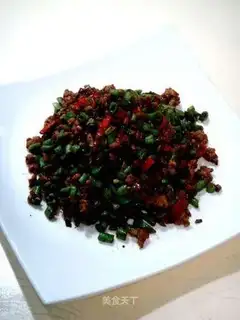
The following describes this simple method for making "sour horns and pickled peppers" at home. By the way, we can use the soaked "sour horns" to make a "stir-fried sour horns with minced pork" that Chairman Mao used to like most.
Sour horns and pickled peppers
By TyrelPouros
Recipe Recommendations
- sour and salty
- pickled
- several days
- simple
Steps for Sour horns and pickled peppers
1
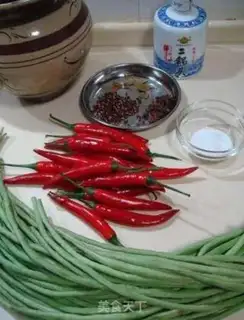
Cowpea, bright red pepper, fragrant leaf, prickly ash, star anise, ginger slices, salt, high-quality white wine, clear water.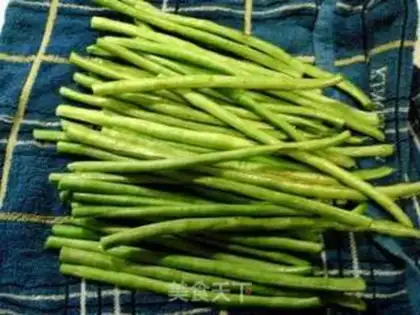
2
Wash the cowpeas first, cut them into three sections with a knife, and then wipe the water out of the cowpeas with a disinfected dry towel for later use (you can also dry it in air).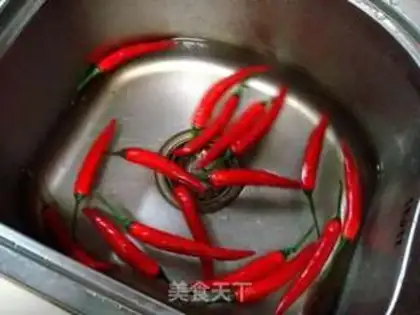
3
Wash the fresh peppers and wipe off the water with a dry towel. Set aside.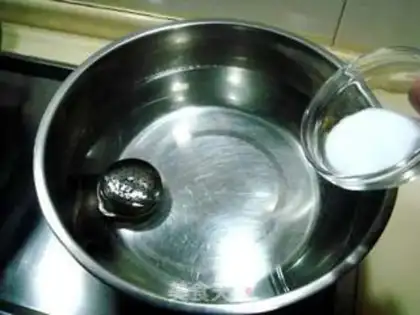
4
Put the star anise, pepper, and fragrant leaves in the spice box and cover it, then place it in a clear basin, pour another 40 grams of salt into the basin and boil over high heat, simmer over low heat for 3 minutes, turn off the heat, and let cool for later.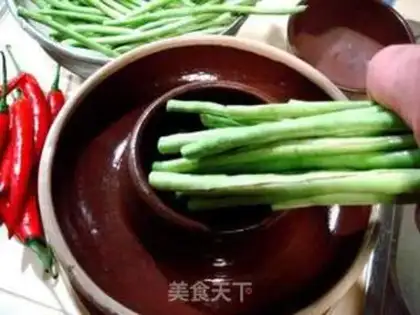
5
Place the washed and dried cowpea plate into the kimchi jar and press solid.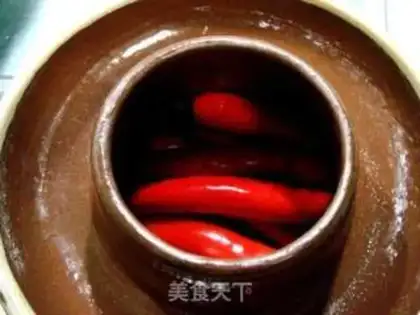
6
Then add the washed dried peppers.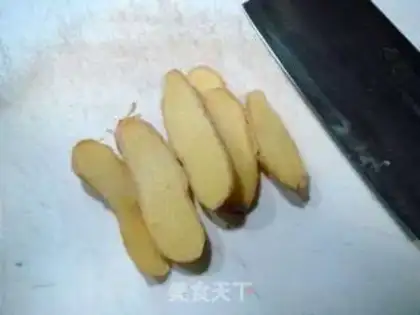
7
Wash and slice the ginger.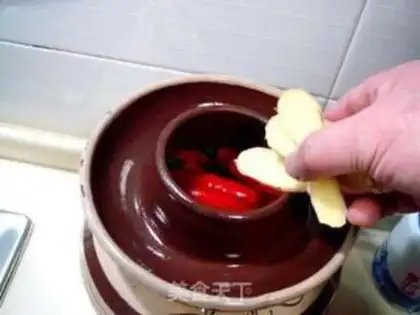
8
Put the ginger slices into the pickle jar and smooth them out.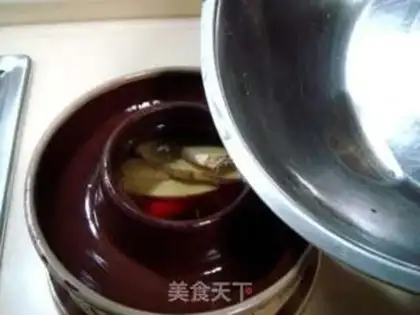
9
Inject the flavored water to cool, and the water will cover the raw materials.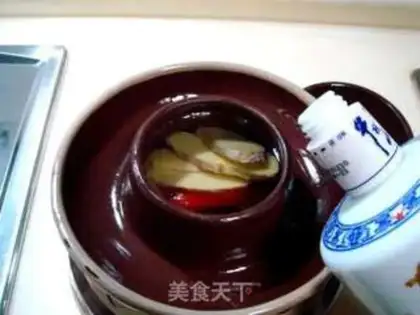
10
Finally, pour in about 30ml of white wine to cover the jar.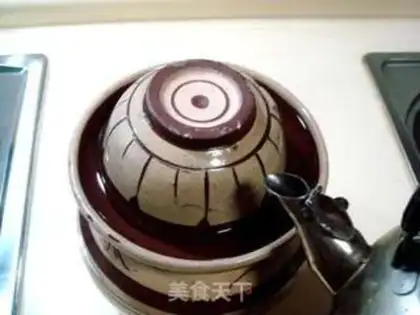
11
Pour cold boiled water into the sealed sink of the jar cover and fill it 80%.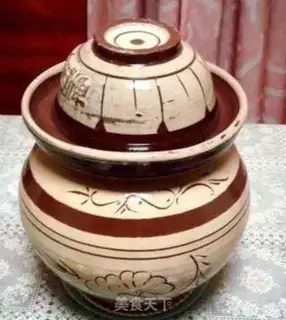
12
Place the kimchi jar in a cool and ventilated place. If the indoor temperature is 22-28 degrees, it can be eaten after soaking for one week.(Soak at 15 -22 degrees for 15-20 days, and soak above 28 degrees for 4 days for basically enough).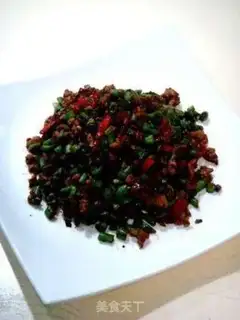
13
Minced meat stir-fried sour horn production.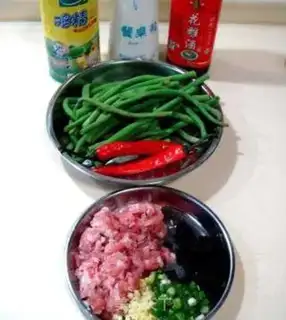
14
Ingredients: 200 grams of sour corn, 100 grams of minced pork; ingredients; 30 grams of pickled peppers; seasoning; 20 grams of dried fermented soybean, 1 gram of salt, 2 grams of chicken essence, 10 grams of rice wine, 15 grams of shredded chives, 10 grams of shredded ginger, 15 grams of cooking oil.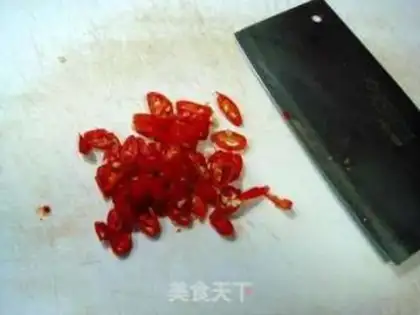
15
Cut the pickled peppers in circles, and then shred the sour horns.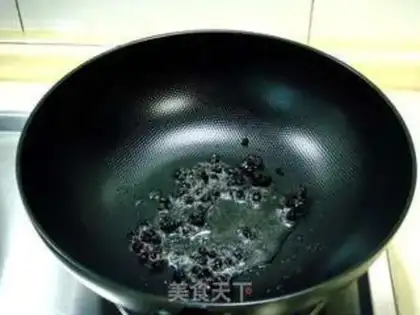
16
Heat a stir-fry spoon over heat, add appropriate amount of cooking oil, add dry fermented bean sauce and stir until fragrant.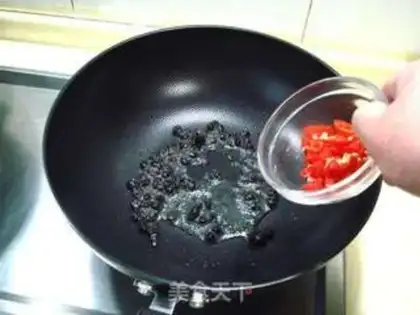
17
Pour in pickled peppers and stir-fry.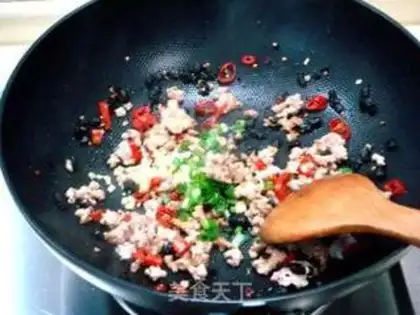
18
Then add in the minced meat and stir-fry, stir-fry the minced meat thoroughly, add in the minced chives and minced ginger and stir-fry.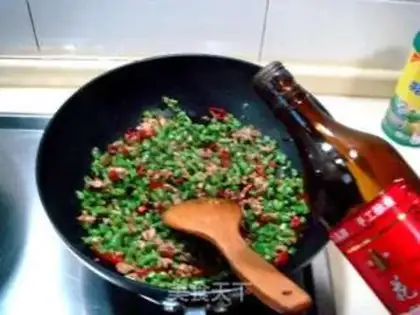
19
Stir fry until fragrant, add sour horns and stir-fry. Add sour horns and stir-fry for 3 minutes. Drain the water and cook in rice wine and stir well.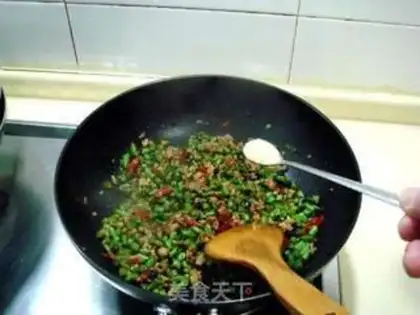
20
Season with a little salt and chicken essence, but not too much salt, because the sour horn itself has a salty taste.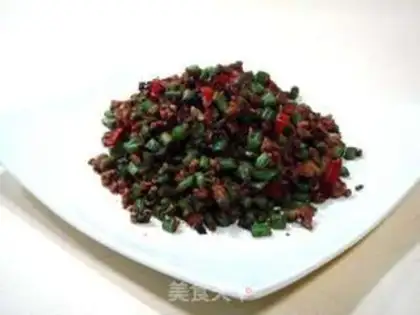
21
After frying well, you can take out of the pot and serve on the table.Sour horns and pickled peppers Make Tips
Characteristics of sour corn: salty, slightly sour and fragrant. It can be mixed with chili oil and pepper oil, or fried or cooked. Characteristics of stir-fried sour horns with minced pork; salty, fresh and slightly spicy, strong soy bean aroma, strong taste, and very good for drinking with meals. Warm tips: 1. Choose fresh cowpeas to brew. Wash the cowpeas, dry them or wipe them clean before brewing. 2. Spices can be used according to your own taste. It is best to have a lighter taste. Spices such as star anise should be added less and slightly enhance the flavor. Add more tender ginger and pepper appropriately, and use it for stir-frying after soaking. 3. When making chopped peppers with pickled peppers, it is better to soak them for more than 20 days before the taste is strong. It can be used to stir-fry dishes with fish-flavored flavors. When using it, you can chop the pickled peppers into minced rice, or use a cooking machine to beat them into hot sauce. If you use it with Pi County hot sauce, the taste will be even better! The fried dishes taste more authentic! 4. Kimchi can be replaced with a new soup after being brewed more than three times, otherwise it will be brewed too quickly and the taste will be too strong, and the crispness of fresh vegetables will be lost. When there is no need to replace new soup, before making new vegetables, boil the old soup to cool and soak it for a second time to keep the food clean and hygienic, especially when making kimchi in summer. The purpose of changing the old soup after brewing several times is to keep the kimchi fresh and crisp without making the taste too sour. Lactic acid bacteria must be replaced after repeated fermentation. Only by eating them frequently can food hygiene and safety be ensured. 5. You can use old kimchi soup to make delicious dishes such as "sour soup fish".