Scrambled ham
By VicentaLakin
Beans are rich in nutrients and efficacy: they can help to slow the rich plant protein contained in the artery sclerosis, they can effectively slow the sclerosis of the artery, and they also contain rich coarse fibres that help to reduce cholesterol in blood and to protect the cardiovascular vessels. Beans can help the brain. The presence of phosphorous resins in muscular beans is a component of human neurocell composition, particularly choline in muscular beans, which is an essential chemical substance for the transmission of information by neuromechanical cells, and is therefore often eaten by muscular beans, which enhance the memory function of the brain and have a brain-enabled effect on students and brain workers。
Recipe Recommendations
- broad bean 500G
- ham 100g
- fungus 50g
- chives 10g
- garlic 10g
- oil 0.5 spoon
- salt 1 spoon
- MSG
- salty and fresh
- fried
- ten minutes
- simple
Steps for Scrambled ham

1
In the north of Dalian, few fresh peas were seen and they came back。
2
And the green and green skin inside the skin of the bean。
3
The mussels are then stripped to clean dry water。
4
Ham cut into small pieces。
5
Molybdenum is purified。
6
Onions and garlic cut into small particles。
7
Heated in the pot with oil and fragrance and garlic, and fried with beans。
8
It's so comfy and sour and sour。
9
Put the ham in the fire。
10
It's good to be able to get out of the pot when it's in wood and when it's in salt and taste。
11
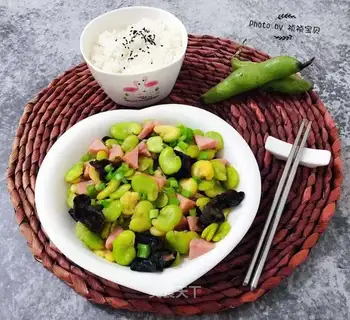
The fresh, fresh bean ham is on the plate。
12
The nutrients of the beans are very rich and our family is in love with it。
13
The fragrance of the bean entrance and the ham are better combined。
14
It's a perfect match for a bowl of rice。
15
A good day begins with a good breakfast。Scrambled ham Make Tips
Beans are rich in nutrients and efficacy: they can help to slow the rich plant protein contained in the artery sclerosis, they can effectively slow the sclerosis of the artery, and they also contain rich coarse fibres that help to reduce cholesterol in blood and to protect the cardiovascular vessels. Beans can help the brain. The presence of phosphorous resins in muscular beans is a component of human neurocell composition, particularly choline in muscular beans, which is an essential chemical substance for the transmission of information by neuromechanical cells, and is therefore often eaten by muscular beans, which enhance the memory function of the brain and have a brain-enabled effect on students and brain workers。