Chai fish soup is one of the must-have condiments for Japanese cuisine, because the delicacy of Chai fish soup can often add more umami and aroma to food.
The most commonly used soy sauce in Japanese cuisine has many flavors, but it can be roughly divided into thick and light flavors. Nongkou soy sauce is deeper, has a more delicious taste, slightly sweet, and is widely used. It is needed in almost all dishes and sauces, so it has become the most important variety of soy sauce. Light soy sauce is relatively light and has a strong taste. It is generally placed in dishes that do not change the color of the ingredients and sauce. There are few general applications.
Generally, in Japanese cuisine, only a small amount of sauce is made with light soy sauce. (Soiled vinegar, thick eggs, and steaming in tea bowls are generally light mouthed.) However, if there is no light mouthed soy sauce, all of them can be replaced with thick mouthed soy sauce, but the color is slightly inferior. Therefore, the consumption of thick soy sauce far exceeds that of light soy sauce. Nongkou soy sauce has also become synonymous with home-made Japanese soy sauce.
Japanese baked pork with tin foil
By KylaReinger
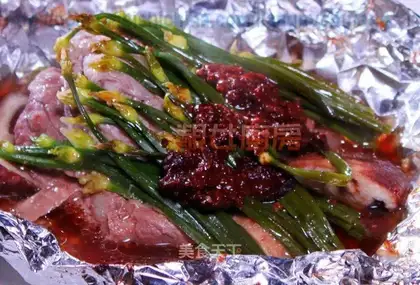
Recipe Recommendations
- pork appropriate amount
- leek flower appropriate amount
- mushrooms appropriate amount
- chicken powder appropriate amount
Steps for Japanese baked pork with tin foil
1
Spread shredded onions on the bottom layer of tinfoil.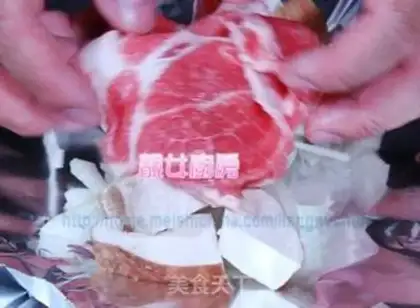
2
Place the chopped mushrooms around the shredded onions, and then place pork slices on the mushrooms and onions (the pork should choose snowflake slices, which means that there is even shredded fat meat in the lean meat, a bit like snowflake beef, with net and threadlike fat distribution, so that the roasted pork is the most fragrant).
3
Spread with leek flowers.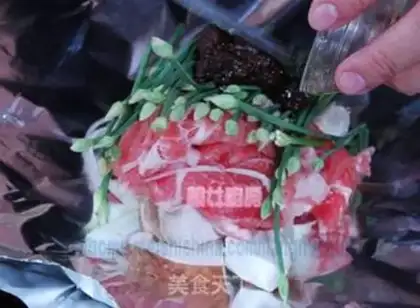
4
Add Japanese fried sauce.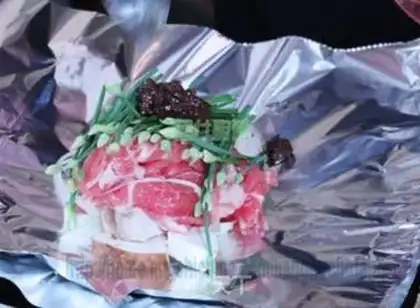
5
Drizzle with 6 tablespoons of Japanese soy sauce, a seasoning made of Chai fish soup and chicken powder (there is no Japanese soy sauce. If you use soy sauce that has been added with sodium glutamate and other flavors, you don't need to add chicken powder. Chai fish soup is made of Chai fish soup and water).
6
Add two spoonfuls of straight drinking water (the spoon in the picture is the spoon used to measure Japanese soy sauce. Since fried sauce, soy sauce, and stock contain salt, it is important to add appropriate amount of water to season).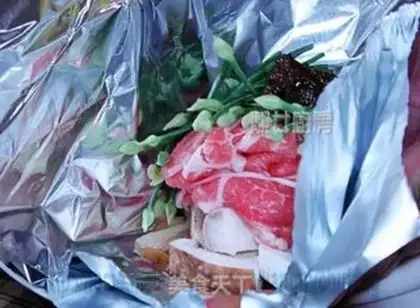
7
Mix the liquid seasoning and ingredients well (you can hold the tin foil and shake it, but be sure to hold the ingredients underneath to avoid breaking the tin foil).
8
Wrap the ingredients.
9
Put appropriate amount of salt in the pan and stir-fry to warm.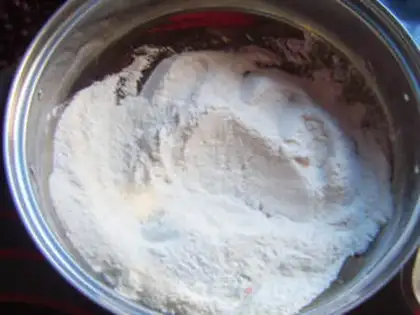
10
Place the tinfoil wrapped ingredients into evenly heated salt.
11
Cover the lid and bake over medium heat for 20 minutes.Japanese baked pork with tin foil Make Tips
Be sure to reserve a certain amount of space for tin foil when you use 1 package of ingredients, because preheating will expand. 2 Bake with salt, at moderate temperature, and evenly heated, which is slightly different from an oven. 3 Fold the tin foil in half, lay it flat before putting the ingredients in order to avoid leaks. 4 If you choose tenderloin for pork, the time will be shortened by about 5 minutes. It is not recommended to use tenderloin. The tenderloin has no fat and will not be very fragrant when roasted. It is best to choose meat with even fat distribution to be very fragrant.