Stewed pork trotters with Chinese cabbage
By EmelieWill
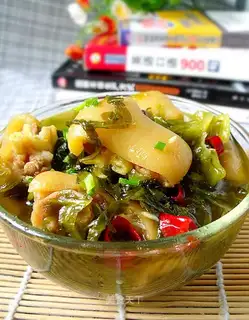
Hot and sour, refreshing but not greasy. The crispness of the pickled cabbage, the aroma of the pig's trotters is strong, spicy and can't stop. The pickled cabbage absorbs the meat oil of the pig's trotters, making the pig's trotters soup more refreshing.
Recipe Recommendations
- pettitoes a
- sauerkraut an
- garlic five
- onion three sections
- Jiang three pieces
- octagonal two
- salt appropriate amount
- spiced powder a teaspoon
- MSG a teaspoon
- sour and salty
- pot
- several hours
- ordinary
Steps for Stewed pork trotters with Chinese cabbage
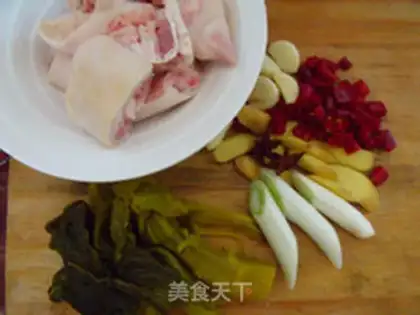
1
For the raw material diagram, when buying pig trotters, you need to chop them well.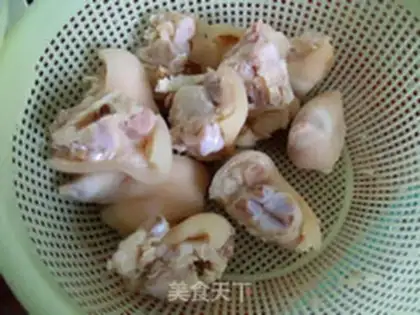
2
Blanch pig's trotters in water. When the water boils, you can add some wine to eliminate the fishy smell. If you cook it for a while longer, the dirty things will come out, take it out and wash it in clean water.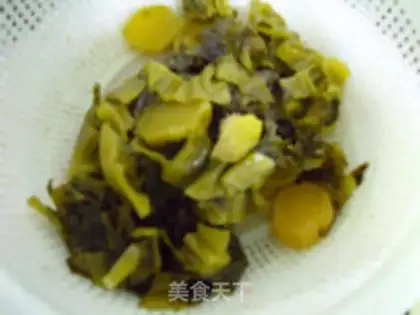
3
Wash the pickled cabbage and soak it for half an hour. If it will taste at the vegetable market, it should be scalded with boiling water before soaking it.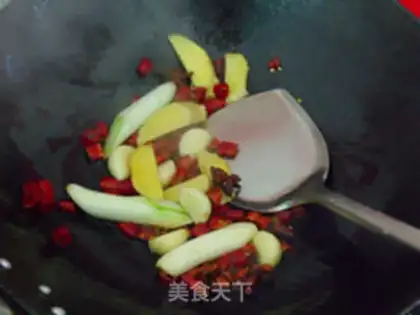
4
Put oil in the pot, and fry chives, ginger, garlic, red pepper and star anise over low heat when it is 50% hot.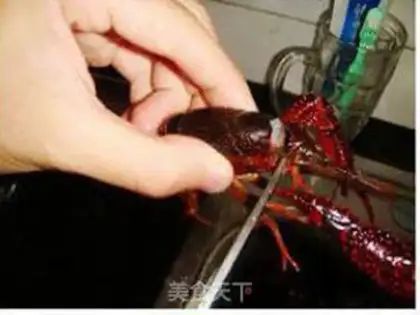
5
Add sauerkraut and stir-fry, add some five-spice powder, and add water.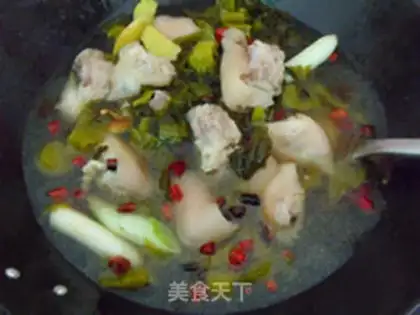
6
You can put the pig's trotters in this way directly, but I turned them into a casserole, and the stew became rotten like that.
7
Don't use too much water in the casserole, just drown it quickly, and simmer for an hour and a half to adjust the salt flavor. Simmer for another half hour.
8
Add some chicken essence or MSG to enhance the flavor before taking out the pan.Stewed pork trotters with Chinese cabbage Make Tips
1. Do not use too much oil when stir-frying the pickled cabbage; one tablespoon is enough. Otherwise, it will look very oily after the pork trotters release their fat.
2. Do not throw away the leftover broth with the pickled cabbage. Cook some noodles and put them in—it tastes absolutely amazing!
3. If you don't have a clay pot, use a soup pot. Bring to a boil over high heat, then simmer over low heat; the cooking time is the same.