Qi-tonifying foods, in Traditional Chinese Medicine, people say that replenishing Qi is the key to health. So, is this really the case? If you are deficient in Qi or easily fatigued, you can try the foods listed below. These are the most common foods in daily life, making them very convenient and quick for you. With such convenience, why not take a look?
5 Foods That Can Boost Your "Qi"
Sautéed Potato Slices with King Oyster Mushrooms
I. Potato
Eating more root and tuber plants helps to replenish Qi, such as potatoes, Chinese yams, sweet potatoes, etc. Ginseng also belongs to this category. Because these plants are fully buried in the ground as they grow, they absorb and condense more of the earth's Qi. It can be said that the growing environment can sometimes fundamentally determine the medicinal properties of a plant. After understanding this principle, everyone can selectively choose some foods based on their own constitution.
If you have paid attention, you will find that potatoes and sweet potatoes, after being eaten, easily form gas in the intestines. Especially when you eat a little more, you will pass more gas than usual. This is also the reason why such foods can generate and replenish Qi.
Here, we will focus on potatoes alone. In Traditional Chinese Medicine, potatoes are considered sweet in flavor, neutral in nature, and slightly cool. They enter the spleen, stomach, and large meridians. They have the effects of harmonizing the stomach and regulating the middle, strengthening the spleen and promoting urination, detoxifying and reducing inflammation, relaxing the bowels, lowering blood sugar and lipids, invigorating blood and reducing swelling, replenishing Qi and strengthening the body, as well as beautifying and anti-aging. Because of its many benefits to the human body, the potato is also known as the "underground apple" and a "perfect" food.
Potatoes mainly enter the spleen and stomach meridians, which can greatly replenish the Qi of the spleen and stomach. Moreover, potatoes mostly grow in summer and autumn, divided into summer potatoes and autumn potatoes. In Traditional Chinese Medicine, it is believed that "the sky's Qi is warm, and the earth's Qi rises." Therefore, the growth of potatoes benefits more from the rising earth's Qi. When people consume them, it can effectively improve the condition of Qi deficiency, especially the deficiency of the spleen and stomach Qi.
However, Qi-tonifying foods should not be consumed in excess, as it can easily lead to problems like chest tightness and abdominal bloating. Once symptoms of bloating and belching appear, you can pair it with Qi-moving foods like dried tangerine peel when consuming it again.
II. Chinese Yam
"The sky's Qi connects to the lungs, and the earth's Qi is received by the kidneys." Chinese yam tonifies Qi and enters the lung and kidney meridians, able to replenish the Qi of the lungs and kidneys and connect the Qi of heaven and earth. Moreover, it is neither hot nor drying, with a very mild nature. After consumption, you don't have to worry about the problem of Qi stagnation. Therefore, it is especially suitable for those with Qi deficiency, earning it the name "food of the immortals."
Rib and Chinese Yam Soup
In the "Compendium of Materia Medica," Chinese yam is described as: "Chinese yam benefits kidney Qi, strengthens the spleen and stomach, stops diarrhea and dysentery, resolves phlegm, and moistens the skin and hair." Benefiting kidney Qi means Chinese yam can replenish kidney Qi; strengthening the spleen and stomach refers to its ability to support the Qi of the spleen and stomach; moistening the skin and hair means Chinese yam benefits lung Qi, and since the lungs govern the skin and hair, Chinese yam also has the effect of nourishing the skin. Furthermore, from the perspective of "using color to supplement color," Chinese yam is white, and the color associated with the lungs is also white. Therefore, eating Chinese yam can boost lung Qi, which in turn makes the skin delicate and fair—that is, Chinese yam also has a whitening effect.
Chinese yam is a typical health food that is both medicinal and edible. Whether it's stir-fried or stewed, Chinese yam is a great Qi-tonifying food. The effects are the same whether you use dried Chinese yam slices from a pharmacy or fresh Chinese yam from the market. Regular consumption is very beneficial for those with Qi deficiency. If you have friends with a weak constitution, they can appropriately cook Chinese yam into a porridge to drink. If paired with meat, be careful about over-replenishment. In Hunan cuisine, there is a famous dish called Stewed Chicken with Chinese Yam, which is very delicious. However, some people with a slightly 'hot' constitution may find their nose wings red and the air they exhale hot the next morning after eating it, which means they have over-replenished.
When consuming Chinese yam, it is particularly important to note that Chinese yam has an astringent effect. Those who have excess heat, excess pathogens, or constipation should eat it less or not at all.
Cheesy Baked Sweet Potato
III. Sweet Potato
Like potatoes and Chinese yams, the edible part of sweet potatoes grows underground. They are between grains and vegetables, serving as health foods that are both medicinal and edible. There are too many benefits to eating sweet potatoes: it can anti-aging, prevent arteriosclerosis, promote bowel movements, delay skin aging, and increase strength. I personally recommend a conservative method for preparing sweet potatoes for better results, such as steaming, boiling, or making sweet potato porridge. These methods can effectively bring out the effect of sweet potatoes in replenishing the Qi of the spleen and stomach. Additionally, eating too many sweet potatoes can cause Qi stagnation in the intestines. Note that the elderly are not suitable for eating too many sweet potatoes.
Potato and Mushroom Braised Pork
IV. Mushroom
Mushrooms are one of the "Four Great Mountain Delicacies," known as the "Queen of Plants" and "the meat among vegetables," and are a highly praised medicinal cuisine. Mushrooms are sweet and neutral in nature, belonging to the liver and stomach meridians. They have a regulatory effect on those with Qi and blood deficiency and those who cannot tolerate fatigue. Especially wild mushrooms have a more significant effect of replenishing Qi and expelling dampness. This is because wild mushrooms often grow in damp places on hillsides, thus having a strong defense against dampness, and their dampness-expelling function mainly comes from this.
In addition to the effects of replenishing Qi and nourishing Yin, mushrooms also have a significant anti-cancer effect.
Braised Beef in Soy Sauce
V. Beef
Beef can replenish the spleen and stomach, support the central Qi, and has a great regulating effect on those with deficiency of both Qi and blood, or those who have been ill for a long time and have a weak constitution. Beef can first replenish the Qi of the spleen and stomach, and then the entire meridian system and organs are regulated. There are many ways to cook beef: stir-frying, grilling, pan-frying, stewing—it's delicious no matter how it's cooked. But what is the most nutritious way to cook it? For the elderly, stewing is the most suitable. Stewing beef can preserve its nutritional value to the greatest extent and also ensures that the elderly do not consume too much fat. Beef is not easy to stew tender. When cooking, you can add a hawthorn, a piece of dried tangerine peel, or a little tea to make the meat tender more easily. Hawthorn and dried tangerine peel also have the effect of moving Qi, which can prevent Qi stagnation while replenishing Qi. Adding some Chinese yam, lotus seeds, and red dates when stewing beef can further help replenish the spleen and Qi, and has a significant effect on those with a weak spleen and stomach, insufficient Qi and blood, emaciation due to deficiency, and fatigue. If beef is eaten together with cactus, it can also have the effects of anti-cancer, pain relief, and improving the body's immune function.
Although beef has many benefits, its fibers are relatively coarse and difficult to digest, and it has high cholesterol and fat content. Therefore, the elderly, young children, and people with weak digestion should not eat it too much or too often. Once a week is more appropriate.
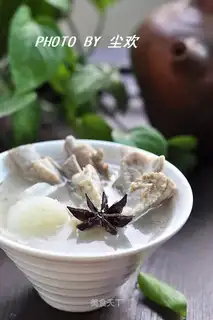 Ribbon Mountain medicine soup
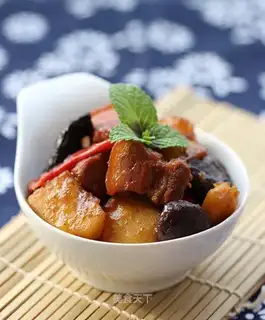 Potato mushroom roast
 Cheese and potatoes
 Coffee cake toast
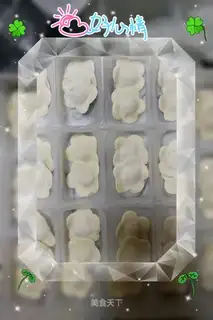 A petal dumpling