While delicacies are tasty, they are not necessarily healthy. Nowadays, when people eat, nutrition and health are often the top priority. More and more people are realizing that expensive food does not mean good food. In Chinese "cuisine," there are four types of vegetables that seem unremarkable but are called "longevity vegetables" by our ancestors.
Oyster Mushroom and Chinese Cabbage
1. Kelp Lowers Blood Lipids
"Kelp is indeed a vegetable with high nutritional value," Zhang Hude, a professor from the Health Preservation Department of Beijing University of Chinese Medicine, told reporters. Kelp grows in seawater and is a type of seaweed with a very high iodine content. Kelp is also rich in crude protein, sugar, calcium, and other nutrients, with several times the content of spinach and Chinese cabbage.
Zhang Hude pointed out that the alginic acid sodium in kelp has a blood pressure-lowering effect and also plays a certain role in preventing leukemia and itai-itai disease. Kelp starch can lower blood lipids, helping to prevent arteriosclerosis and reduce cholesterol. "Salads and soups are common ways to eat it, but people with a weak spleen and stomach and pregnant women should not eat too much."
2. Mushrooms Prevent Cancer
Shiitake mushrooms were the first edible fungi domesticated and cultivated by the Chinese people and have a long history of consumption in our country. Because of their rich nutrition and delicious taste, they are known as the "king of mushrooms". Emperor Zhu Yuanzhang of the Ming Dynasty often ate this vegetable and considered it a "longevity vegetable." Zhang Hude told reporters that shiitake mushrooms "benefit qi, relieve hunger, treat wind and break blood, and benefit the stomach and help digestion." In folk medicine, they are often used to treat headaches and dizziness. Modern research has shown that shiitake mushrooms can regulate the human immune system, reduce the possibility of tumor development, and have the effect of preventing and fighting cancer.
3. Fern Relieves Inflammation
Fern, also known as dragon's head vegetable or ruyi vegetable, is a common wild vegetable in mountainous areas. Zhang Hude said: "A few years ago, I vigorously promoted ferns. They are rich in protein, fat, carbohydrates, minerals, and various vitamins, and have high nutritional value." Fernin in ferns has a certain inhibitory effect on bacteria and has good effects of clearing heat and detoxifying, sterilizing and reducing inflammation, and has a certain therapeutic effect on fever, eczema, sores, and other ailments. "When eating, blanch it in boiling water to remove the astringent taste. Fern is cold in nature, so people with a weak spleen and stomach should not eat too much," Zhang Hude reminded.
Spicy Fern
4. Purslane Kills Bacteria
Purslane, also known as five-element grass or long-life vegetable, is widely distributed in China and can be eaten fresh or dried. It is a wild delicacy recorded in ancient books. Purslane can be stir-fried with shredded pork or made into a soup with eggs and shredded pork, which is delicious, crispy, tender, and smooth. "In addition to containing protein, fat, sugar, crude fiber, and various nutrients such as calcium, phosphorus, and iron, purslane itself has high pharmacological effects," Zhang Hude said. Purslane contains a large amount of noradrenaline, potassium salt, and rich citric acid, malic acid, etc., which can help stabilize blood sugar, lower blood pressure, and protect the heart.
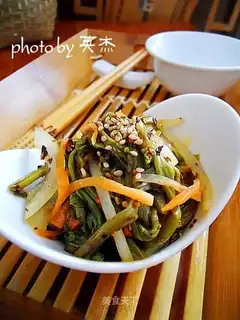 Spicy pickles
 Pelican mushrooms