Introduction: The potato is rich in nutrients and can be prepared in various ways, but caution is required when consuming them. Potatoes should be peeled, and any sprouts must be removed to prevent poisoning; potatoes should not be soaked for long periods, as this can lead to the loss of water-soluble vitamins and other nutrients; Do not buy potatoes with green skin or sprouts to avoid poisoning.
Can anyone tell me, is the potato, also known as the Irish potato, a grain or a vegetable? In times of food scarcity, it was common to steam a few potatoes to stave off hunger, yet a plate of shredded potatoes with green peppers is also a delicious delicacy. This seemingly unremarkable potato has been in the public eye for many years. Recently, the Ministry of Agriculture held a "Strategic Seminar on the Staple Food Development of the Potato," once again making the potato a hot topic.
Sour and Spicy Shredded Potato
On January 6, 2015, the Ministry of Agriculture organized the "Strategic Seminar on the Staple Food Development of the Potato." The conference advocated for the potato to become a staple food, arguing that this would open up new ways to ensure national food security; improve dietary structures and enhance public health; and alleviate pressure on resources and the environment to achieve sustainable agricultural development. The general consensus of the meeting was that making the potato a staple is both feasible and necessary.
Potatoes are resistant to storage and are a food that helps prevent chronic diseases like diabetes.
This marks a future push in China to advance the staple food development of the potato, aiming for significant increases in its cultivation area, yield per unit, total output, and the proportion of staple food products in total potato consumption. The potato will gradually become China's fourth major staple crop, following rice, wheat, and corn. It is projected that by 2020, over 50% of potatoes will be consumed as a staple food.
Chicken and Potato Stew
The strategy of staple food development for the potato involves processing it into staple foods like steamed buns, noodles, and rice noodles, developing it into another staple food alongside rice, wheat, and corn. Because of its unique characteristics: first, compared to wheat, corn, and rice, potato flour has a longer storage time, over 15 years at room temperature, and some countries classify potato flour as a strategic reserve grain; second, potatoes are rich in dietary fiber and low in fat, which is beneficial for controlling weight gain and preventing chronic diseases like diabetes.
Potato cultivation technology was introduced to China in the 17th century. The average yield of potatoes in China is only 0.93 tons/mu.
The potato, also known as the Irish potato, got its name because it resembles a bell. This name was first recorded in the "Songxi County Gazetteer: Goods and Materials" during the Kangxi era. In Northeast China, it is called "potato"; in North China, "mountain egg"; in Northwest China and the Hunan-Hubei regions, "foreign taro"; in the Jiangsu-Zhejiang area, "foreign taro" or "foreign yam"; and in Guangdong, "small potato." Due to the confusion of names, botanists gave it a universal name: "potato."
Potato and Egg Pancake
The earliest known cultivation of potatoes by humans can be traced back to the southern region of Peru, between 8000 and 5000 BC. It is native to the Andes Mountains of South America, in areas of Peru and Chile. Lake Titicaca, located 3800 meters above sea level in the Andes, may be the earliest place where potatoes were cultivated. About 7000 years ago, an Indian tribe migrated from the east to the cold Andes Mountains, settling near Lake Titicaca and living by hunting and gathering. They were the first to discover and consume wild potatoes.
In the mid-16th century, potatoes were brought to Europe by Spanish colonists. At that time, people often admired their beautiful flowers and used them as ornamental plants. Later, a French agronomist discovered that potatoes were not only edible but could also be used to make bread and other foods. From then on, potatoes were grown on a large scale as food. In the 17th century, potatoes were introduced to China and soon became popular in Inner Mongolia, Hebei, Shanxi, and northern Shaanxi.
Potato Pancakes
Today, the main potato-producing regions in China are the Southwest, Northwest, Inner Mongolia, and the Northeast. As of 2012, China's potato cultivation area was 78.15 million mu, with a total output of 81.54 million tons, ranking first in the world. However, China's potato varieties have low yields and severe degeneration. According to a report by the Food and Agriculture Organization of the United Nations, the average yield of potatoes in China is only 0.93 tons/mu, while the average yield in developed European and American countries is 2.33 to 2.87 tons/mu, a significant gap. The staple food development of the potato will encourage the state to increase investment in research and development of potato seeds and provide policy support, thereby increasing the yield per unit of potatoes and providing a new guarantee for national food security.
Seared Potatoes
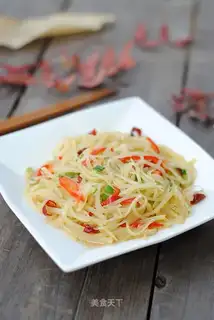 hot and sour potato silk
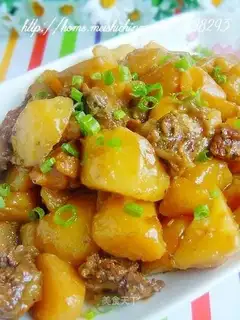 Stewed chicken nuggets with potato
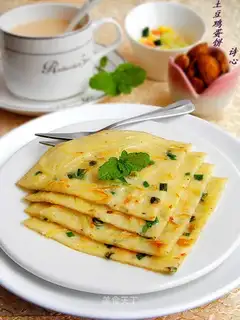 Potato omelet
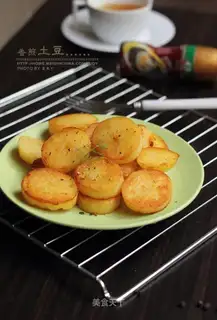 Fried potatoes
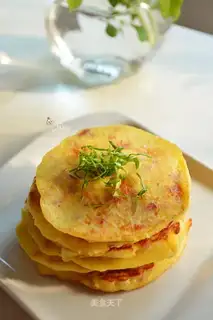 Potato pancakes