Introduction: "Where full grows the southern wormwood, and the short sprouts of reed appear, 'tis time the puffer-fish swims up the stream." The southern wormwood mentioned in Su Shi's poem is also known as Luhao, and it is currently the best time to eat it. Luhao comes in white, green, and red varieties, with the green one being the most commonly consumed. Each stalk of Luhao is as pliable as a willow branch, with small nodes on its slender stem.
Luhao: Strengthens the spleen and whets the appetite
Luhao was once a delicacy in the imperial court, hence it is known as the "emperor's vegetable." Dr. Wu Jinghuan from the National Institute for Nutrition and Food Safety of the Chinese Center for Disease Control and Prevention introduced that Luhao is rich in nutrients, especially carotene, with 1.5 milligrams per 100 grams, which is 2-3 times higher than vegetables like tomatoes and pumpkins, making it very beneficial for protecting eyesight. When stir-fried with meat and eggs, it can improve the utilization of vitamin A.
The refreshing aroma of Luhao comes from a volatile essential oil that stimulates the appetite. As the temperature warms up, many people lose their appetite, and eating Luhao can help to whet the appetite and strengthen the spleen. Sun Simiao's "Qian Jin Shi Zhi" records that Luhao can "calm the heart qi, nourish the spleen and stomach, resolve phlegm and fluid retention, and benefit the intestines and stomach." However, the aromatic essential oil in Luhao is volatile when heated, so it can be simmered in soup or briefly blanched before being served as a cold salad.
Stir-fried Luhao Stalks with Tofu Skins
In addition, Luhao also contains high levels of mineral salts such as potassium and sodium, which can regulate the body's water metabolism, promote urination, and reduce edema. Due to its high sodium content, less salt should be used during cooking.
There are often two types of Luhao at the market, with similar flavors. One has slightly larger leaves with petal-like rounded edges, and this type is mainly eaten for its leaves. The other type features the stalks as the main attraction, with a few green leaves attached. If you prefer tender stalks, you can choose this Luhao stalk variety.
Fava Beans: Brain-boosting, calcium-supplementing, lipid-lowering, and cancer-preventing
Fava beans contain a large amount of protein, second only to soybeans among commonly consumed legumes, and they have a relatively complete range of amino acids, especially a rich content of lysine. Fava beans also contain important components for regulating the brain and nervous tissue, such as calcium, zinc, manganese, and phospholipids, which have a brain-boosting effect that enhances memory. If you are preparing for exams or engaged in mental work, consuming fava beans in moderation may be beneficial. The calcium in fava beans aids in the absorption and calcification of bones by the body, promoting human bone growth and development.
The vitamin C in fava beans can delay arteriosclerosis, and the dietary fiber in the fava bean skin can lower cholesterol and promote intestinal peristalsis. Modern people also consider fava beans to be one of the anti-cancer foods, with a role in preventing colorectal cancer.
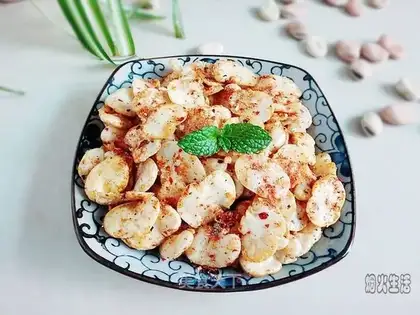
Salt and Pepper Fava Beans
Pea Pods: Cook with high-calcium foods
Fresh peas are not only rich in protein but also of high quality, containing all the essential amino acids needed by the human body. Regular consumption is very beneficial for the growth and development of children. The crude fiber in fresh peas has the effects of cleansing the intestines, lowering cholesterol, and preventing cancer.
The calcium and phosphorus content in peas is relatively low among bean foods, so when cooking, it is recommended to pair them with high-calcium ingredients such as soy products, bok choy, or rape greens. This not only makes them more delicious but also enriches the nutritional value. Although there are many benefits to eating peas, eating too many can cause bloating, and the amount should not exceed 50 grams at a time.
Snow Peas: Eating more can enhance metabolism
Snow peas are one of the main vegetable varieties consumed in Western countries. Unlike ordinary vegetables, they contain substances such as abscisic acid, gibberellin, and phytohemagglutinin, which have antibacterial and anti-inflammatory functions and are also very important for enhancing the body's metabolic functions.
In addition, snow peas are rich in carotene and vitamin C, which can make the skin soft and smooth, inhibit the formation of melanin, and are beneficial for beauty. Snow peas and pea shoots contain relatively rich dietary fiber, which can prevent constipation and have a bowel-cleansing effect.
Garlic Snow Peas
Asparagus: Prevents colds
Its slender green stalks resemble young reed sprouts and bamboo shoots, so people vividly call it asparagus, although its real name is Asparagus officinalis, and it is also known as dragon's beard vegetable in some places.
The tender stems of asparagus are rich in vitamins and minerals, especially vitamin C, with a content of 45 milligrams per 100 grams, which is higher than in oranges and tangerines. Regular consumption can enhance the body's immunity, prevent colds, and also has a certain alleviating effect on gum swelling and bleeding. Asparagus has low sugar content and contains substances that can help regulate blood sugar, making it suitable for diabetics. In addition, substances such as potassium and saponins in asparagus have the effect of regulating blood lipids and blood pressure.
Asparagus may look tough, but it is very tender to eat with a slight grassy flavor. Fang Hongyun recommends a recipe that preserves the original flavor—soup-poached asparagus, which only requires cutting the asparagus into sections, blanching them, and then drizzling with chicken broth.
Spring Bamboo Shoots: Relieves dryness and constipation
It is the season for spring bamboo shoots to hit the market, and the brown-coated spring bamboo shoots at the market still carry the scent of soil. Fang Hongyan said that spring bamboo shoots contain plenty of water, and their protein content (2.4 grams/100 grams) is also among the best in vegetables, making it a high-protein, low-fat food. In addition, spring bamboo shoots are rich in insoluble dietary fiber, and regular consumption can prevent constipation.
Braised Spring Bamboo Shoots
Spring bamboo shoots themselves have no special flavor and are a very versatile ingredient. When paired with meat dishes, they can absorb the aroma of the meat while also absorbing grease to cut the richness of the dish. In vegetarian dishes, many recipes also include spring bamboo shoots for their crisp, tender, and delicious flavor. Cold-dressed spring bamboo shoots are a nutritious and healthy side dish; the white bamboo shoots look refreshing and are particularly crisp and refreshing to eat.
Lettuce: Clears heat and reduces fire
A thick, green stem with a bunch of leaves on top is lettuce, also known as stem lettuce or asparagus lettuce.
Lettuce has a high potassium content, reaching 212 milligrams per 100 grams, which is beneficial for maintaining the body's water balance and is good for patients with hypertension and heart disease. Zuo Xiaoxia introduced that lettuce has a lot of juice and a refreshing taste, which can alleviate symptoms of excessive liver fire. In the dry, windy spring of northern China, eating more lettuce can replenish water and reduce internal heat.
After buying lettuce, many people throw away the lettuce leaves, but the nutritional value of lettuce leaves is also quite good. Especially for carotene, its content is 6 times that of lettuce stalks, and the vitamin C content is 3 times that of lettuce stalks. Lettuce can be stir-fried or served as a cold salad. Shred the lettuce, add some salt, sesame oil, and sesame seeds, and it becomes a dish that is pleasant to look at and refreshing to eat.
Warm Tip:
Asparagus is high in folic acid, making it a good food for pregnant women to supplement folic acid. However, folic acid is sensitive to high temperatures, so it is best to cook it with low heat and slow stewing or high heat and quick stir-frying. In addition, Zuo Xiaoxia reminds that because asparagus has a high purine content, it is not suitable for people with gout and high uric acid.
Tofu Skins and Lettuce Leaves
 Pretzels
 Homemade salt tofu
 Roast clams
 Shrimp onions
 It's a home-cooked catfish