Introduction: Spring has passed, and before we know it, Lixia (Start of Summer) has arrived. With each solar term, health preservation becomes a major focus. Many people want to know what to eat for health during Lixia. So, with such a rich variety of delicious foods, how should we choose? Selecting the right vegetables and fruits can be greatly beneficial to the body. Here are 10 recommended foods suitable for eating during Lixia for a healthy diet.
1. Duck Eggs
This is naturally the top recommendation. The custom of "standing an egg" during Lixia refers to standing a duck egg. Duck eggs are nutritious and can be compared to chicken eggs. Traditional Chinese medicine considers duck eggs to be sweet and cool in nature, with the effects of nourishing yin and clearing the lung, and they enter the lung and spleen meridians. They have functions such as greatly tonifying deficiency and fatigue, nourishing yin and blood, moistening the lungs, and beautifying the skin. They are suitable for patients recovering from illness, those with heat-related coughs, dry throat and sore throat, hypertension, diarrhea, and dysentery. They are also used for diaphragm heat, cough, sore throat, and toothache. Modern medical research shows that the protein content of duck eggs is comparable to that of chicken eggs, while the total mineral content is far superior, especially the iron and calcium content, which are extremely rich and can prevent anemia and promote bone development.
Homemade Salted Duck Eggs
2. Lettuce
The "Ben Cao Yan Yi" describes it as "found everywhere." Late spring and early summer are the best time to eat lettuce. The Song Dynasty poet Lu You's "New Vegetables Poem" says: "Cucumbers and green lettuce are the most suitable, appearing on plates in the fourth month."
Traditional Chinese medicine believes that lettuce benefits the five organs, unblocks the meridians, and opens the chest and diaphragm. It tonifies qi, strengthens muscles and bones, removes bad breath, whitens teeth, and brightens the eyes. It also has the effect of promoting lactation. It promotes urination to expel toxins and neutralizes the venom of insect and snake bites. Moreover, for those with a weak body, insufficient yin, frequent bleeding from the gums, or a dry nose prone to nosebleeds, lettuce stems can be sliced, cooked, and then mixed with soy sauce or salt to treat and reduce bleeding. However, it is worth noting that frequent consumption can also make the vision blurry and unclear. People with cold-related illnesses should not eat it. Lettuce is toxic, and eating it harms people; all kinds of insects dare not approach it.
Stir-fried Lettuce Shreds
3. Poria
Poria contains porian polysaccharide, glucose, protein, amino acids, organic acids, fat, lecithin, adenine, choline, ergosterol, various enzymes, and potassium salts. It can enhance immune function; porian polysaccharide has a significant anti-tumor effect; it has a diuretic effect, increasing the excretion of electrolytes such as potassium, sodium, and chloride in the urine; it has sedative and liver-protecting effects, inhibits ulcer formation, lowers blood sugar, and has anti-radiation effects. The ancients called Poria the "divine medicine of the four seasons" because its effects are very extensive and not limited by season. When combined with various medicines, it can exert its unique effects for all kinds of diseases, whether cold, warm, wind, or dampness. Modern medical research shows that Poria can enhance immune function, and porian polysaccharide has significant anti-tumor and liver-protecting effects.
Double Bean and Poria Pork Bone Soup
4. Wheat
Wheat is rich in starch, protein, fat, minerals, calcium, iron, thiamine, riboflavin, niacin, and vitamin A. The main components of wheat are carbohydrates, fat, protein, crude fiber, calcium, phosphorus, potassium, vitamin B1, vitamin B2, and niacin, as well as an ingredient called allantoin. In addition, wheat germ is also rich in dietary fiber and vitamin E, and small amounts of arginine, amylase, sitosterol, lecithin, and protease. Wheat has the effect of nourishing heart qi and is suitable for people with heart problems. Decocted into a soup for consumption, it can treat strangury. Ground into a powder for consumption, it can kill roundworms. Drinking a decoction of old wheat can also stop night sweats. When burned to ash and mixed with oil, it can be applied to treat sores and scalds from hot water or fire.
Fingered Citron Wheat Soup
5. Bitter Melon
After the beginning of summer, the weather is hot, so it's natural to be prone to "heatiness" (internal heat). Therefore, eating more bitter melon at this time can prevent it. Bitter melon is bitter in taste; raw, it is cool in nature, and when cooked, it is warm. Raw, it clears summer heat, purges fire, relieves heat, and eliminates vexation. Cooked, it nourishes blood, nourishes the liver, moistens the spleen, and tonifies the kidneys. It can eliminate pathogenic heat, relieve fatigue, clear the mind and brighten the eyes, and replenish qi and strengthen yang. However, when eating bitter melon, one should also be careful not to damage the qi of the spleen and lungs.
Although the weather is hot in summer, one should not eat too many bitter foods, and it is best to pair them with pungent foods (such as chili, pepper, green onions, and garlic) to avoid the bitter flavor from affecting the heart and to help replenish lung qi. If you don't like the bitter taste, you can cook it in a way that reduces the bitterness. The best way to eat bitter melon is still raw in a salad. A salad can well preserve the vitamins contained in bitter melon. If stir-fried, these vitamins will be largely lost during the cooking process, and the oil content will be relatively high, so people will consume more oil after eating it, and it cannot play the role of cooling and reducing internal heat.
Black Bean Sauce and Chili Bitter Melon Stir-fried with Chicken
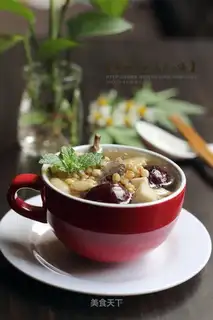 Five fingers of peach wheat soup
 Hong Kong pineapple bag
 Old cucumber egg pancakes
 Sausage fish
 Macalon's woodcake