Every autumn, the seeds of the pomegranate fruit are a riot of color, red as agate and white as crystal. Pomegranates are juicy, sweet and sour, and refreshing to the taste, with the功效 of "quenching hunger and thirst, and sobering up." In addition to being eaten fresh, when processed into cool beverages or used to make wine and vinegar, it has a unique and distinctive flavor.
1. Antioxidant
According to analysis, pomegranate fruit contains tannins, sugars, malic acid, citric acid, protein, vitamin C, etc. Its vitamin C content is 1.2 times higher than that of apples, while its fat and protein content is relatively low. The pomegranate peel, flowers, and roots contain alkaloids, tannins, and organic acids, which have astringent, antibacterial, and anthelmintic effects, and therefore can be used as medicine.
Pharmacological experiments have shown that the pelletierine in the fruit peel has a paralyzing effect on human parasites; pomegranate root peel inhibits *Shigella*, *Pseudomonas aeruginosa*, *Salmonella typhi*, *Mycobacterium tuberculosis*, and various skin fungi, and also has a certain inhibitory effect on viruses. Israeli scholars have proven that drinking 2-3 ounces of pomegranate juice daily for two consecutive weeks can slow down the oxidation process by 40% and reduce deposited oxidized cholesterol. Even after stopping consumption, this peculiar effect will last for another month. Moreover, pomegranate juice has extraordinary clinical effects in resisting cardiovascular diseases and is a more effective antioxidant juice than red wine, tomato juice, etc.
Pomegranate Cream Cake
2. Prevention and Treatment of Arteriosclerosis
Professor Aviram of the Israeli National Academy of Engineering published his latest research findings in the American Journal of Clinical Nutrition regarding the effects of juice on cardiovascular diseases. He stated that for preventing and treating heart disease caused by arteriosclerosis, pomegranate juice is better than red wine. This is because cholesterol in the body, when oxidized and deposited, can lead to arteriosclerosis and cause heart disease.
Aviram's initial experiment was conducted on a mouse. He claimed that a mouse with artificially induced arteriosclerosis, after drinking pomegranate juice for 11 weeks, had only half the arterial hardening damage as the control group of mice that did not drink pomegranate juice.
Pomegranate has a significant astringent effect, able to stop diarrhea, and coupled with its good antibacterial properties, it is an excellent remedy for treating diarrhea and bleeding. The polyphenol content of pomegranate juice is much higher than that of green tea, making it a superstar in anti-aging and cancer prevention. It is toxic to most estrogen-dependent breast cancer cells but has almost no effect on normal cells.
3. The pomegranate is a treasure, with its peel, roots, and flowers all usable as medicine
Its peel contains components such as malic acid, tannins, and alkaloids. According to relevant experiments, pomegranate peel has obvious antibacterial and astringent functions. It can cause the intestinal mucosa to contract and reduce the secretions of the intestinal mucosa, so it can effectively treat diarrhea, dysentery, and other conditions, and has a good inhibitory effect on *Shigella* and *Escherichia coli*. In addition, the peel of pomegranate contains alkaline substances, which has the effect of expelling parasites;
Pomegranate flowers have hemostatic functions. Soaking pomegranate flowers in water to wash the eyes also has a brightening effect. To treat canker sores and oral ulcers, crush a sour pomegranate with its seeds, soak it in boiling water, filter it, and let it cool. Gargle with it multiple times a day. It is also suitable for bad breath and sore throat. Calcinate the pomegranate until charred, grind it into a fine powder, mix with an appropriate amount of sugar, and take 6 grams with warm water twice a day to treat hemorrhoid bleeding.
People eat pomegranates and casually discard the peel, which is a real pity. Because the pomegranate peel is the main medicinal part of the pomegranate, its nature is warm and its taste is sour and astringent, with the effects of expelling parasites, astringency, and stopping diarrhea. In ancient times, the "Thousand Gold Formula for Dysentery" used to mash a sour pomegranate with its peel and seeds, add tea leaves and ginger, and decoct it to treat chronic dysentery due to deficiency-cold. In modern folk medicine, 30 grams each of pomegranate peel and hawthorn are decocted for consumption.
Pomegranate Juice
4. Pomegranate peel can also be used to expel parasites
Decoct 15 grams of pomegranate peel with 9 grams of betel nut to treat ascariasis and taeniasis. Soak 45 grams of pomegranate peel in a large bowl of warm water for 12 hours, filter it, and decoct it into a small bowl. On an empty stomach in the morning, take half first, then take the other half after half an hour, and then take 10 grams of Glauber's salt after another half hour, which has a certain effect in expelling tapeworms. Please note that when using pomegranate peel to expel parasites, only saline laxatives such as magnesium sulfate or Glauber's salt can be used. Do not use castor oil as a laxative to avoid poisoning.
Red pomegranates are rich in minerals and contain two major antioxidant components—pomegranate polyphenols and anthocyanins, as well as linolenic acid, vitamins C, B6, E, and folic acid. The mineral extracts of calcium, magnesium, zinc, etc., contained in red pomegranates can quickly replenish the moisture lost by the skin, making the skin brighter and softer.
5. Although pomegranates are delicious, one should pay attention to the appropriate contraindications when eating them
Patients with gastritis and those with the early stages of diarrhea and dysentery should avoid eating them. Eating too many pomegranates can cause "heatiness" and turn teeth black; one should rinse their mouth promptly after eating. Pomegranates are high in sugar and have an astringent effect, so patients with colds, acute inflammation, and severe constipation should consume them with caution, and diabetic patients should avoid them. Children should eat fewer pomegranates, as they are prone to causing fever and phlegm rales, and can easily aggravate symptoms of acute bronchitis, coughing, and excessive phlegm.
Pomegranate Juice
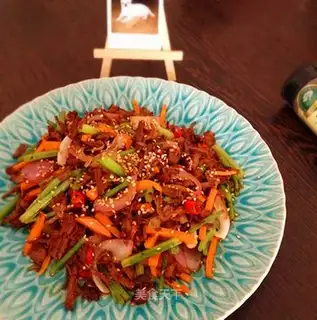 Spicy hands tore beef
 Porridge
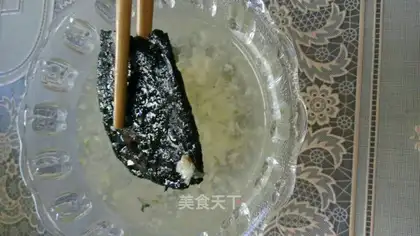 Pork blood