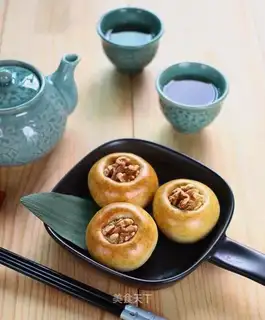
It's crazy to make ice cream recently, it's got all kinds of ice cream in the fridge, and it's been experimenting with all kinds of things, and it's working, maybe because it's more fun than the others. This square makes it feel like it won't be dug for much longer than it freezes, and it has a very thick mouth and no ice. At this point, Gum said behind my back, "You're so ugly, you're so ugly, you've got a little pointy, you've got a sound that floats from the side."
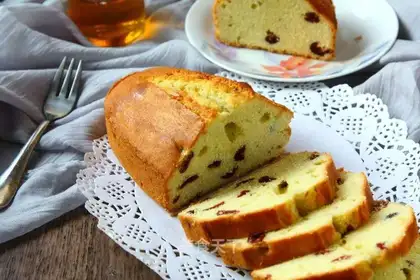
A pound cake, also called cream cake, a common base cake, which Taiwan calls heavy cream cake or pudding cake. The pound cake originated in England in the 18th century, when it had only four equivalents, one pound of sugar, one pound of flour, one pound of eggs, and one pound of butter, each of which was a quarter, and it was sent to France, and it was called a quarter cake. In terms of formulas, there are two main kinds of pound cake at the end of the 18th century, full and split, but the practice here is not to re-incorporate all the proteins, even in the form of eggs, but the simplest way to separate them. In those years, when there was basically no hair-cutting technique, which was not very precise in terms of size, which was basically mixed, the cake was made in rougher form on the ground, and after centuries of development, the baker gradually modified the formula, making it softer. In the middle of the nineteenth century, the formula ratio of the pound cake began to be adjusted even more, and it began to fade. Up to the twentieth century, powdered powder, little sodas and so on also became involved. Today, pounds of cake are not limited to a quarter of the original scale, but also include material such as cream。