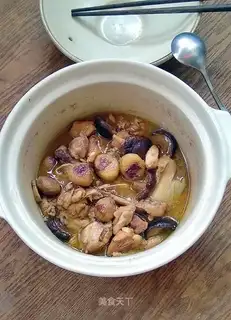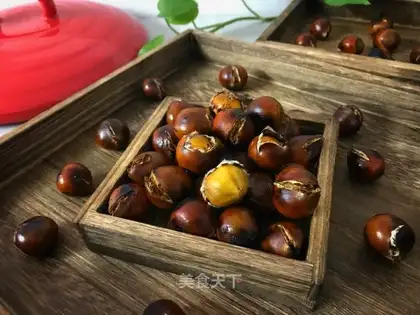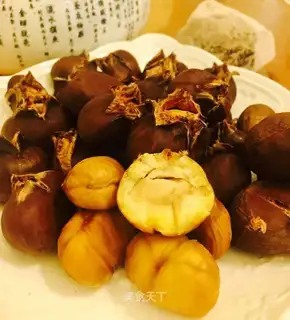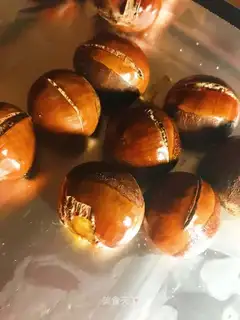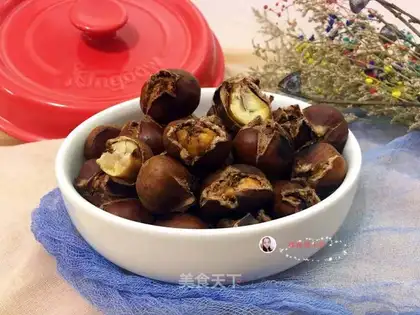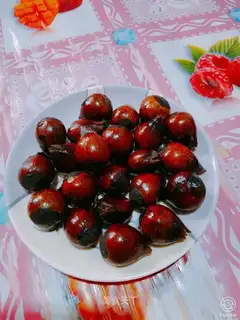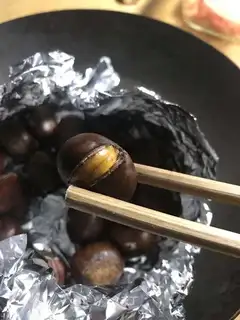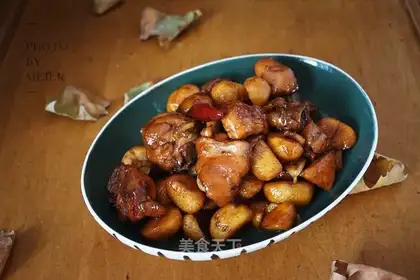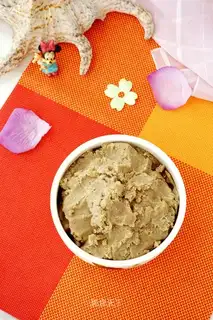
It was suddenly discovered that the tea table contained a large bag of chestnuts, which had been de-shelled. In the fall, you'll see chestnuts on the side of the road, and a bunch of chestnuts thumping in and then thumping out. This process does not allow chestnuts to be completely de-shelled, with hairy insides and broken casings. The worst is the destruction of the radiant surfaces of the chestnuts, which are covered with fine trenches, and the pellets of the insides and outer shells. All the beauty of chestnuts is destroyed. And that's a big bag of chestnuts, on the tea table. It's more than three pounds, and it's four pounds before they take off. Half-naked chestnuts don't get rid of them right away, they're just afraid of color decay. But almost four pounds of chestnuts are easy to eat. For a while, it was decided to allocate a pound to make a chestnut, to make a little bit of sauce, to make a little bit of mooncake, and to freeze it if you can't fix it. Fearing that the chestnut skin would dye the chestnuts, it took a lot of effort to remove the remaining skins. Steam over sift for fine. It's dryer to get the chestnuts, and they have to be prepared with water in order to make mud. But the butter gives chestnut cream, but soon regrets it, because it doesn't taste like butter. The color of the chestnuts is a little gray, it's because of the thin, broken chestnuts, or because it doesn't detect a slight bottom
I'm not immune, I'm not immune, I'm ready, I'm ready, I'm ready to bake, I'm up to 1300°C, I'm hot, I'm hot, I'm hot, I'm hot, I'm hot, I'm hot, I'm hot, I'm hot, I'm hot, I'm hot, I'm hot, I'm hot