So far, I have cooked no less than twenty kinds of Korean delicacies, and the only ones that I can accept and am willing to cook are those few-spicy cabbage, fried rice cake, stone pot tofu, stone pot bibimbap, spicy cabbage fried rice, bean sprout rice, ginseng chicken soup, egg rolls.
Some Korean food is delicious, some find it difficult to eat, and my personal feelings are quite clear. Only today's miso soup belongs to the type that I neither like nor hate.
I like it because it is low-fat and low-calorie, rich in ingredients, and balanced in nutrition. I said I didn't like it because I wasn't used to the taste of soy sauce. However, I read online that soy sauce is an excellent health food for the body. If soybeans are fried, boiled, and fried and eaten, the human body's absorption rate of the nutrients it contains is only about 50%, and half of it is lost. Because there is a thin and strong cell membrane in soybeans that contains the nutrients, if this cell membrane is not destroyed, the nutrients will not be easily absorbed by the human body. Soybeans also contain a trypsin inhibitor that interferes with the digestion of trypsin in the body. However, after soybeans are processed into soy sauce, due to the action of enzymes, more minerals such as phosphorus, calcium, and iron in the beans are released during the processing process, which improves the absorption rate of nutrients in soybeans, which can reach 92%-96%; during the processing of fermented soy sauce products, riboflavin, etc. can be synthesized due to the action of microorganisms. Therefore, the nutrition of soy sauce is easier to digest and absorb than soybeans. Moreover, eating more soy sauce is good for stomach digestion and has a good anti-cancer effect. So with the mentality of taking it as medicine, I feel that it is good to eat it occasionally.
most
Korean miso soup
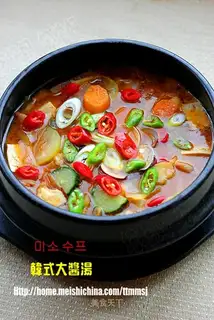
Recipe Recommendations
- soybean paste 80 grams
- pork belly 80 grams
- South tofu 200 grams
- meretrix 100 grams
- onion 1/4 of
- carrots half a
- cucumber half a
- green onions half a
- Huzi half a
- ginger several pieces
- green pepper appropriate amount
- red pepper appropriate amount
- pepper appropriate amount
- salt a spoonful
- oil appropriate amount
- taomi water 400 grams
- slightly spicy
- burn
- three-quarters of an hour
- ordinary
Steps for Korean miso soup
1
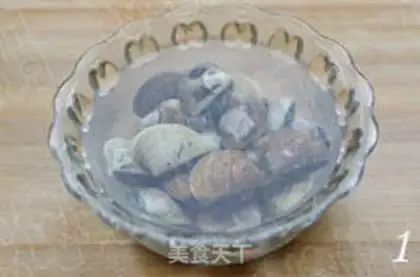
After rinsing the clams, soak them in light salt water for half a day to allow them to spit out all the sand, then rinse them with clear water and soak them in water for later use.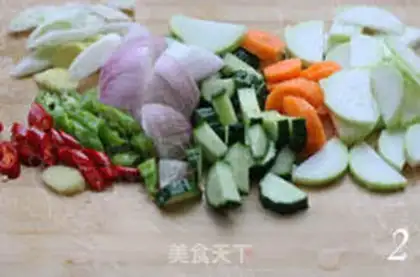
2
Slice onions, carrots, cucumbers, green onions, gourds, and ginger, and circle green and red peppers for later use.
3
Cut tofu into square pieces.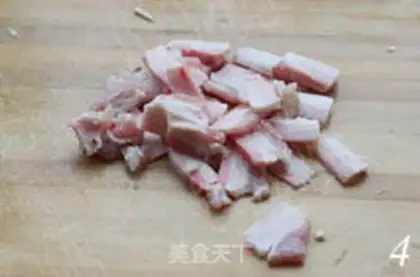
4
Slice pork belly.
5
Pour the rice washing water into a stone pot, place the sauce in a filter sieve, roll it with the back of a spoon, filter into the rice washing water, and stir well.
6
Place the stone pot on the heat and cook until it boils.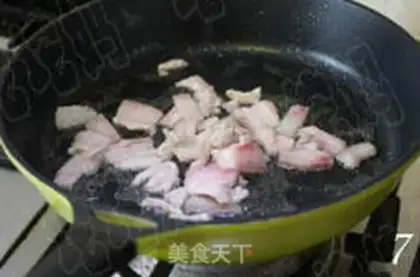
7
When cooking miso soup, pour a small amount of oil into the frying pan, add in the pork belly slices, and fry on both sides until it breaks raw.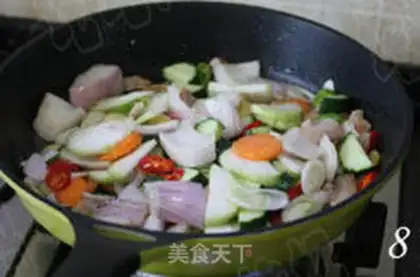
8
Add ginger slices, green onions, green and red peppers, and cut vegetables in turn, add 1 spoonful of salt, and stir fry well.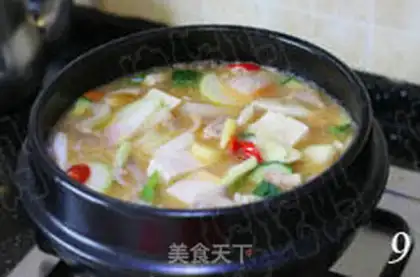
9
When the soup in the stone pot boils, add in the stir-fried ingredients and the filtered clams, and stir well.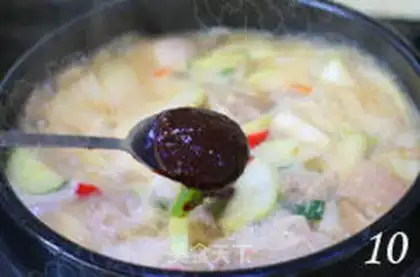
10
When boiling again, add the chili paste, stir well, simmer on low heat for another 5 minutes, then turn off the heat.Korean miso soup Make Tips
There is no certain formula for vegetables in miso soup. You can add any vegetables as long as you like them, as long as they are not opposed to each other, and they must be slightly more durable to cooking, and not just boil them into paste with one click of the pan. Those who don't like pork belly can also change it to beef, and you can also add spicy cabbage to enhance the spicy and sour taste. Friends who like vegetarian food can also use pure sauce to make the soup without adding any meat and oil, and the taste is not bad. It's just that I think the vegetables should be cooked with a little meat to make the soup more delicious, so I added a small amount of sliced meat, so friends who don't like meat don't have to agree, haha!