Shanghai snacks
VicentaLakin
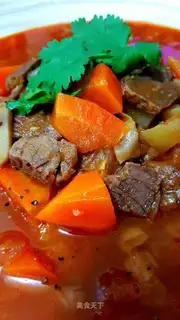
First, the name “Rosson” is said to be a Chinese translation from Russiansoup (Rosson, or Russian, from the early years of Shanghai's Ocean Rim English, pronunciation: [lù]), another commonly used name. In some parts of north-eastern China, the so-called So-po-ta. During the October revolution, a large number of Russians moved to Shanghai, bringing vodka and Russian vegetables, the first of which was run by the Russians. This soup, which has evolved from Russian cuisine soup, is sour and sour than sweet and not used in Shanghai. Later, it was influenced by the extraction of raw materials and local tastes, which gradually resulted in sweet, sweetly fragrance, fatty, freshly smooth soup. It is not only Western food, but also schools, establishments, families and Chinese restaurants. Over time, the soup has formed various genres and branches in Shanghai, the most representative of which are the “hotel pie”, “canteen sect” and “family sect”. After the launch of the borscht, the restaurant pie, represented by the Huaihai Cafeteria, and after several improvements and renovations, became the roadmaster of the borscht in the Sea, followed by a variety of restaurants and individual Chinese restaurants. The canteen pie, also known as the à la carte, tends to be full of soup with a large noodle or a warm tea bucket, without ketchup or only with a small amount of color. The soup is often a “cracking soup” with a few red intestines. The tomato is not skin-skinned, but, strangely, it's very different from the borbon soup in the Western restaurant. Even if the tomato boils, it tastes nicely, so many secondary school students have so far been reluctant to eat school food, go to school and buy a bowl of this soup with a dollar or two to make lunch. The “family” people, who had no reason to learn how to burn in the Western cabbage, and who did not want to fall like the “canteen” themselves, had to figure out how to burn, mainly with beef instead of red intestines, and had to pay for it。