Introduction: Lotus root is very common in the winter market. Various fresh lotus roots are transported from other places to the dinner table, becoming a delicious delicacy for the people. Lotus root contains many nutrients and has good health benefits for the human body. Generally, families eat lotus root by stir-frying or stewing it in soup. Do you know other ways to eat lotus root? What are the benefits of eating lotus root? How is lotus root healthiest to eat? The following introduces some common knowledge about eating lotus root. Let's take a look!
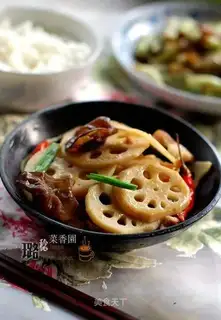
Stir-fried Lotus Root with Wood Ear Mushrooms and Sliced Pork
Are there different types of lotus root for eating?
Lotus root is the enlarged part of the underground stem of the lotus plant, appearing as a short cylinder. Its outer skin is thick, rough, and smooth, in a gray-white or silvery-gray color, while the inside is white. The nodes are centrally swollen, containing several differently sized channels arranged symmetrically left and right. The root is heavy in texture and crisp and tender. In China, the cultivated lotus root for consumption is primarily of the vegetable type. According to measurements, every 100 grams of the edible part contains 2.3 grams of protein, 0.1 grams of fat, 18.1 grams of carbohydrates, 18 milligrams of calcium, 51 milligrams of phosphorus, 4.4 milligrams of iron, as well as vitamins B and C. It can be divided into two main categories:
The first category is the vegetable type lotus root. Its rhizome is relatively fleshy, with a white outer skin, crisp and tender flesh, a sweet taste, high yield, but it produces few lotus seeds;
The second category is the seed type lotus root. The lotus is smaller, the flesh is slightly grayish in color, the quality is poorer, but it produces many seeds, mainly for harvesting lotus seeds.
Pig's Trotter and Lotus Root Soup
Which lotus root is suitable for stewing in soup, and which is suitable for eating raw?
Lotus root is sweet in flavor and rich in starch, protein, vitamins C and B1, as well as inorganic salts like calcium, phosphorus, and iron. The lotus root flesh is easy to digest and suitable for nourishing both the young and the old.
Commonly eaten lotus roots are divided into three types: red-flower lotus root, white-flower lotus root, and hemp-flower lotus root. Red-flower lotus root is slender and long, with a brown-yellow, rough outer skin. It contains a lot of starch, little water, is glutinous but not crisp and tender, making it suitable for soups. White-flower lotus root is large and fleshy, with a delicate, smooth, silvery-white outer skin. The flesh is crisp, juicy, and intensely sweet, making it best for eating raw. Hemp-flower lotus root is pinkish in color, with a rough outer skin and high starch content, making it best for cooked dishes.
Raw lotus root is cool-natured and has the effects of clearing heat, relieving vexation, cooling the blood to stop bleeding, and dispelling stasis. Cooked lotus root is warm-natured and has the effects of nourishing the heart and blood, strengthening the body, and invigorating the spleen and stomach. The lotus nodes between the sections contain about 2% tannin and asparagine, giving them a stronger hemostatic and astringent effect than fresh lotus root. They can also counteract crab poison. The flowers, leaves, stems, roots, seed pods, and seeds (including the embryo) of the lotus plant all have their respective effects and can be used as medicine.
Lotus root has been a beloved food since ancient times. Fresh lotus root contains up to 20% carbohydrates and protein, and is also rich in various vitamins and minerals. It can be eaten as a fruit or as a culinary delicacy. If it is candied in sugar or made into lotus root powder, it has a unique flavor.
Lotus Root Stewed with Pork Ribs
How to eat lotus root for its therapeutic benefits?
Influenced by ancient Chinese medicine, countries like South Korea and Japan, as well as regions in Hong Kong and Taiwan, currently place great importance on the therapeutic effects of lotus root and have many practical methods passed down.
For a sore throat from a cold, gargling with a mixture of lotus root juice and egg white is highly effective. The egg white can soothe the throat and relieve coughing, while lotus root can eliminate fatigue and calm the mind. The method is to peel and wash the lotus root, mash it to extract the juice, and mix it with egg white (one egg can be used for three separate occasions). Keep it in a cool place and use it for gargling.
Lotus root soup can also eliminate oral inflammation. Finely chopped lotus root is simmered in water, and the resulting liquid is used for gargling 5 to 6 times a day. For bronchitis, lotus root juice is effective, and the skin also has medicinal properties, so it doesn't need to be peeled. Simply wash the lotus root and extract the juice. The juice is also beneficial for patients who find blood streaks in their phlegm in the morning or have a hoarse voice in the evening.
Lotus root soup can also prevent and alleviate coughs. Thinly sliced lotus root with its skin can be simmered in thin malt sugar syrup and drunk. Additionally, crushing the lotus node section to extract the juice can also stop coughing and relieve chest tightness. When fever is accompanied by severe thirst, drinking fresh lotus root juice can both reduce fever and quench thirst. The effect is even better if pear juice is added. Cooking lotus root with soaked rice to make a congee has the same effect. For patients with nosebleeds without a clear external cause, drinking a small glass of fresh lotus root juice once or twice a day has a good effect.
Lotus Root, Corn, and Pork Rib Soup
To relieve fatigue from drinking and stabilize the nervous system. Mixing lotus root juice with ginger juice and drinking it, or diluting lotus root juice with hot water and drinking it, twice a day, one small cup each time, can quickly relieve fatigue from drinking and stabilize an unstable nervous system. Because lotus root has the effect of relieving nervous fatigue, it can also be used to prevent and treat restlessness, insomnia, eye fatigue, and other conditions caused by excessive stress, anxiety, etc. Usually, the appropriate amount of lotus root juice is calculated at 10 ml per kilogram of body weight, which can be taken in several doses or consumed with meals after being decocted.
For menopausal women experiencing irregular menstruation, irregular bleeding, or emotional instability, restlessness, etc., it is best to eat lotus root frequently. The lotus root can be mashed into juice or taken with a little salt.
Lotus root also has the function of regulating the heart and blood pressure, and improving peripheral blood circulation. To promote metabolism and prevent rough skin, 20 grams of lotus root can be washed, peeled, sliced, and blanched in boiling water. Then add 1 cup of rice and 2 cups of water, simmer over low heat, and season with a little salt after it cools. The effect is better if lotus seeds are added.
Lotus Root and Pork Rib Soup
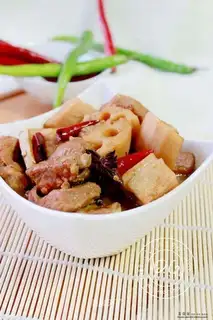 Stewed pork ribs with lotus root
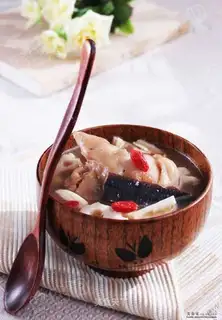 pork trotters and lotus root soup
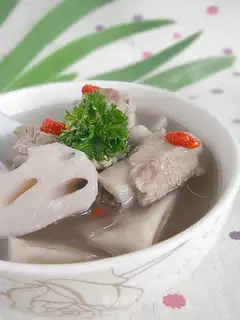 Lotus root and pork ribs soup
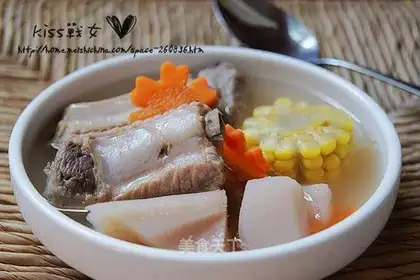 Lotus root corn ribs soup
 Liang Moo-mu's meat chop