Introduction: "Seasons are a food's best friend, but also its worst enemy." In the past, when winter came, the vast northern regions of our country were desolate, with no grass or trees growing and only withered leaves falling. From November to April, there was almost no way to grow "seasonal" vegetables and fruits. However, facing the relentless cold, people always found a way to adapt.
"The hustle and bustle of three springs cannot compare to the busy autumn." During the autumn harvest season, people began to busy themselves storing food for the winter. Every household dug cellars to store winter vegetables like cabbage, radishes, carrots, and potatoes. At the same time, they also made pickled cabbage, fermented vegetables, and salted vegetables to meet the culinary needs of the harsh winter season.
Sour and Spicy Cabbage
With the continuous development and advancement of greenhouse cultivation technology and modern transportation, the supply of fresh fruits and vegetables is no longer an issue even in the cold north, and vegetables and fruits unique to the south are also conveniently transported to northern markets. Why do people still have a special affection for winter-stored vegetables?
China has a traditional saying—"eat in season." Although fresh vegetables are always more nutritious than pickled, dried, or cellar-stored vegetables, many people still mind so-called "off-season vegetables," even when they are surrounded by fruits and vegetables all year round and can no longer tell which are in-season and which are off-season.
Spicy Kimchi
So-called off-season vegetables mostly refer to those grown in greenhouses during the winter. Although compared to summer field vegetables, winter greenhouse vegetables may have slightly lower levels of chlorophyll, vitamin C, total sugar, and mineral elements like calcium, magnesium, and potassium, they still have higher vitamin content than vegetables stored in cellars for a long time and more antioxidant and health-promoting substances than pickled or dried vegetables. In the era without off-season vegetables, the winter dinner table consisted of nothing more than radishes, cabbage, potatoes, and pickled cabbage. Naturally, there was no talk of food diversity or the enjoyment of fine food, and health conditions were quite unsatisfactory—people were generally deficient in nutrients like vitamin C, carotene, and vitamin B2 during the winter and spring seasons. Vitamin deficiency symptoms that are now rare, such as angular cheilitis, night blindness, and scurvy, were once commonplace.
Scrambled Eggs with Onion and Carrot
In conclusion, no matter the season, eating more fruits and vegetables is a wise and healthy choice. Even so-called off-season vegetables are far better than having no seasonal vegetables at all. Countless studies at home and abroad have confirmed that the greater the total intake of fruits and vegetables, the lower the risk of cancer and heart disease, and off-season and greenhouse vegetables have never changed this outcome.
For quality-assured pickled and fermented vegetables, there is no need to ban them. Although their contribution to vitamin supply is limited, they can still provide relatively rich minerals and dietary fiber. Moreover, pickled and fermented vegetables can help increase gastric acid secretion, so people with poor appetite or insufficient stomach acid can have a dish of sour pickled vegetables to whet their appetite.
Braised Pork with Radish
From both economic and environmental perspectives, as well as from a nutritional and safety standpoint, winter-stored vegetables once held an important place in people's winter diets and can still play a supplementary role today. As long as they are cooked and paired reasonably, they can completely continue to be a part of a healthy diet, providing unique flavors and textures while also elevating into diverse regional cultures and nostalgia, continuing to carry people's eternal pursuit of good food.
 Scrambled eggs with onions and carrots
 Yams and radish ribs soup
 spicy cabbage
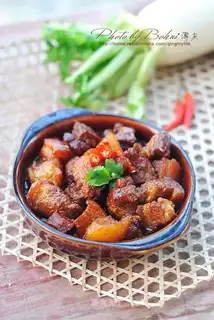 Braised pork with radish
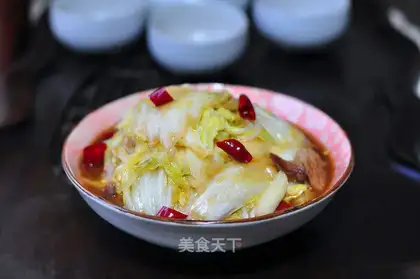 Jealousy cabbage