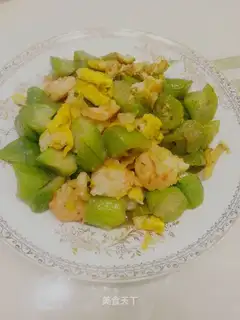
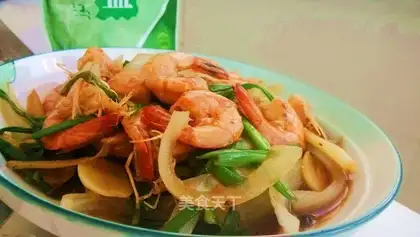
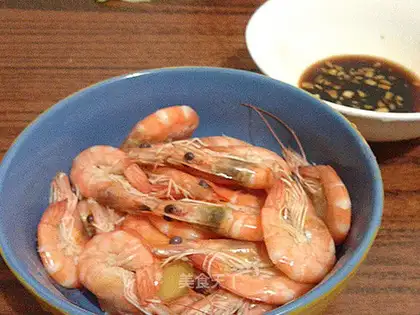
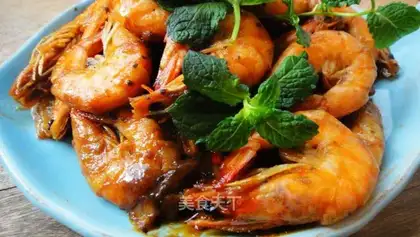
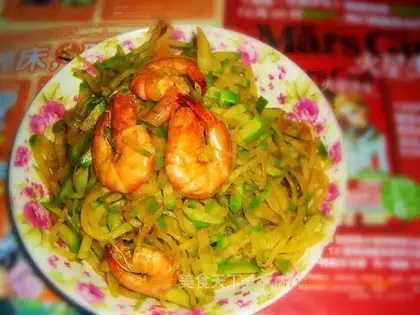
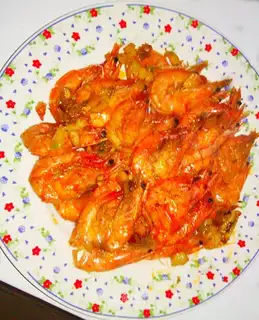
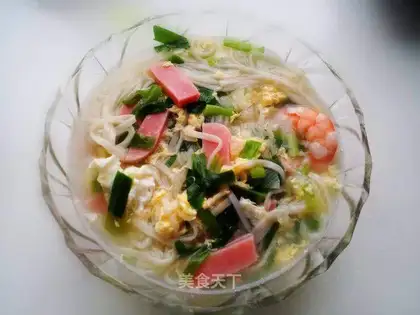
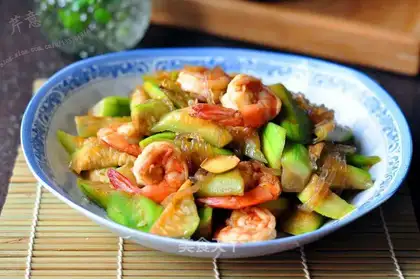
Shrimp cooking, nutrition, and good taste. It's generally popular and easy to do it as silk-cracked shrimp, smelt-cray shrimp, cabbage-cray shrimp, radish-cray shrimp ... Although the mix is different, the approach is generally consistent. One of the problems with this kind of cooking is that it's easy to get out of the water, that shrimps can get out in small quantities, and vegetables can get out of the water. If no measures are taken, there is too much soup, which affects the taste; there is no one to ask for it, and nutrition is lost. What measures are being taken? It's a solution, but it's probably sticky and disgusting. I've got a great idea, which is to add a piece of powder -- no more, no more, no more, no more, no more, no more, no more. - Imagine the best ingredients in this dish
(a) Shrimp is nutritious and soft, which is an excellent food for those who are weak and in need of care after illness; shrimp contains rich magnesium, which is an important regulating factor for heart activity and provides a good protection of the cardiovascular system, which reduces cholesterol content in blood and prevents artery sclerosis, while also expanding the coronary artery to prevent high blood pressure and myocardial infarction; shrimp has a strong emulsive effect and is especially useful for phosphorus, calcium, calcium, and pregnant women; shrimp has renal prognosis, lactation, blood steration, siltification, positive oscipitation, coronal pain control, and gashosis