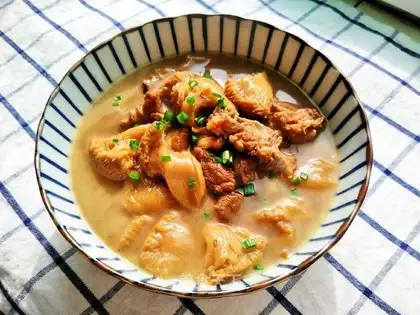
The dragon bones are called rows, the spinal bones of pigs, thin flesh and little fat. Pork dragon bones contain a large amount of bone marrow, and soft, fat, bone marrow when cooked is released, which is very good for stew. In bacterial vegetables,[1] is a relatively rare type, as well as an expensive edible fungus, which is included in one of the eight mountains. Monkey mushrooms have good use and are combined with nutrition and medicine. Monkey mushrooms and fins, bear palms and ostrich nests are known as four famous dishes. Monkey-head mushrooms are a large bountiful fungus in the old mountain forest, which prefers to grow in broad-leaf trunk faults or tree holes. They were white and matured into hairy yellow browns, which looked like the head of a monkey, and were famous. Monkey mushrooms are the sub-entity of the mothbacterium monkey, collected in the summer fall. Artificially grown sub-entities, which are older than three months old, are taken off when they grow, dry or scarcely used. Tastes of sex: odour, sex. Function: Rehabilitation. Nutrition and medicinal monkeyheads have a high nutritional content of 26.3 grams per 100 grams of protein, twice as high as mushrooms. It contains up to 17 types of amino acid, 8 of which are required for the human body. Per 100 grams of monkeys contain 4.2 grams of fat, which is a veritable high protein, low fat food, as well as various vitamins and inorganic salt. Monkey mushrooms promote appetite, enhance the functioning of the gastric mucous barrier, increase the rate of lymphocytes conversion, and increase the effects of white cells. It can raise the body