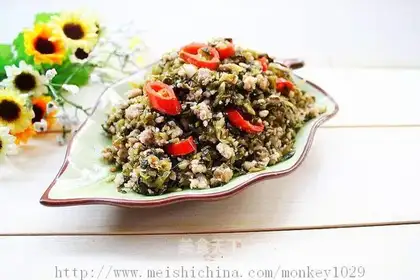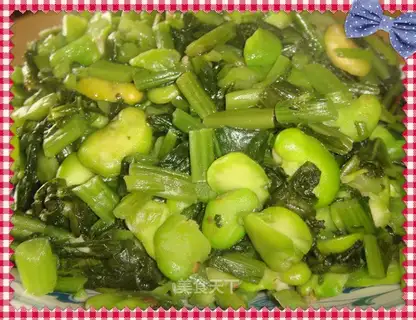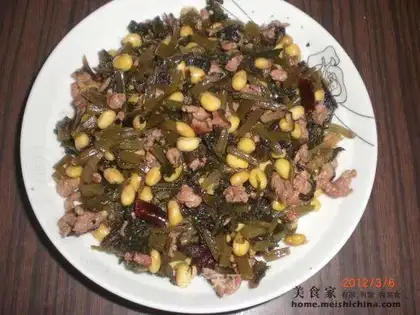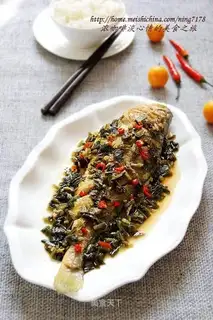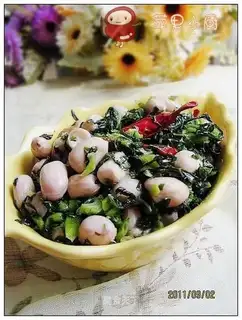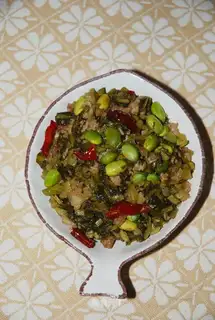
"Xuelihong" is regarded as "potherb snow" according to the study of famous lexicologist Wang Guanghan's "Research on Dictionary Problems * Review of Recommended Words in Modern Chinese Dictionaries". Hong,"Guangyun" is pronounced "Hu Gongqi", and "Jiyun" is interpreted as "Mao". "Guang Qunfang Pu·Vegetable Pu 5":"There is a dish in Siming named potherb mustard. The snow is deep, and all the vegetables are frozen and damaged, but this dish is the only one that is green." It is said that this dish reverts to its peak when it snows, hence the name. Writing "red" doesn't make sense. <br /><br />[Family and genus] are the young stems and leaves of the cruciferous plant mustard. It is a variety of mustard used in the middle leaf of mustard vegetables. <br /><br />[Alias] Snow vegetables, spring never grows old, frost never grows old. Some districts and counties in Chongqing also call them fragrant vegetables. <br /><br />[Sexual and taste return to meridians] Warm in nature, sweet and spicy in taste; enter the liver, stomach, and kidney meridians. <br /><br />[Indications] Detoxify and reduce swelling, appetizing appetite and digestion, warming the middle and promoting qi. Improve eyesight and improve diaphragm. Indications for sores, carbuncle swelling and pain, full chest septum, cough and excessive phlegm, deafness of ears and ears, swollen gums, constipation and other diseases. <br /><br />[Nutritional ingredients] Each 100 grams contains 91.5 grams of water, 2.8 grams of protein, 0.6 grams of fat, 1.6 grams of vitamins, 3.6 grams of carbohydrates, 23.9 mg of calcium, 64 mg of phosphorus, 3.4 mg of iron, 10.07 mg of vitamin B1, 0.06 mg of riboflavin, 0.7 mg of niacin, and 83 mg of ascorbic acid.