Jiangsu cuisine
KeiraCrona
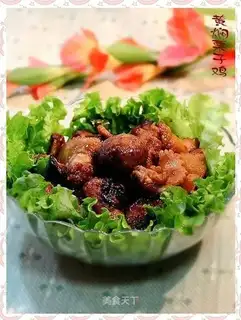
This year, there is a bumper harvest of chestnuts and oil chestnuts in the north. There are many varieties and the prices are cheap. Raw fresh chestnuts are among the best in Beijing. The oil chestnuts produced in Huairou are of the best quality. Unfortunately, fresh oil chestnuts cannot be bought in the market, and it takes more than an hour to drive to the Huairou production area to purchase them. <br />Today, I bought some big fresh chestnuts in the supermarket. Although the chestnuts are not as good as oil chestnuts, they are big and taste good. The disadvantage is that they are not easy to peel! After I bought it home, I cooked it and peeled it for half an hour before I finished peeling it. First, I used my fingers to dig it until my nails hurt, and then I used a knife to scrape the peeling belt. Finally, I finished peeling it. Anyone who has a quick way to peel chestnuts may wish to give guidance. Thank you! <br />The color of cooked chestnuts is not good, and it seems that the chestnut meat is a little black, but it does not affect the taste and taste. The chestnut that is stir-fried or peeled raw is golden and beautiful, but the raw chestnut is really difficult to peel! Today, chestnut is used to make a dish called "Braised Chestnut Chicken". This dish belongs to a traditional Beijing-style dish. In the past, this dish was made only with sugar color and soy sauce to color. Today, I didn't use the sugar color and put some oyster sauce in it to taste more delicious. The practices are as follows;
NoreneTreutel
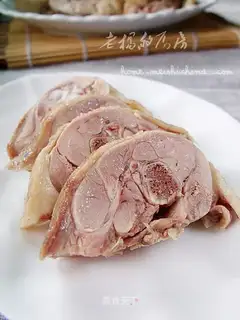
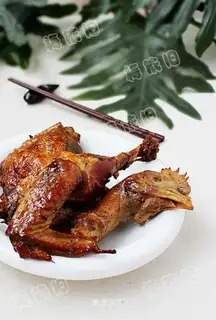
This is the first time I have cooked such a difficult dish. The actual operation is actually not difficult. I just feel that it is impossible to cook it myself when I mention eating salted duck. <br />In fact, you only need to master three steps: one, pickle the duck, two, make the brine, and three, stewing the duck. <br /><br />The finished duck meat is tender and juicy, has a refreshing taste, non-greasy, and is not fishy at all. Make one in advance for guests coming from home, and it will definitely make the guests praise your craftsmanship!
MyrlAufderhar
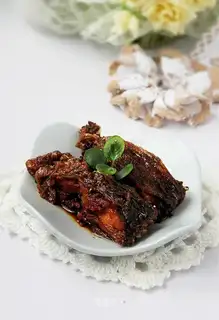
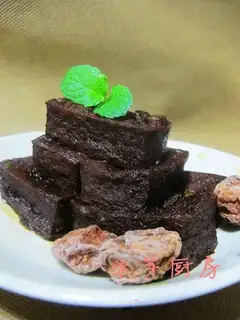
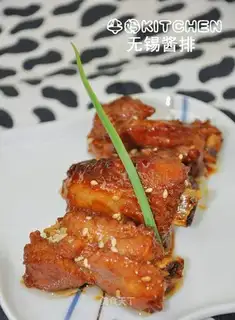
Legend has it that in the Song Dynasty more than 800 years ago, a very sloppy beggar monk Jigong, with a disheveled head and a dirty face, wearing a broken cassock, holding a bowl in one hand and knocking wooden fish in the other, and a broken cattail fan stuck at his waist. He went to Wuxi to beg for his fortune, from Wuxi's east street to west street, and from south street to north street. Everyone thought him dirty, and did not get a bowl of vegetarian rice. Later, he walked around a Lu Ji Cooked Meat Shop, turning around again and again, countless times. A little clerk at the counter saw it and guessed that he wanted to eat meat, so he asked deliberately: "You want to eat pork?" Ji Gong nodded and sent the bowl over. The little boy gave him a few pieces of pork. Ji Gong took it and finished it within a few steps. Ji Gong turned back again, and the little boy asked again: "Do you still want to eat?" Ji Gong nodded again and gave him a few more pieces of pork. Ji Gong finished eating again in three bites, but still refused to leave. Just as the little boy was about to give the meat to Jigong again, he heard footsteps behind him. Seeing that it was the boss, he said to Jigong,"Ask the boss for it!" Jigong asked the boss for it. The boss conveniently handed him a few bones. Ji Gong didn't want it, so the boss had to give him a few more pieces of pork and murmured: "I've eaten all the meat for you. Tell me to sell the bones tomorrow!" Ji Gong replied cheerfully: "Tomorrow, you can sell the bones!" The boss became angry and said,"You are a monk and eat hundreds of rice, so your words are easy. Bones can't sell for meat, why don't you tell my family to drink northwest wind?" Ji Gong said delightedly: "Boss, what you said is unreasonable. As the saying goes: Good gold grows in the sand, and good meat grows around the bones. Bones can be sold for meat." The boss thought for a long time, but couldn't think of a word to answer Ji Gong. Ji Gong taught his boss how to cook bones while eating meat. Later, he tore off a few cattail stalks from the broken cattail fan at his waist and handed them to the boss, telling him to cook them with the bones. After saying that, he disappeared. After Ji Gong left. The boss looked at the pile of meat bones on the counter and thought, What will I sell tomorrow? His mind suddenly lit up. Tomorrow, he would follow the old monk's instructions and cook the bones and sell them! The next day, the boss did the same, and the cooked meat bones were fragrant, and residents in the entire Wuxi City smelled the aroma and came to buy the meat bones. There is not much time to sell out. Everyone agreed to eat it. From then on, the reputation of Wuxi's meat bones spread.
CeasarLeuschke
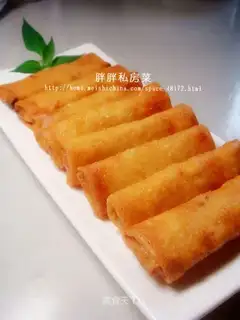
Spring rolls: It is said that during the Song Dynasty, there was a scholar in Fuzhou who immersed himself in studying all day in order to study his books and take exams, often forgetting to eat and sleep. His wife tried to persuade him repeatedly, but it was useless, so he came up with a solution: grind the rice into pancakes, use the rice meat as the filling, and wrap it into a roll shape, which can be used as both rice and rice. This snack was later named spring rolls and gradually became popular in urban and rural areas. Fuzhou people often eat them during the Spring Festival, which is as common as making dumplings during the holidays in the north. Cai Xiang once wrote a poem to praise: "Spring dishes are thinking about the ninth trimester." Nowadays, the skin of spring rolls has been changed to flour, and the filling is generally made of bean sprouts, leeks, and dried tofu. Some also add shredded pork, shredded bamboo shoots, chopped green onion, etc. The more advanced spring rolls are made of shredded chicken or oysters, shrimp, winter mushrooms, leeks, etc. Spring rolls are fried with low heat until golden yellow, crispy on the outside and tender on the inside. They are also called "fried spring." <br />Characteristics of shredded chicken spring rolls: crispy, fragrant and tender.
SybleJerde
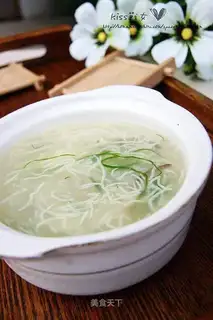
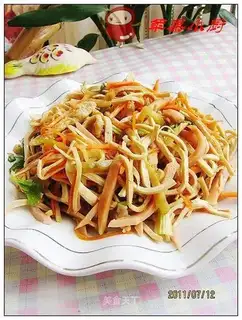
Wuwei Dry Silk is a traditional snack in Taizhou, Jiangsu Province with a history of more than 200 years. During the Kangxi period of the Qing Dynasty, this dish was available in teahouses in Taizhou. Yuan Mu of the Qing Dynasty also recorded in the "Suiyuan Food List" that dried tofu was shredded very finely and mixed with shrimp seeds and shrimp oil (soy sauce)... This shows how delicious this dish is. <br />The main ingredients of traditional five-flavor dried shredded silk include: dried tofu, shredded pork, shredded cooked chicken, shredded pickled mustard, shredded cooked bamboo shoots. The ingredients include shredded ginger, coriander, and lake shrimp. They are seasoned with soy sauce, sugar, and sesame oil. Because of the ingredients, I made simple adjustments to make them more suitable for my family's taste.
FannieMoen
Ingredients: soy sauce,salt,tea,rice,chives,sesame oil,Jiang,sugar,pepper,brown sugar,seasoning package,young cock