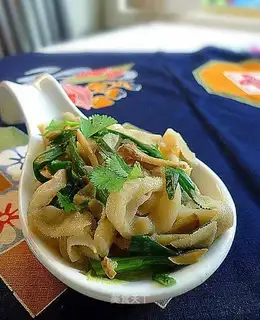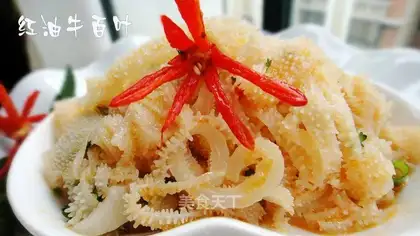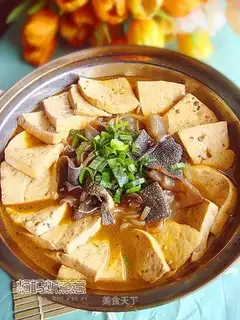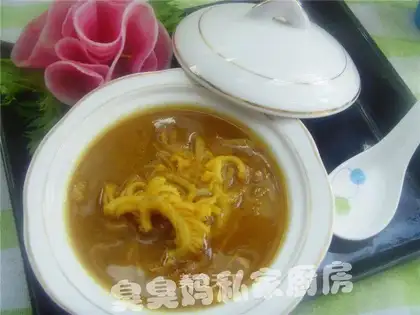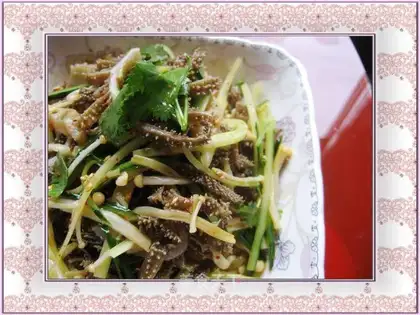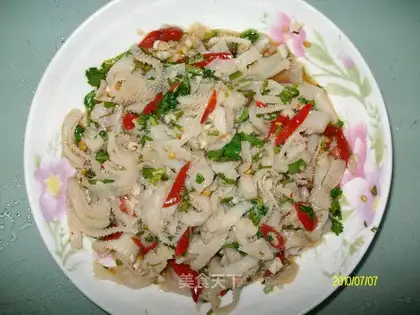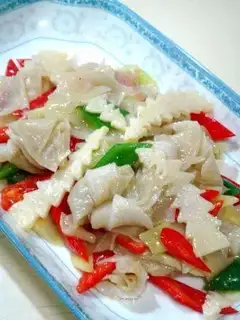
Nowadays, aquatic products stalls in major supermarkets in Beijing sell more cattle and white leaves. Cattle are ruminants. Unlike other livestock, cattle have four stomachs, namely the rumen, the reticulate stomach (honeycomb stomach), and the flap stomach, also called the louvered stomach and the abomasum. The first three stomachs have no gastric glands and do not secrete gastric juice. They are collectively called the forestomach. After cattle eat grass, they can be stored in the forestomach, then slowly pour straw and chew carefully, and then enter the main stomach for digestion. The fourth gastric abomasum, which is the main stomach, has gastric glands that can secrete digestive juice, so it is also called the "true stomach". The roughage and forage eaten by cattle are mainly decomposed into absorbable and usable substances by fermentation by microorganisms in the rumen, and then poured into the main stomach. The main stomach is also what is called the "tripe" in cooking food, and the flap stomach is one of the auxiliary stomachs of the cow called the "ox white leaf". <br />"Niu Baiye" has a sweet taste and mild nature. Traditional Chinese medicine calls it "can nourish each other in form. That is, what the common people often say, nourish whatever you eat, so it has the effect of replenishing the spleen and stomach. "Compendium of Materia Medica" says that it can play the role of "replenishing the middle and replenishing qi, detoxifying, and nourishing the spleen and stomach". According to other ancient Chinese medicine books, it also has the effect of "strengthening the spleen and stomach and avoiding food injuries caused by drinking accumulation", and can also moisten the lungs. From the perspective of traditional Chinese medicine theory, eating "Baiye" often is a way to "replenish the soil and generate gold". Therefore, the raw material "Niu Baiye" is an excellent raw material in preparing Chinese food. Its good effect must not be ignored. If cooked well, it will bring people appetite and enjoyment of delicious food! <br />When choosing beef louver, it is better to choose one that is tough and slightly fishy. However, veneers with thick meat and fragile meat must not be eaten. Most of these veneers have been expanded with drugs and look good, but they are not conducive to human health. After buying the "louver" back, it is best to soak it in clear water for more than 5 hours, then wash it repeatedly. After cutting it, blanch it with boiling water. After blanch it, it will be washed again with clear water. This can remove most of the peculiar smell and ensure the safety of food consumption. <br />Among the condiments used in cooking "Niu Baiye", it is better to use rice wine, and more pepper powder can be added appropriately to remove the fishy smell and enhance the freshness. When frying the pan, the amount of onions, ginger and garlic should be used in larger quantities."Scallion oil" can best improve the quality and aroma of the dish. Whether the beef leaf you cook is delicious or not depends entirely on the wonderful effect played by the onions and ginger! <br />Today, we will use "Niu Baiye" to make a private health dish called "Fried Baiye with Ginger and Scallion". This dish is extremely simple to make, but it tastes delicious. The details are as follows;
Ingredients: soy sauce,chicken essence,salt,liquor,coriander,chili,beef omasum,vinegar,sugar,garlic,sesame oil