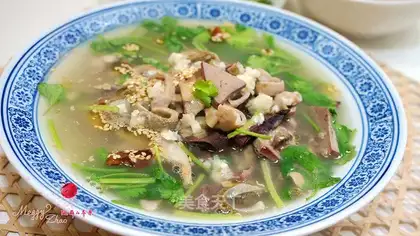
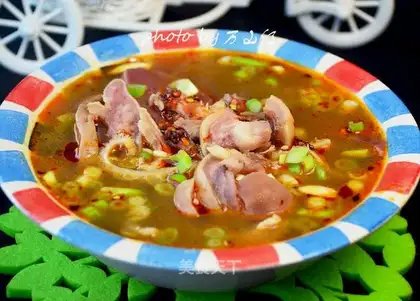
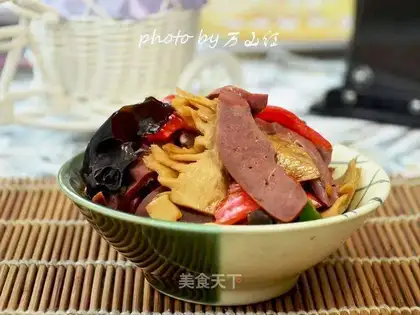
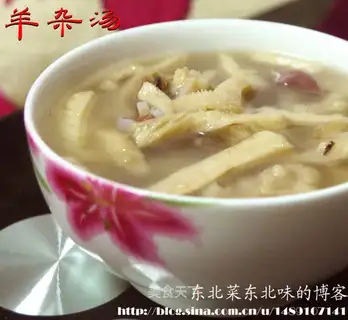
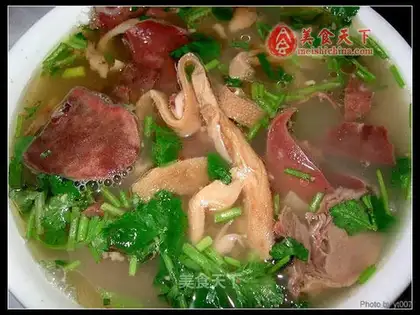
The lamb soup is pure food. It's a soup made of silks cut out of sheep, etc., which is spicy enough to protect the cold, the interior, the northwest and the northwest of the hill. Also, lamb soup is one of the canteens of the river, which is made of carrots. The so-called sheep and goats are the result of the fact that there is so-called sheep and sheep head, foot and foot, sheep's heart, liver, sheep's lungs, sheep's intestines, etc. Do not think that these are the best foods, each of which has its own effects: smallpox (sheep brain) has its own brain, especially for the elderly and the mentally weak; and mouths (tongues) have the capacity to regenerate blood, which is most likely to feed the sick. In Harbin, where I come from, there are lots of clean restaurants. Every time I go, I'll order some wheat or a bowl of warm lamb soup. It'll be a pleasure to have a good fragrance
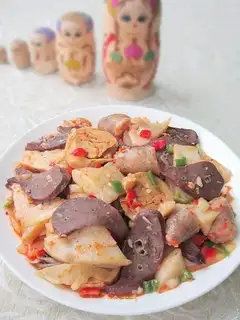
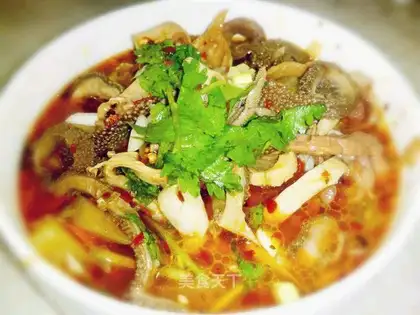
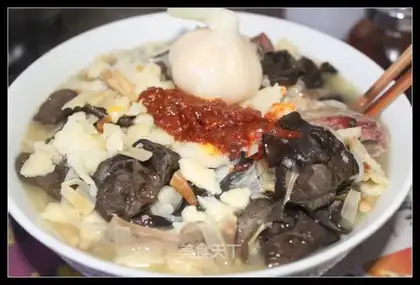
The pulmonary rice intestines, known to me frequently, is a food that is unique to Xinjiang, and is said to have originated in Ishawara, which has a history of 30 or 40 years as a food in Xinjiang. Before the 1970s, all households were providing food on a quantitative basis, with Uighur families generally having large numbers of children, and many families generally not fed enough. The Uighur mother brought back the sheep's lungs she had to throw away and put them in the water to wash. At the beginning, the sheep's lungs were not white, which meant that the blood was still fresh, and then, after they had cut the two coarse veins connected to the lungs, the smart Uighur mother, who added the sheep's lungs and face bands to the ingredients, added a variety of spices and made a uniquely delicious lung. Later, it slowly spread across Xinjiang, reaching out to the specialty restaurants to the night market, and became the present feature of a delicious plume of rice. Famous lungs have become food that is unique to Xinjiang, and tourists from the interior have come to taste it, and they've all taken pictures of it. It used to be soupy, and now there's a lot of hot-fried pasta pulmonary in a lot of real-estate restaurants, and they've added to the sauce and the dishes, and they've got a big plate of $30. If you want to eat a genuine Xinjiang specialty, you're welcome to Xinjiang
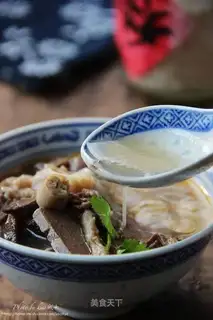
White soup is the traditional Qinghua Qinghua dish, which is very popular with the old Beijing people. It's full of soft, soft, white soup, sour and salty. Most of the material used to be supplied after the autumn is sheep belly, sheep lungs, intestines, sheep hearts, lamb head meat, etc., and white soup tastes so good that it becomes a common snack today。
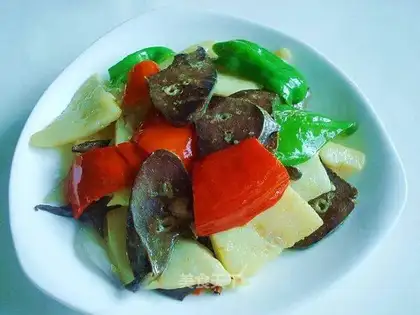
Black and white sheep lungs are one of Xinjiang's specialty foods, and they're also a fresh food for Xinjiang's people. They're scrawling, they're a little sacky, they're red, green, black and white, they're colorful, they're spicy. In order to do it at home, the most serious, the one who came out today to eat grubby soup at a grubby soup shop opened by her sister, who was passionate, knew that I wanted to make a grubby blunder, gave details of what I would do and said that I would not do, could come and ask her at any time. She was also a cook, and had known that she was famous for her grubby soup。
Ingredients: salt,coriander,Yangxin,sheep lung,Morel,mutton head meat,MSG,pepper,cooking wine,Jiang,vinegar,green onions,garlic