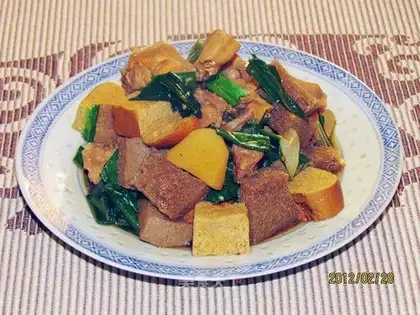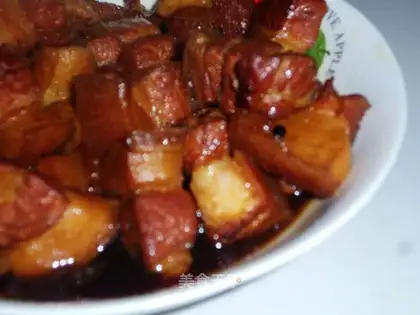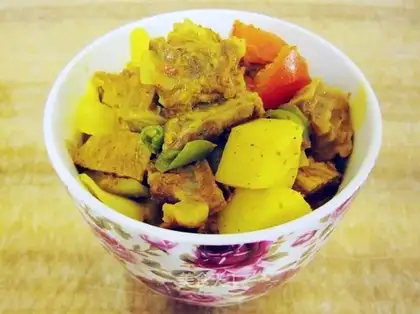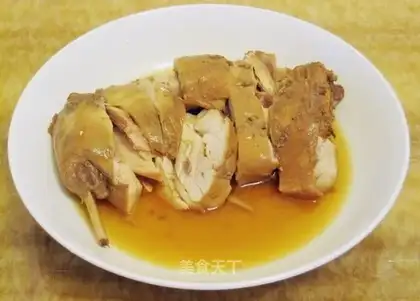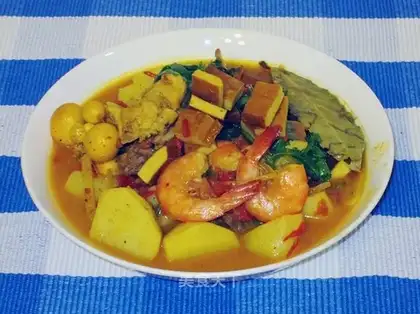
[Ziyang Steamed Pot] first originated in Hanwang Town, Ziyang County. It was first served as a dish when the Hanjiang River workers were resting for a happy gathering, and later developed into the finale of the New Year's Eve reunion dinner. <br /><br />Steamed basin is a valuable dish in Ziyang and is rarely eaten in ordinary times. It is just a must for the reunion dinner on the evening of New Year's Eve. As a big dish, it celebrates the bumper harvest in the old year and wishes a happy new year, a happy family, and a rich life all year round. This dish is only available at banquets when wealthy families entertain distinguished guests and host weddings and weddings. Close relatives and friends who have been away for a long time and come back to welcome the family, or go far away for a grand trip, also make this dish. The steaming basin reflects the owner's sincerity and kindness. It is large, full of chicken, thick trotters, fragrant egg dumplings, abundant vegetables, and delicious and mellow soup.
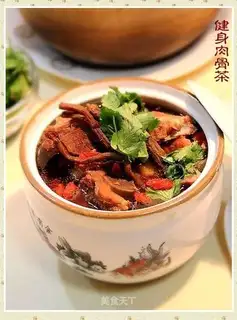
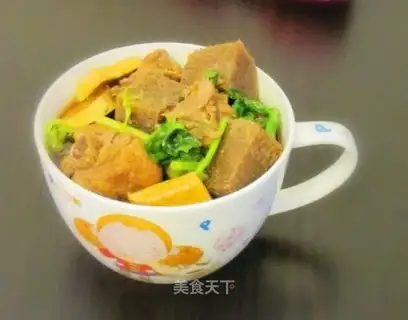
Working abroad is sometimes very busy. For lunch, go to a nearby Chinese restaurant and order a piece of meat bone tea and a plate of fried vegetables, coupled with a bowl of rice to make a good lunch. Among them, soup, vegetables, meat and vegetables are all available, which is fast and convenient. <br />There are many ways to make "meat bone tea", and the requirements for raw materials used in spring, summer, autumn and winter vary. Among them, there are dampness removing, health preservation, strengthening muscles, and making products for special customers with certain nourishing effects. "Meat Bone Tea" is also divided into different practices of Hakka people in Fujian and Hainan. The Fujian School focuses on nourishing, so the flavor of traditional Chinese medicine is relatively strong, while the Hainan School focuses on the spicy taste of pepper. Although the practices are slightly different, the main ingredients used are all the same, both of which are pork bones and pork. <br />"Bak Kut Tea" is in Fujianese, and its English name is Bak-Kut-The. It belongs to one of the delicacies of Southeast Asia. It is found in places such as Singapore and Malaysia. "Meat Bone Tea" is a soup made of pork and pork bones combined with traditional Chinese medicine. Its unique flavor is well-known overseas and is deeply loved by tourists and Chinese people from all over the world. Among them, Klang Pork Bone Tea is the most famous. <br />Legend has it that when Chinese first came to Nanyang to start a business, due to poor living conditions, people were far away from their homeland and could not adapt to the local hot and humid climate. The acclimatization caused most people to suffer from various diseases. For example, some tropical diseases such as rheumatism, malaria, summer heat, and local plagues are constantly eroding people's health, and the health of many people who are originally very strong are also starting to deteriorate. After falling ill, most people have no money to treat diseases, and just a minor illness kills people overseas. In order to protect themselves, people have begun to develop good prescriptions that can cure diseases, eliminate dampness and strengthen the body. Among the older generation of entrepreneurs, there were also some who understood medicine. They tried to use various local and self-carried Chinese herbal medicines, including fragrant leaves, pepper, lemon leaves, chicken bone grass, ginseng, overlord flower, gastrodia elata, astragalus, angelica, wolfberry, Codonopsis pilosula, etc. to cook medicines. According to different local seasons, climate change, and people's physical differences, several traditional Chinese medicine decoctions were formulated. However, the Chinese at that time were taboo to take medicine openly. They were afraid that locals and Western colonists would be ostracized in choosing jobs if they said that Chinese workers were unhealthy, so everyone called this medicinal soup "tea." At that time, these medicinal teas developed by our ancestors played a huge role during that period and also provided great health protection for the early Chinese immigrants to Nanyang. <br />As the stars moved by, people gradually began to adapt to the local climate and living conditions. Once, someone accidentally put pig bones into the medicinal soup. Unexpectedly, this medicinal soup with pig bones in it tasted very fragrant and delicious., unique flavor. Later, people specially adjusted the ingredients for making tea, and after continuous improvement, added some pork, and finally replaced it with pork ribs. After several years of inheritance, it became the famous delicacy "meat bone tea" that is now familiar to overseas Chinese. <br />To put it bluntly,"meat bone tea" is the same as stewed pork ribs in northern my country, except that a lot of Chinese herbal medicines are added and used to prepare the taste of the soup and achieve its nourishing effect according to different effects and seasons. It belongs to an authentic China medicinal food developed and contributed by the ancestors of overseas Chinese."Meat Bone Tea" can be eaten both meat and soup. It is a very delicious nourishing food. It originates overseas but has roots in China. <br />The ingredients I chose for this "meat bone tea" I made today are more suitable for warming the body and strengthening the body in winter. It has a certain nourishing effect. The main methods are as follows;