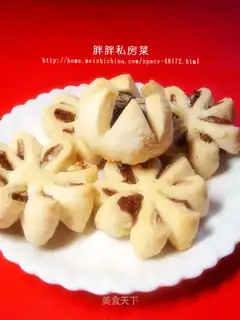
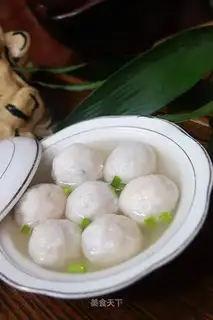
Fujian snacks
EfrainKautzer
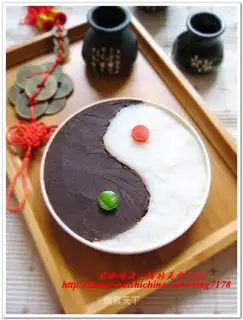
Must-eat Fujian cuisine list-[Tai Chi Taro Mashed]<br /> Taro has always been a delicacy on the plate. [Tai Chi Taro Mashed] is one of the traditional sweets of Fujian cuisine. It is often found at banquets during auspicious times in Fuzhou. There is an interesting anecdote to its fame: in the 19th year of the Daoguang reign of the Qing Dynasty (1839 AD), when Lin Zexu went to Guangzhou to ban smoking as an imperial envoy, consuls from Britain, Germany, the United States, Russia and other countries specially prepared Western-style sleeping mats to "entertain" Lin Zexu in an attempt to embarrass Lin Zexu while eating ice cream. Afterwards, Lin Zexu also held a sumptuous banquet to "repay" these consuls. After a few cold dishes, a plate was served with a dark gray and shiny color, dark brown and smooth, like two fish lying in it without steaming, just like a cold dish. A foreign consul picked up a spoon and scooped it into his mouth. His eyes were so hot that he couldn't even spit out. After hearing another "squeaking", he saw another consul's lips also burned out. A red "lace" was also formed, and the other guests were stunned. At this time, Lin Zexu stood up casually and introduced: "This is a famous dish in Fujian, China. It is called Taiji taro paste." From then on, this dish became famous far and wide. <br /><br />This dish is shaped like Tai Chi. The white taro paste and brown bean paste are curved and coiled to form an interesting contrast. The red and green cherries seem to make the pattern full of dynamic and festive colors, making it lovely. [Tai Chi Taro Mashed] is a festive beet with auspicious patterns and is very suitable for festive family banquets or wedding banquets. There are also practices to sprinkle dried fruits such as red dates, melon seeds, and winter melon strips on them to increase the festive effect. <br /><br />Taro is sweet and flat in nature, and has the effect of eliminating mala and resolving masses, replenishing qi and kidney, and replenishing deficiency and injury. It has a certain nourishing effect for people with weak constitutions. Lard is used more in vegetables, and it is not advisable for the elderly to eat more.
MeganeRuecker
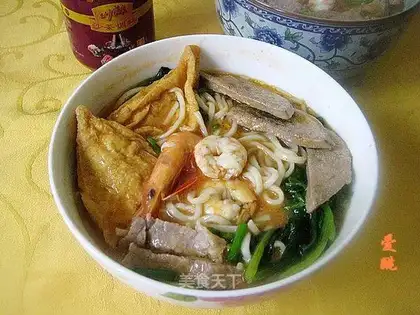
I have eaten many noodles, but my favorite is Xiamen's Shacha noodles. <br />It has been many years since I left Xiamen. Every time I go back, I have to eat Shacha noodles. Once, I met with old classmates and went to a time-honored brand next to Zhongshan Road to eat Shacha noodles. <br />Shacha noodles, the soup color is red and bright, the taste is salty, fresh and spicy, and the nutrition is reasonable. The taste is salty, fresh, spicy, and a little sweet.
SteveWilderman
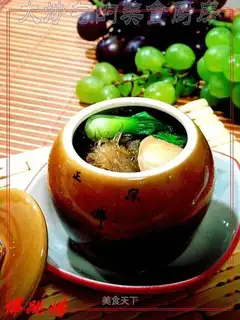
"Fujian Cuisine" is one of the eight major cuisines in China. Its most famous one is a famous dish at home and abroad called "Buddha Jumps Over the Wall." <br />"Buddha jumps over the wall" is both "burning eight treasures in an altar" and "blessing and longevity". It was founded in the early years of the Qing Dynasty, and its birthplace was the "Juchun Garden Restaurant" in Fuzhou City, Fujian Province. <br />When the masters created this dish, the owner named it "Tanshao Babao", and later changed the name to "Fushou Quan" for luck. "Buddha Jumps Over the Wall" is an elegant name given by literati and literati temporarily while drinking. Unexpectedly, it has been used and passed down to this day! <br />At that time, in the "Juchun Garden Restaurant" in Fuzhou City, Fujian Province, our country, it was very famous for cooking this dish, and some literati and literati came here famous. After tasting it, these literati praised it and inevitably used poetry to add fun. This was an ancient custom. <br />Once, scholars took turns writing poems. One of the scholars wrote a poem saying: "The altar rises and the aroma of meat wafts around the neighborhood, and the Buddha hears that he has abandoned Zen and jumps over the wall." It means that the aroma of this dish is so tempting that even after the "Buddha" smells it, it will activate its mortal heart, haha! <br />Don't be so boring, let's get back to the main story. Today's first sketch will be the famous "Buddha Jumps Over the Wall", the first flavor of southern Fujian. Let me make it clear in advance here that because the materials are not complete, there are two raw materials missing. One is tendon and the other is sea cucumber. However, it doesn't matter. It's just a point here, and the production at home is not so rigorous. Take this opportunity, I'll drink a bowl to replenish it first, haha! The main practices are as follows;