Soak pickles
JakobSwaniawski
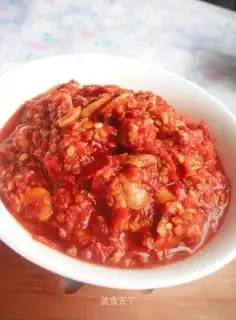
In Sichuan and Chongqing, most people make bean paste (directly called "Douban") to prepare home-cooked dishes. The raw materials of home-made watercress are basically the same as those used in Pi County watercress. The latter is mainly industrial mass production with special formulas, complex processes and higher production requirements; while the former has relatively simple processes and no restrictions on the production environment and venue, making it suitable for family production. <br />The ingredients used in the bean paste I make myself are fresh and sufficient, healthy and hygienic, and do not contain any pigments or additives. The finished product tastes more fragrant than the one I buy. When frying, the pan will not be cooked (the bottom of the pot will be pasted). The dishes made are red in color and bright and fragrant. When buying Pi County watercress from outside, you have to open your eyes and choose products from well-known large factories, otherwise you will accidentally buy something that is not authentic. I still have lingering fears about the bean paste and chili paste I bought from abroad. Back then, many unscrupulous factories used "Sudan red" to reduce costs and improve color. Some would add flour and other raw materials to reduce the amount of chili peppers. The color of the bean paste darkened and completely lost the red luster of the red pepper itself. <br />Douban is made every year or two. As long as the prepared Douban is stored properly, it will become more and more fragrant, and there will be no problem leaving it for a few years. I am used to eating my own bean paste, and no matter how troublesome it is, I want to make it myself. I don't waste much time thinking about it. Compared with the long time that it used to take time and effort, it only takes a few hours to make it once, but it can be eaten for a year or two or even three years. Moreover, the production process is also an enjoyable process. <br />I often think of all the processes I used to help my mother make home-made watercress at home when I was a child: cutting bean (broad bean) petals->peeling the shell of bean bean->WO watercress (fermented Aspergillus flavus)->beating sea peppers (peppers)->making watercress paste jar. This series of tasks is usually completed in the summer. I thought I was small at that time, sitting on a small bench with a long bench high in front of me. The basin on my left hand contained whole beans. A small basket was placed under my feet. I grabbed a handful of beans with my left hand. Holding a small machete in my right hand, using my thumb and index finger to fix the beans under the cutting blade, and then "pop" it on the bench. The beans were cracked into two intact from the middle. With a loose finger, the beans fell into the basket under my feet, and it took only a short amount of effort to knock one or two kilograms. Then soak the bean beans with clear water, peel off the bean shells, drain the water, and when it is half-dry in the sun, pick fresh tree leaves or pumpkin leaves, take a large dustpan made of bamboo, and evenly spread the leaves on the dustpan, then evenly spread the bean beans, then cover with two layers of tree leaves or pumpkin leaves, and place them in a cool place to grow mold (Aspergillus flavus). Wait until the watercress grows green and black mold hairs (not the mouldy mold), the mouldy watercress will be ready. Moldy bean beans do not need to be washed. They can be soaked directly to make bean paste, or they can be dried and used again. If stored properly, they can be preserved for several years. Now, there is no longer this fun, because you can buy Wow-ready Wow-bean beans in the market and use them directly after soaking them soft, saving the very troublesome process of cutting Wow-bean beans. When I returned to my hometown this year, I actually saw that when I was a child, I was sitting on the stool where I was cutting mustache beans. It was still the same, the same color, and still as strong. My father said that he had this stool when he was a child. It seems that this stool will be fine for 100 years.
MargotGerhold
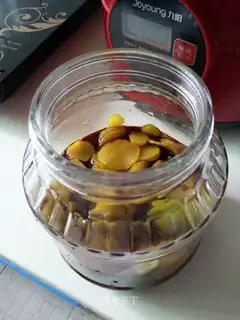
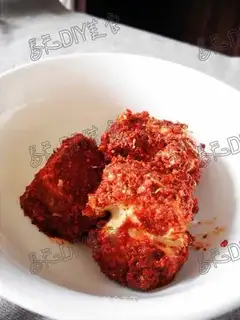
Half a month ago, my uncle and cousin's family came to my house as guests. Every time they come, I will make a big table full of hometown delicacies and let them feast on them. <br /><br />My uncle joined the army and left home at the age of 15. After five years of self-study, he was admitted to Harbin Institute of Technology. After graduation, he has been engaged in radar work and teaching at the Military College, and followed him to move south and north until he finally settled in Yantai. Uncle is now 80 years old. He is in strong body, coordinated movements, quick thinking, clear speech, neither too fast nor too slow, and always smiling. At first glance, he looks at most in his 60s. As usual, I chatted with my uncle about hometown, relatives and friends, fishing, and delicious food. While chatting, my uncle asked me if I still had tofu curd at home. I went back to my hometown this winter to celebrate the New Year but didn't make it. My uncle said he wanted some of the fermented tofu I made because the fermented tofu I made had the same flavor as the one his father made when he was a child. He didn't want more, just a small bottle would do. Uncle said this several times in the morning, and his face was full of happy memories and longing. Looking at him, my nose couldn't help but sour, and my eyes immediately felt moist. I quickly said that the temperature is not high yet, so I can still do another round. I said to myself: Uncle, from now on, I will make it for you every year. <br /><br />Now I finally understand why I always like to rush around making snacks from my hometown every year. In addition to wanting to eat, I also want to regain my childhood feelings and brew my thoughts for my parents and relatives in the process of making them. <br /><br />We usually call fermented bean curd fermented tofu or moldy tofu. In previous years, when I made fermented bean curd, I liked to wrap it in wilted Chinese cabbage leaves and seal it up, so that the fermented bean curd is easy to store and is not easy to squeeze and deform. This year, tofu can still be moldy while the temperature is low, but Chinese cabbage cannot be processed. So I decided to leave the fermented bean curd naked. For easy picking, I washed out a glass pickle jar so that when I used chopsticks to hold it, I could clearly see the position of the fermented bean curd inside and maintain its integrity.
GeorgianaKessler
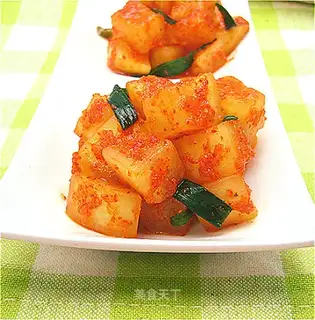
When you are tired of stir-fried food and fried food; when you don't know what to eat, simply making a spicy radish piece is a good choice. <br /><br />Except for the longer marinating time, the rest is very simple. <br /><br />In my hometown Fushun, there are many Korean people, so Korean dishes are very popular in our country. <br /><br />Perhaps it is because in order to cater to the tastes of Han people, the Korean dishes I have eaten since I was a child without seafood. Therefore, the spicy radish pieces I made did not add seafood (such as shrimp paste, snow fish maw, fish sauce, etc.). If you want to eat seafood flavors, you may as well add them according to your own taste when making them------