aphrodisiac
ElliottFritsch
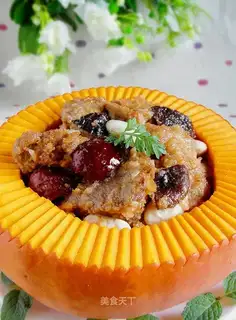
In winter, people start taking supplements in order to resist cold. At the same time, they need to reasonably mix some ingredients suitable for winter but tonic in their daily diet, so as to better increase nutrition and improve immunity. <br />In addition to protein, fat and vitamins, ribs also contain a large amount of calcium phosphate, bone collagen, bone mucin, etc., which have high nutritional value and can provide calcium for children and the elderly. It has the effects of nourishing yin, strengthening yang, replenishing essence and replenishing blood. <br />Golden melon is rich in nutrients and is rich in starch, protein, carotene, vitamin B and other ingredients. It has high nutritional value and has the effects of nourishing the middle and replenishing qi, clearing heat and detoxifying. It can be eaten by ordinary people and is especially suitable for spleen deficiency, weak qi, malnutrition and other diseases. <br />Mushrooms are known as "mountain treasures" and are very beneficial to human health. It not only enhances the body's immunity, but also helps children's bones and teeth grow. It is also a unique food that corrects enzyme deficiency in the body. <br />Red dates are warm and sweet, and contain protein, fat, sugar, calcium, phosphorus, iron, magnesium and rich vitamins. In addition, they also contain carotene, etc. They are very rich in nutrients and can nourish blood circulation, calm the mind, educate and brain, and enhance appetite. Improve human immunity. It is known as "natural vitamin pills". <br />Golden melon ribs-After a long period of steaming, the ribs fully absorb the fragrance of the golden melon, and also penetrate the soup and meat aroma into the golden melon. This dish is rich in nutrients, has a refreshing aroma and delicious taste. It can be eaten by the general public. It is especially suitable for people with insufficient qi and blood and yin deficiency.
NoemiLangworth
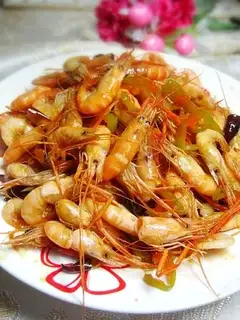
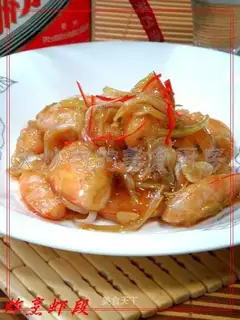
"Fried Shrimp Section" is a high-quality dish that is quickly fried in Shandong cuisine. It was brought to Beijing by Shandong masters very early. "Fried Shrimp Section" used to be a special dish in the "Dianfu Building", one of the famous "Eight Buildings" of Shandong cuisine operators in the capital. It was also a representative dish of the birthplace of Shandong cuisine on the Jiaodong Peninsula. <br />Many people misunderstand "fried shrimp section" as "Beijing cuisine". In fact, it is not. It is an authentic Shandong dish. This dish was originally brought to Beijing by a Shandong chef surnamed Li from "Anfu Building", one of the famous "Eight Buildings" that runs Shandong cuisine in the capital. The address of "Anfu Building" before liberation was opened in the current location of Wangfujing Department Store. It was founded by the father of Mr. An Yunqing, a native of Shandong. <br />"Anfu Lou" gathered a group of top chefs among Shandong cuisine. The place was famous for its crispy coriander, fried cooking, scorched, white stewed, braised, etc. However, with the passage of time and historical changes,"Anfu Tower" has long disappeared in the long river of history! <br />The "Anfu Tower" before liberation was not like this. At that time, it was a famous top restaurant in the capital! There used to be a saying in Beijing called "Wufu, Wenxing", which means that Anfu Tower is a place where generals gather, while Dongxing Tower is a place where officials and dignitaries gather. <br />The regular visitors to "Anfu Tower" at that time were all wealthy descendants of the Qing Dynasty and princes and aristocrats, such as the Aisin Gieluo family, dignitaries in the late Qing Dynasty, leading figures in the Beiyang warlords, and later confidential personnel of the Kuomintang army. The most famous among them are Yuan Shikai's son Yuan Kedin, Fengxian warlords Zhang Zuolin, Duan Qirui and Wu Peifu, and later the chief spy agent "Kawashima Yoshiko" under Kenji Toiwara, chief spy officer of the spy chief during the Japanese invasion of China. <br />Kawashima Yoshiko, also known as Jin Bihui, was the 14th princess of Prince Su Shanqi in the late Qing Dynasty. Her name was Aixinjue Luo• Xianyu, and her name was "Jin Bihui" in the Han Dynasty. Everyone in the restaurant from the owner to the waiter called her "Jin Siling". Jin Bihui and Yuan Kedin both like to eat this "fried shrimp section", which is a must-order dish at every banquet. <br />There are many such historical stories in the "Anfu Tower". Later, after Japan surrendered, the "Anfu Tower" was forced to exchange it and changed its owner due to its political involvement. However, it continued to use this brand name until it continued to operate until the eve of liberation. It was officially closed. This historical story will be hidden for the time being, and I will talk about the old past of the "Eighth Building" in the capital in detail in the future. <br />"Fried shrimp section" is one of the traditional representative dishes in Shandong cuisine. It is quick to make and delicious. It is a quick stir-fried dish among Shandong cuisine. Today, Da Chao Shao cooks this time-honored and exquisite "fried shrimp section". The main methods are as follows;
ScotFerry
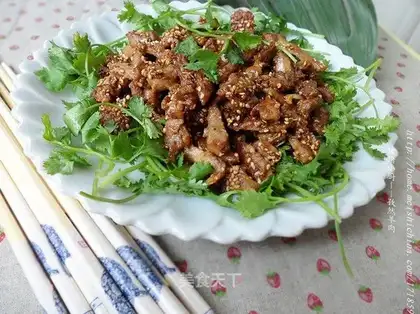
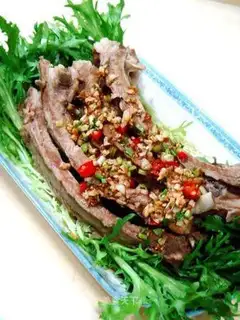
Ingredients: Angelica dahurica,beef tendon,cooking wine,sesame oil,soy sauce,onion,Jiang,garlic,octagonal,grass fruit,cinnamon,pepper,geranyl,clove,nutmeg
BufordD'Amore
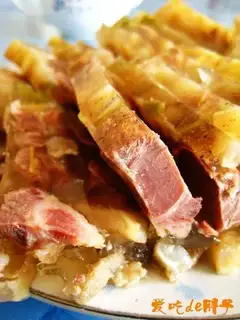
"Hand-grabbed mutton" has a history in our country for thousands of years. It used to be a good delicacy for nomadic people. "Hand-grabbed mutton" is most famous in my country's Inner Mongolia, Northwest China, and Qinghai-Tibet areas. It is also a big dish for friends from ethnic minorities and is very popular among Muslim friends. <br />"Hand-grabbed mutton" has its own special ingredients and practices in various places. Although there are slight differences in taste, the main practices are generally the same, except for slight differences in the use of condiments. <br />In the past, making "hand-grabbed mutton" was generally stewed with a casserole similar to a large urn. Later, in some places, large aluminum pots were used, but iron pots were never used because iron pots would oxidize some medicinal ingredients., and thus lose their due nutritional value, which is similar to boiling Chinese herbal medicine. Sand pots must be used. <br />The making of "hand-grabbed mutton" is very particular. Generally, ingredients must be poured into the soup according to the seasons. In winter, some regional specialties, such as tonics such as "wolfberry", should be put in the stewed mutton soup. In the spring and autumn seasons, Astragalus membranaceus and tangerine peel should be put in the soup, which can remove dryness and reduce the calories of the mutton, so as to achieve the warming effect. It does not taste as much as the calories in winter. In ethnic minority areas,"hand-grabbed mutton" is also eaten in summer, but relatively less. "Sheep" usually choose lamb meat. Generally, it is stewed with the whole rib in the waist of the sheep. The meat should be fat and lean to taste delicious. The rib of the sheep should not exceed the thickness of the tip of the little finger. Cook the mutton and dip it in the seasoning and eat it. <br />The one I made today is a "hand-grabbed mutton" in the spring and summer season. I put a small piece of astragalus and tangerine peel in the soup. I won't feel angry when eating it in this season. Based on summarizing the practices in the northwest, I made simple improvements in the use of condiments. It is also relatively easy to make and is most suitable for family production. Since there are no large-size casseroles and aluminum pots at home, I used a stainless steel pot instead for the time being. After preparing it, I had to switch it from the pot to the container immediately. It should not be stored in the stainless steel pot for too long to prevent the raw materials used in it. Oxidation. The specific practices are as follows;
RobertoSanford
Dyed black rice appeared on the market. I searched the Internet and now I teach you a few tricks on how to identify true and false black rice:<br /><br /> The first move is to look at the shine. Normal black rice has luster on the epidermis, but inferior black rice has no luster. <br /><br />The second trick is to look at the skin. For normal black rice, what is picked up with your hands is a flake, but if it is powdery, it is inferior black rice. <br /><br />The third move is to look at the heart of the rice. The core of normal black rice is white, while the core of ordinary rice is transparent and has no color. Although black rice dyed with rice has a relatively uniform appearance, the color of the dye will penetrate into the heart of the rice. <br /><br />The fourth trick is to soak rice water. The rice soaking water in normal black rice is purple-red, and after dilution it is also purple-red or close to red. If the water soaked is like ink and remains black after dilution, this is fake black rice. <br /><br />The fifth move is to watch white vinegar. Black rice water turns green when it encounters alkaline substances, and turns deep red when it encounters acidity. If ordinary citizens have questions about the black rice they bought, they can test it with vinegar. Because vinegar is acidic, if black rice water does not react chemically or discolor when encountering acetic acid, it must be caused by the dye. <br /><br />Han Longzhi, Institute of Crop Science, China Academy of Agricultural Sciences: "If it is dyed, the color will look very uniform. If it is not dyed, the color will not be too uniform. It will be dark and light." <br /><br />Experts say that we should also look at the "second whites" of black rice. The first "white" among the "two whites" is the germ part of black rice. It should be a white point. Although the rice is black, this part should be white.; the second "white" refers to the section of broken rice, which must also be white.