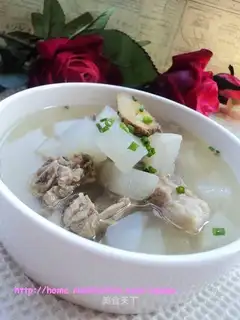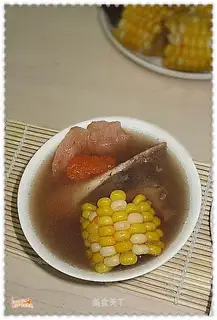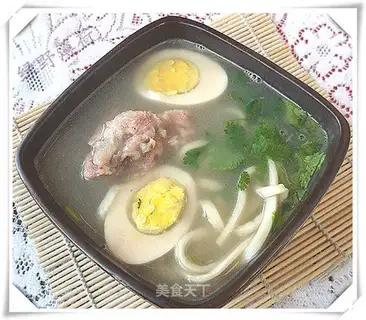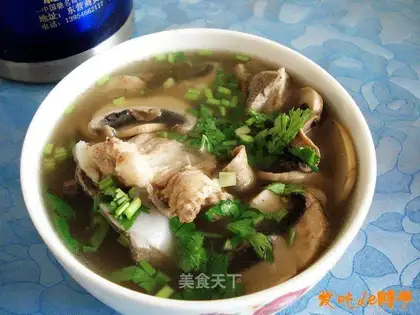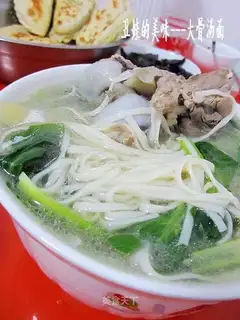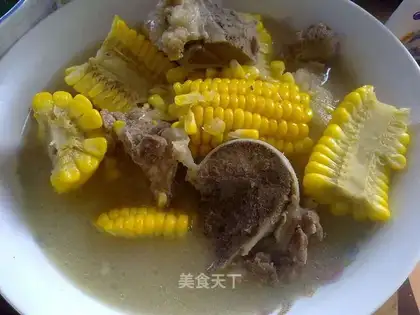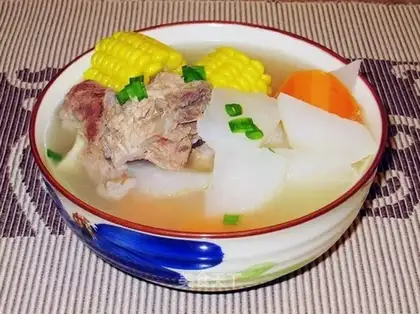
Red and white radish bone soup is also a classic soup in my family. <br />Recently, various statements about "food collocation taboos" have become very popular. One of the more typical statements is "white radishes and carrots cannot be eaten together","cucumbers cannot be eaten together with tomatoes", etc. <br />This kind of combination is very delicious, but can't you eat it like this? I finally found data to refute these fallacies. <br />Myth:<br /> Because the content of vitamin C in white radish is very high, and carrot contains a vitamin C decomposing enzyme, which can destroy the vitamin C in white radish. When the two meet, the vitamin C in white radish is severely damaged, and its nutritional value is naturally greatly reduced. <br />Cucumbers contain a vitamin C-decomposing enzyme that destroys vitamin C in other vegetables. Tomatoes are typical vegetables rich in vitamin C. If the two are eaten together, the vitamin C absorbed from tomatoes will be destroyed by the decomposing enzymes in cucumbers, and the effect of supplementing nutrients will not be achieved at all. <br />Criticism:<br /> In fact, the vitamin C content in white radishes and tomatoes is not high, while carrots and cucumbers also contain vitamin C. <br />The vitamin C content per 100 grams of edible parts is 21 mg in white radish, 16 mg in carrot, 19 mg in tomato, and 11 mg in cucumber. <br />The content of vitamin C in vegetables is relatively high, including peppers, bitter gourd, cauliflower, mustard greens and rapeseed moss, with more than 60 mg per 100 grams of edible parts. If you can't eat it together just because you are afraid of vitamin C being destroyed by vitamin C-decomposing enzymes, you can't eat it with carrots and cucumbers, and you can't eat it with white radishes or tomatoes! <br />On the other hand, the enzyme that decomposes vitamin C is even more heat-labile than vitamin C. In boiling water, before it can destroy vitamin C, you are already destroyed. <br />Why does the food we eat contain more or less vitamin C? Because vitamin C is also critical for plant growth. Researchers found that GDP-L-galactose phosphorylase produces vitamin C in plants, an antioxidant that helps plants resist the stress of drought, ozone and ultraviolet light. <br />Why do carrots and cucumbers contain vitamin C decomposing enzymes? There is an enzyme that produces vitamin C in plants, so there will be vitamin C-decomposing enzymes in plants to balance it. So I think it's not just carrots and cucumbers that contain vitamin C decomposing enzymes. <br />Since there is no harm in cooking white radishes and carrots together, is there any benefit? The benefits are very large. Both beta carotene and vitamin A protect vitamin C from oxidation.
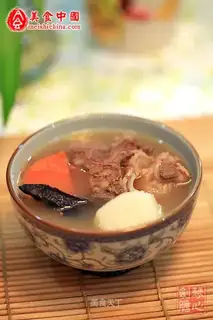
When it comes to Cantonese food, there is naturally a hot soup. As the saying goes, a chef can make a pot of soup, but a master of Cantonese cuisine cannot make soup, so he should not be a master. Cantonese soup has become a representative of culture. Drinking a bowl of Laohuo soup when you go home from work every day is a manifestation of family harmony and represents a kind of care. Cantonese people usually drink soup before eating. However, since we are all working together now, Guangdong's Laohuo soup takes a long time to cook. Gradually, it is not necessary to drink soup before eating. It can be after a meal, or it can be eating out and going home to have a sip of soup. All in all, Laohuo Soup has deeply affected the lives of Cantonese people. Today, I want the simplest carrot Huaishan pork bone soup. It tastes clear and sweet and can strengthen the spleen and stomach the stomach. I also added some Ganoderma lucidum to the soup, which tastes good.