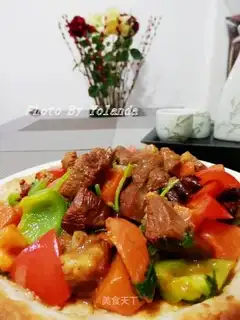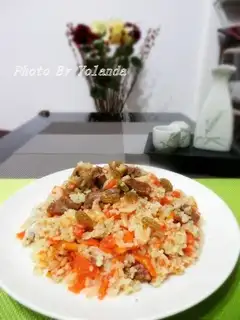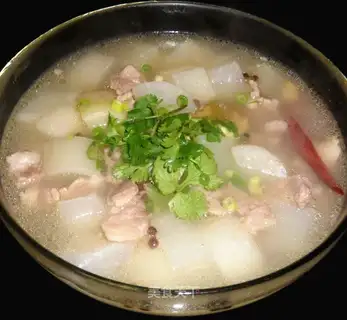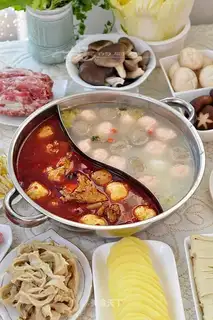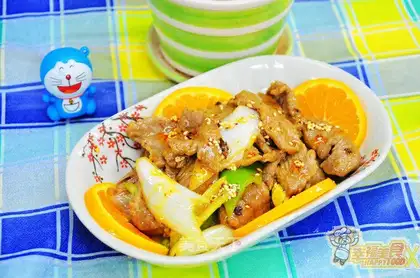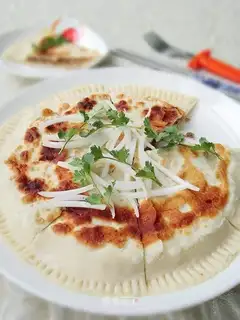
Xinjiang's lambs, because of their particular geography and climate, have become of high quality and tasteless. Urumchi's favorite is lamb. Many Mainlanders, who do not like lamb, have come to Urumqi to compliment Xinjiang on its beauty, and Xinjiang have done so well. This lamb pancakes is also one of the practices of lamb, and the unique combination of lamb and pasta reflects the combination of food and food of the Xinjiang people, both staples and dishes, and the perfect combination of lamb and noodles. This food is available in Xinjiang's Qinghua restaurant and hotel. The big, clean hotels usually put onions and a cold sheep belly on top of lamb pancakes, so that they can both depurate and cook. I've had this lamb pancakes, and it's so hot, red pepper oil in it, and it's red with all the white onions. But the pizza was fried, and it was so glamorous, so glamorous, so pitiful, so greasy that it would be decorated with onions and hot sheep. I've made it a little bit better, and I've made it fried. It tastes the same. Onions are nutritious and smell hot. It stimulates stomach, gastrointestinal and digestive glands, promotes appetite, promotes digestion, and has no fat onions, which contain a mixture of sulfur-containing compounds that can reduce cholesterol, and can be used to treat indigestion, appetite and internal consumption。
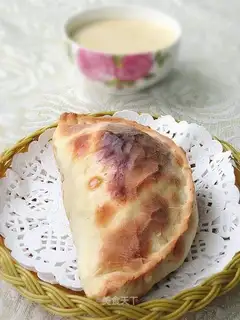
most people in the interior of xinjing's pit baked buns do not know, know or know about this unique practice, much less the taste of it. i baked buns in the oven last time. a lot of friends said they hadn't met, let alone ate. i remember a friend who played with foods who left me a message saying that his family came to xinjing for business, bought $200 for buns and pit meat every time they went back, heated it with ovens, that his family particularly liked to eat, that his lamb was so good, that she had to come to xinjing to taste the unique food of xinjing. it is a specialty of wada and a high-nutrient food produced in the desert environment. it's called "desert pancake." it's a little bit different in terms of buns, which are thicker and shaped like moontooths. many people don't know what it is. in the fields of the south frontier, the size of this kumachi is determined by the size of the man, and when it is finished, the qumachi twig sets fire with a hawl or a red willow branch, and when the fire is extinguished, then the qumaki twig is buried directly in the hot ash. about an hour later, the qumaki twig is removed and the dust is taken out, and a golden “kumei twig” is born. eat with a knife and cut into a triangulation. a kumachi man with a bowl of milk and tea can eat well. it is said that it ate kumechchi and that it would not catch the cold the next day without sleeping in the desert. as can be seen, the high heat and high nutrition of kumejis is well known by tourists as “desert pizza”. “kumaji” is an old-fashioned way of baked tungsten, which is called “kumaji” when the locals omit the word “tao”. in uighur, “kumaji” means bake cake because it is made in a unique and delicious way and is popular. according to ray, a senior editor of xinjiang's food industry, the most primitive cucumber is a big croquettes, which now have moontooth shapes, an improved modern version of the “comerchexium”。
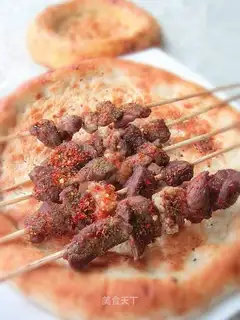
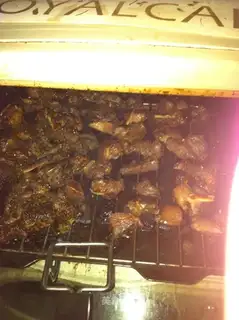
The lamb, the Qinjiang, the lamb...'" In the saloon, the scent smelt into your nose. “The lamb string has to be roasted with charcoal!” - In people's sense, only Xinjiang's roasted meat string is authentic, and only the tunnel. It's both a street-flavored fast meal and a good meal for visitors. It's called "Kavavve" in Uighur. There's a "Mitr kavav" in the garage, and it's a good food. Xinjiang's meat string is unique for two reasons. One is that Xinjiang has a good breed, which is closely related to Xinjiang water and pasture conditions. Like Altai's goats, Baringbrook's sheep, are the best-quality lambs, and the other one, Xinjiang's roasted lambs have been selected with special spices. These two conditions are unique, and the rest of the region is not available ... roasted lamb can be described as a Qinjiang traditional snack throughout the country, and the real roasted lamb is roasted on a specially made roasted bowl, using smoke-free coal as fuel. The red willow willow for the barbecue. Subsequently, the roasted lamb was transmitted throughout the country, with Xinjiang ' s most authentic. Shanghaiers, who are said to be reluctant to eat lamb, will also reach out their thumbs at Xinjiang's roasted lamb string: “It's delicious”. Xinjiang's real lamb string is usually made of white onions and salt pickers, and picks some of the fat, and a percentage of the fat tastes even more beautiful and eats nothing. It's important that lambs cut pieces of mahjong size instead of pieces. A string of five pieces of lamb and five pieces of meat, and it's roasted back and forth. If you use a piece, you burn it, you lose the moisture, you get dry, you lose your appetite. In fact, the Xinjiang don't like to call it a lamb string, and usually when they go, they call the boss, "Five sets of barbecue!" Many families in Xinjiang now have little iron stoves, which, every summer, raise coal-free, place them at the door of their own unit, bake lamb strings, sit on the floors of relatives and friends, and have a large bunch of roasted meat with beer. I wanted to bake it outside, it was cold out there, it was too cold, and I baked it in a oven。
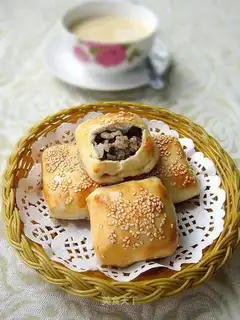
Baking buns (known as “salmsa”) and skin buns (known as “Petermansta”) are foods preferred by Uighur compatriots. Every morning a bowl of milk tea and two baked buns were their nutritious breakfast. The Han people do the same, except to go to a bun store for their fellow Wei, where they pack “two buns”, as they often say. If you say I want lamb buns, it must be a stranger who doesn't know the customs of Xinjiang, which is made of lamb. The simplest approach is fresh lamb, which must be half of the goat's leg and half of the goat's oil, so that the onion (the skin teeth of the Xinjiang people) eats a special flavor, and the onion must be white, and it must be cut, so that the lamb must be cut. Such a little ding, a roasted bun bites it, it's fresh, it's oily, it's shiny. This is the characteristic of Xinjiang's cuisine, “oily” (many outsiders say that Xinjiang food is too greasy, but it is related to Xinjiang's geography and climate. It's not the dry-ass type. The buns like that eat up the cocoon. The taste of Xinjiang's lamb, with no more sauce, with pepper powder and tweak powder, is not Xinjiang's taste. And the shape of the bun has been a shape since ancient times, and that's square. The real buns are baked from the pits, and now there's ovens that you can make at home, but the only thing that's different is the ovens that are baked, and the taste is different, and the pits are baked from the fragrance, the natural smell. It doesn't taste like that. I used to bake it from my home in an oven and brush it with egg fluid, but the real roasted bun in a pit does not brush egg fluid, so it's for the good, and it's for the good, and it's not for the taste of a pit. So many special foods in Xinjiang are impersonable unless you haven't eaten the special foods of Xinjiang, and the ones that are lost. Both types of food are purchased in restaurants, food stands and alleys in towns and villages in Xinjiang, such as the Beijing meatloaf and Tinjin dogs, which are popular with customers. It's funny, when a thin-skin wraps steamed, or baked buns were taken from the pit, the cooks often raised their throats and shouted, "Ibra." Alexa wood buns. Alex Rawood was a famous cook hundreds of years ago. He made buns and buns. So the latter took his name as a sign for a customer。