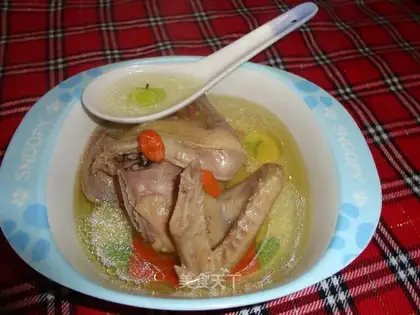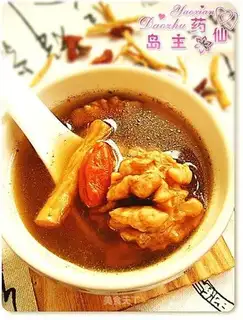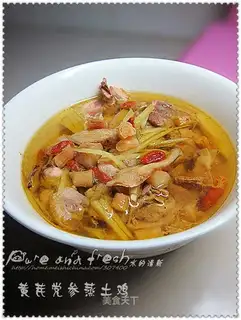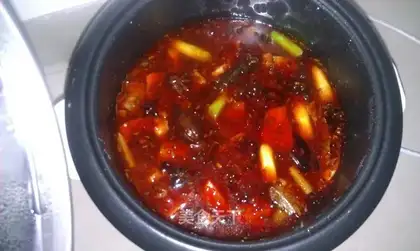
Qi is a precious traditional Chinese medicine and one of the important green health products in modern people's lives. The main effects of Huangqi are: replenishing qi and lifting yang, consolidating the surface and stopping sweating, supporting poison and promoting muscle growth, promoting water and swelling, enhancing the body's immunity, regulating metabolism and other functions. It has both high medicinal value and rich nutritional value. In the Compendium of Materia Medica, Huangqi is listed as the top grade of the classics and is the strength of tonic medicine. <br />[Purpose] It is used for qi deficiency in the spleen and stomach; qi deficiency in the spleen, subsidence of the middle qi, and sagging of organs (rectosis, uterine prolapse, gastroptosis, etc.); weak lung qi, leading to asthma and short qi; qi deficiency and spontaneous sweating, which is easy to catch a cold; qi deficiency and edema, poor urine; deficiency of qi and blood, anemia and yellowing, or limb numbness, or sores, creation that are difficult to heal; diabetes (diabetes). <br />Effect of Codonopsis pilosula:<br /> Buzhong, replenishing qi, and promoting saliva. <br />Treat weakness of the spleen and stomach, deficiency of both qi and blood, fatigue and weakness, lack of food, thirst, prolonged diarrhea, and rectal prolapse. <br />Effects of Tianqi:<br /> Stop bleeding, dissipate blood stasis, reduce swelling, and relieve pain. <br />Treatment of hematemesis, hemoptysis, hematochezia, bloody diarrhea, uterine bleeding, abdominal mass, postpartum blood halo, lochia, falling and bleeding, traumatic bleeding, carbuncle swelling and pain. <br />Effects of red dates:<br /> 1. Strengthen the spleen and nourish the stomach: weakness of the spleen and stomach, diarrhea 2. Strengthen the qi and nourish the blood: Red dates are a good tonic. Red dates are often added to the dietary diet to nourish the body and moisturize qi and blood. Dr. Sun Andi of Immunology at National Taiwan University strongly advocates that eating more red dates, astragalus, and medlar can enhance the body's vitality and enhance immunity. 3. nourishing blood and tranquilizing the nerves, soothing the liver and relieving depression. 4. Relieving medicinal properties: Red dates are often used in prescriptions with strong medicinal properties to reduce the side effects of strong drugs and protect healthy qi.
Codonopsis pilosula can nourish the middle and nourish qi, invigorate the spleen and nourish the lungs. For spleen and lung weakness, shortness of breath, palpitations, lack of food and loose stools,<br /><br /> Asthenia and coughing, internal heat and thirst. <br /><br />Walnut is used for low back pain due to kidney deficiency, weakness of feet, frequent urination, impotence of seminal emission; weakness of lung qi or deficiency of both lungs and kidneys,<br /><br /> Gasping, coughing and short breath; dry intestines, constipation, dry stools; stony, poor urination, etc. <br /><br />It has the effects of astringent, nourishing, strengthening and strengthening the spleen and stomach.
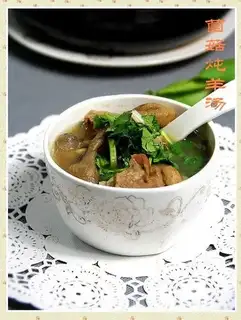
"Sheep soup" has a long history in my country's food culture. It is said that the habit of drinking mutton soup was established in the Central Plains of my country during the Xia and Shang Dynasties. <br />"Sheep soup" is found in many areas of our country and was first spread to the Central Plains by nomadic peoples. According to inspections, at present, there is a long history of making mutton soup in Jiangsu, Zhejiang, Sichuan and Shaanxi, northwest, and northeast areas. <br />There are many ways and varieties of "mutton soup", including nourishing forms, treating and preventing diseases, and general drinking forms. Therefore, the ingredients used vary depending on the function. The quality of sheep soup is determined according to the quality of the sheep. Sheep soup can be made from all parts of the sheep, but the best sheep soup still has bones and meat. <br />Today, I made an ordinary nourishing mutton soup. I put some mushrooms in this mutton soup, so it is called "Mushroom Stewed Sheep Soup". In addition, it also contains Codonopsis pilosula, wolfberry, longan and tangerine peel, which has certain effects of Yiyang, nourishing yin and replenishing blood. The sheep chose some broken bones with belt meat, but did not put in good mutton. These materials were all leftovers chopped from half a fan of mutton. It was a pity to discard the meat to eat, so they used it to make soup. In fact, there is still a lot of meat, haha! The main practices are as follows;
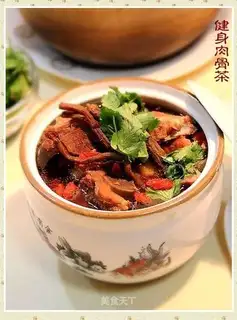
Working abroad is sometimes very busy. For lunch, go to a nearby Chinese restaurant and order a piece of meat bone tea and a plate of fried vegetables, coupled with a bowl of rice to make a good lunch. Among them, soup, vegetables, meat and vegetables are all available, which is fast and convenient. <br />There are many ways to make "meat bone tea", and the requirements for raw materials used in spring, summer, autumn and winter vary. Among them, there are dampness removing, health preservation, strengthening muscles, and making products for special customers with certain nourishing effects. "Meat Bone Tea" is also divided into different practices of Hakka people in Fujian and Hainan. The Fujian School focuses on nourishing, so the flavor of traditional Chinese medicine is relatively strong, while the Hainan School focuses on the spicy taste of pepper. Although the practices are slightly different, the main ingredients used are all the same, both of which are pork bones and pork. <br />"Bak Kut Tea" is in Fujianese, and its English name is Bak-Kut-The. It belongs to one of the delicacies of Southeast Asia. It is found in places such as Singapore and Malaysia. "Meat Bone Tea" is a soup made of pork and pork bones combined with traditional Chinese medicine. Its unique flavor is well-known overseas and is deeply loved by tourists and Chinese people from all over the world. Among them, Klang Pork Bone Tea is the most famous. <br />Legend has it that when Chinese first came to Nanyang to start a business, due to poor living conditions, people were far away from their homeland and could not adapt to the local hot and humid climate. The acclimatization caused most people to suffer from various diseases. For example, some tropical diseases such as rheumatism, malaria, summer heat, and local plagues are constantly eroding people's health, and the health of many people who are originally very strong are also starting to deteriorate. After falling ill, most people have no money to treat diseases, and just a minor illness kills people overseas. In order to protect themselves, people have begun to develop good prescriptions that can cure diseases, eliminate dampness and strengthen the body. Among the older generation of entrepreneurs, there were also some who understood medicine. They tried to use various local and self-carried Chinese herbal medicines, including fragrant leaves, pepper, lemon leaves, chicken bone grass, ginseng, overlord flower, gastrodia elata, astragalus, angelica, wolfberry, Codonopsis pilosula, etc. to cook medicines. According to different local seasons, climate change, and people's physical differences, several traditional Chinese medicine decoctions were formulated. However, the Chinese at that time were taboo to take medicine openly. They were afraid that locals and Western colonists would be ostracized in choosing jobs if they said that Chinese workers were unhealthy, so everyone called this medicinal soup "tea." At that time, these medicinal teas developed by our ancestors played a huge role during that period and also provided great health protection for the early Chinese immigrants to Nanyang. <br />As the stars moved by, people gradually began to adapt to the local climate and living conditions. Once, someone accidentally put pig bones into the medicinal soup. Unexpectedly, this medicinal soup with pig bones in it tasted very fragrant and delicious., unique flavor. Later, people specially adjusted the ingredients for making tea, and after continuous improvement, added some pork, and finally replaced it with pork ribs. After several years of inheritance, it became the famous delicacy "meat bone tea" that is now familiar to overseas Chinese. <br />To put it bluntly,"meat bone tea" is the same as stewed pork ribs in northern my country, except that a lot of Chinese herbal medicines are added and used to prepare the taste of the soup and achieve its nourishing effect according to different effects and seasons. It belongs to an authentic China medicinal food developed and contributed by the ancestors of overseas Chinese."Meat Bone Tea" can be eaten both meat and soup. It is a very delicious nourishing food. It originates overseas but has roots in China. <br />The ingredients I chose for this "meat bone tea" I made today are more suitable for warming the body and strengthening the body in winter. It has a certain nourishing effect. The main methods are as follows;