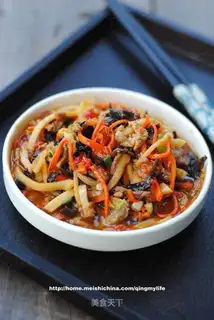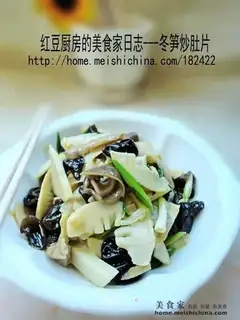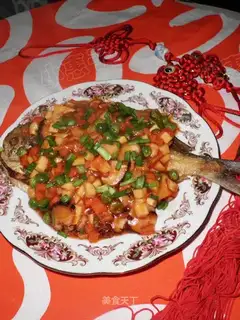
Nowadays, aquatic products stalls in major supermarkets in Beijing sell more cattle and white leaves. Cattle are ruminants. Unlike other livestock, cattle have four stomachs, namely the rumen, the reticulate stomach (honeycomb stomach), and the flap stomach, also called the louvered stomach and the abomasum. The first three stomachs have no gastric glands and do not secrete gastric juice. They are collectively called the forestomach. After cattle eat grass, they can be stored in the forestomach, then slowly pour straw and chew carefully, and then enter the main stomach for digestion. The fourth gastric abomasum, which is the main stomach, has gastric glands that can secrete digestive juice, so it is also called the "true stomach". The roughage and forage eaten by cattle are mainly decomposed into absorbable and usable substances by fermentation by microorganisms in the rumen, and then poured into the main stomach. The main stomach is also what is called the "tripe" in cooking food, and the flap stomach is one of the auxiliary stomachs of the cow called the "ox white leaf". <br />"Niu Baiye" has a sweet taste and mild nature. Traditional Chinese medicine calls it "can nourish each other in form. That is, what the common people often say, nourish whatever you eat, so it has the effect of replenishing the spleen and stomach. "Compendium of Materia Medica" says that it can play the role of "replenishing the middle and replenishing qi, detoxifying, and nourishing the spleen and stomach". According to other ancient Chinese medicine books, it also has the effect of "strengthening the spleen and stomach and avoiding food injuries caused by drinking accumulation", and can also moisten the lungs. From the perspective of traditional Chinese medicine theory, eating "Baiye" often is a way to "replenish the soil and generate gold". Therefore, the raw material "Niu Baiye" is an excellent raw material in preparing Chinese food. Its good effect must not be ignored. If cooked well, it will bring people appetite and enjoyment of delicious food! <br />When choosing beef louver, it is better to choose one that is tough and slightly fishy. However, veneers with thick meat and fragile meat must not be eaten. Most of these veneers have been expanded with drugs and look good, but they are not conducive to human health. After buying the "louver" back, it is best to soak it in clear water for more than 5 hours, then wash it repeatedly. After cutting it, blanch it with boiling water. After blanch it, it will be washed again with clear water. This can remove most of the peculiar smell and ensure the safety of food consumption. <br />Among the condiments used in cooking "Niu Baiye", it is better to use rice wine, and more pepper powder can be added appropriately to remove the fishy smell and enhance the freshness. When frying the pan, the amount of onions, ginger and garlic should be used in larger quantities."Scallion oil" can best improve the quality and aroma of the dish. Whether the beef leaf you cook is delicious or not depends entirely on the wonderful effect played by the onions and ginger! <br />Today, we will use "Niu Baiye" to make a private health dish called "Fried Baiye with Ginger and Scallion". This dish is extremely simple to make, but it tastes delicious. The details are as follows;
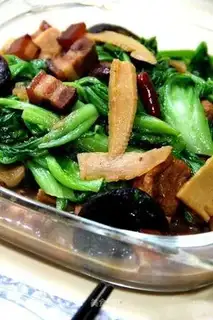
There are many varieties of "stewed dishes" in the north, but they are actually hodgepodge. It used to be common during New Year's Eve, but it's not easy to do it well. It takes a lot of effort to taste good! <br />"Stewed dishes" include assorted stewed meatballs, assorted stewed tofu, assorted stewed vermicelli, assorted stewed rice dumplings, assorted stewed seafood, assorted stewed belly liver, etc. <br />It is very important to make "assorted stewed" saucepans, that is, stir-fried saucepans. If the bottom is not cooked well, the taste will not be good. Today, I made a northern assorted stewed dish called "Meat and Vegetable Stewed Assorted". It used pork belly, fried bean bubbles, mushrooms, winter bamboo shoots, and green vegetables. The specific practices are as follows;
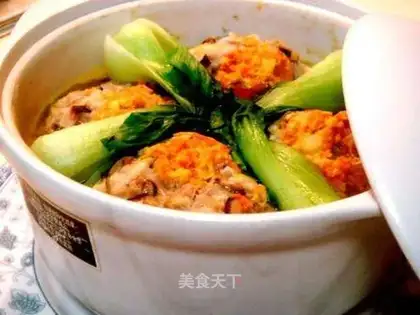
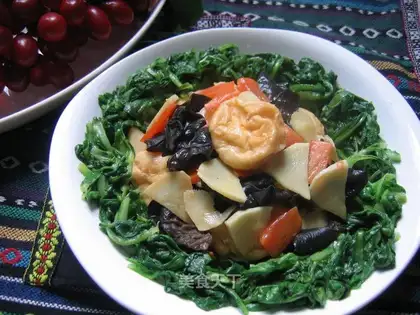
There is a private dish that is very popular among visitors,"Stewed Three Fresh Crab Meal and Lion's Head". Friends all feel that the taste is wonderful, so I specially introduce it to my dear friends online. <br />Lion's head is one of the most popular Yangzhou dishes. Lion's head is called big illegal meat in Yangzhou dialect, and it is called big meatballs or Sixi meatballs in northern dialect. The pork rib meat is chopped into pomegranate grains and made into meatballs. After being stewed over low heat, the fat on the surface of the meatballs is generally melted but not completely melted. The lean meat appears relatively convex, giving people a feeling of rough hair. Because the meatballs are large and rough on the surface, they are called "lion's head". <br />Yangzhou Lion Head has three cooking methods: clear stewed, clear steaming, and braising. As for the derivative varieties, there are many, including clear stewed lion head with crab powder, grilled lion head with river mussel, grilled lion head with chicken, grilled lion head with green vegetables, and grilled lion head with bamboo shoots. Other dishes are unique delicacies. <br />The crab meat lion head I made today is a dish I made for my family at a Spring Festival family banquet several years ago based on the crab meat lion head and supplemented with three delicacies as auxiliary ingredients. At that time, this dish was very popular with my family, so I specially used it as an alternative to reserved private dish. Its taste was more delicious than the authentic stewed crab meal and lion's head. Generally, I rarely make it on important festivals.
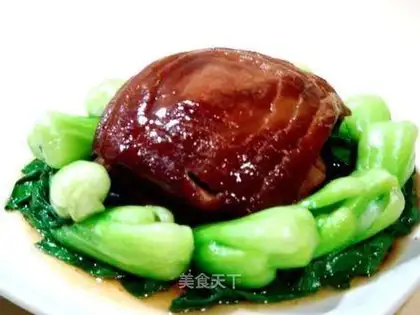
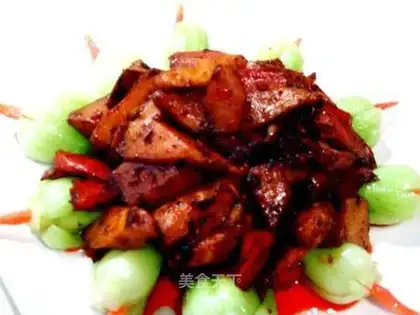
In the past, there was a big dish among the official dishes, called "Qianlianfu Braised Pork" and also called "Wanzi Braised Pork". In fact, the meat is cut into hob pieces with a knife method, and then restored to the meat. This kind of pattern is also called the "ten thousand characters pattern". It is a typical representative of the use of ten thousand characters to decorate the pattern in architectural decoration in ancient China. It is generally used on the lace and fork corners of buildings, and lace calls this pattern "Ten thousand characters are endless", meaning auspicious longevity. Decorate this pattern on the fork corners of the overall pattern to be slightly enlarged, and combine it with the close connection with the lace pattern, which means "everlasting life". This kind of pattern can only be used in the Imperial House. When decorating and modeling, it is generally drawn in a high specification with powder and gold, making the building highlight the splendid atmosphere. <br />In the middle and late Qing Dynasty, this pattern was used in the production of dishes. There were dishes decorated with this pattern at the famous "Manchu and Han Feast" and later the 70th birthday banquet of the Empress Dowager Cixi. For example, there are "Qianlianfu Braised Pork" and "Qianlianfu Sea Cucumber", etc. Later, government families also used this pattern to make dishes during festivals or celebrating birthdays for the elderly, mainly for good luck! <br />The method of "Qianlianfu Sea Cucumber" and "Qianlianfu Buffed Pork" are the same, except that "Qianlianfu Sea Cucumber" is the meat added with sea cucumber. The braised meat is placed in the middle of the plate, and the sides are surrounded by braised sea cucumber. The "Qianlianfu Braised Pork" is mainly based on braised pork, surrounded by cabbage hearts, giving the meaning of a long life. This pattern is often used to cook at general birthday banquets. <br />Today's dish is a big dish in the Spring Festival family banquet. The recipe is also very simple. The big fried spoon borrows the recipe from the official dish and calls it "Thousand Lianfu Ten Thousand Words Braised Pork", which means that everything will go well in the coming year and the family will be happy forever!
Ingredients: chicken essence,salt,garlic sprouts,winter bamboo shoots,black fungus,cooking wine,sesame oil,starch,sugar,water,pepper,dried chili,cooked pork tripe