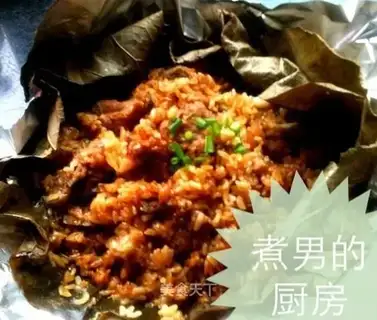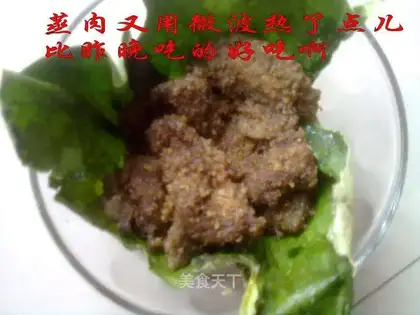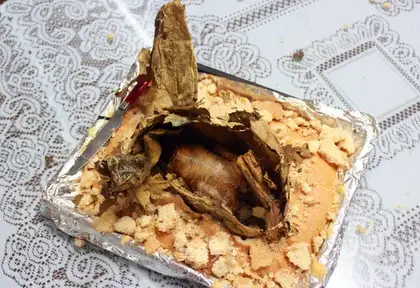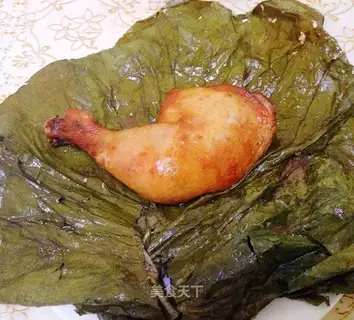
It's like he called Hung Qi from the TV show a long time ago. I couldn't do it at that time, and I never had the chance to eat it, and it was always a shame to watch TV, to see a guy who used flour and wine instead of mud and called a chicken. My God, that's exactly what I wanted. I changed the sauce, and then changed the tin paper into a leaf. For the sake of not wasting the experiment, I did it with only one chicken leg, and I didn't expect to see the moment when the noodles were broken, and the smell was going to float. I admit that I'm a food eater who likes food and has never had any resistance to it. Wine fragrance. It's so special. The chicken's fresh. They didn't use chopsticks. They ate their chicken legs. I don't drink much now, but I'm getting drunk with wine and noodles. If the chicken is baked, fortified with ginger onions, or stuffed with what you like to eat, with tin paper instead of leaves, it can be wrapped entirely in tin paper, but when wrapped in tin paper, the new approach of putting eyes on tin paper is called pheasant, and the old food can be easily felt at home。
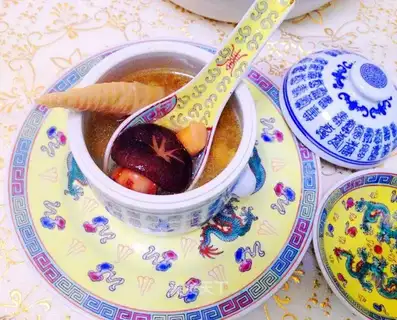
It's my favorite saying that Buddha jumps up the walls, and that's not true, because there's something missing, but it tastes good. It's a culinary. The Buddha's wall is full. Twenty-five years (1899), an official of the Treasury of Fukuoka invited Zhou Lian, Minister of Finance of Fujian Bhu, to a dinner, where he made a meal of Zhou Lian, so that his wife could cook in person, and made a fortune in the form of chickens, ducks, lambs, pigs' bellys, pigeon eggs and seafood. Zhou Lian tasted it, and he spoke. Since then, Zheng Chunfa has learned how to cook this dish, and it has been used to stir up the city when Zheng Chun Hau opened the Zheng Spring Garden. On one occasion, a group of scribes came to taste the dish, and when the whole life was on the altar, the fragrance was filled with fragrances, which triggered poetry, and the chords were loud and loud: “The fragrance of the altar came to pass, and the Buddha ran away from the walls”. Since then, the name has been changed to Buddha's Wall, which is called "Foot Walls", or "Foots" or "Foots", which is the chief dish of Fukuo. It has been reported that on the way to build the Shaolin Temple, Tang Dynasty's high monk, passing through Guandu Province, the night hotel, served his guests and the high monk's snuffing in the walls. Three feet and years of training, jumping from the wall to the fragrance. This is why the Buddha's Wall is famous for its life. Twenty-five years (1899), an official of the Treasury of Fukuoka invited Zhou Lian, Minister of Finance of Fujian Bhu, to a dinner, where he made a meal of Zhou Lian, so that his wife could cook in person, and made a fortune in the form of chickens, ducks, lambs, pigs' bellys, pigeon eggs and seafood. Zhou Lian tasted it, and he spoke. Since then, Zheng Chunfa has learned how to cook this dish, and it has been used to stir up the city when Zheng Chun Hau opened the Zheng Spring Garden. On one occasion, a group of scribes came to taste the dish, and when the whole life was on the altar, the fragrance was filled with fragrances, which triggered poetry, and the chords were loud and loud: “The fragrance of the altar came to pass, and the Buddha ran away from the walls”. From then on, it was called the Buddha Jump Wall. In 1965 and 1980, at the South Park in Guangzhou and in Hong Kong, respectively, the Fukuoka food, which was mainly cooking the Buddha's Jump Wall, was ablaze, raising the fever of the Buddha's Jump Wall around the world. Chinese restaurants in various parts of the country are recruiting customers using their self-proclaimed flaming food. The Buddha's Wall was also acclaimed for its presence at the national feast of the heads of State of Sihanouk, the President of the United States, Reagan, and the British Queen Elizabeth, and it has become more known as the traditional Fukuo, a traditional dish that has a great taste in the mountains and oceans, and has been designated by local cooking communities as the “principal dish” of the Fukuo menu for more than 100 years. Why do you call it "the Buddha Jump Wall"? The following are the many causes of folklore and academic research. There are three kinds of legends in Fukuo: one of them is that, according to a rumor, in the final year of Qinghong Dynasty (1876), an official of the Governor of Fukuo set up a dinner with Fujian Bu, Zhou Lian, whose wife, Shao Xing, cooks a dish called "Fluen-su", in which chickens, ducks, meat and a few seafoods are made in a wine pot in the Shing Hsing. Zhou Lian has been ordered to make a replica of his hair, and Zheng Chun Hau has come to the door to ask for instruction, and to reform it, using more seafood and less meat, to make the food taste more delicious. Zheng Chun-fa left Zhou Lian Palace to raise funds to run the Zhou Chun Gardens Orchestra, which became the owner of the restaurant's cooking, except for the fact that Fukuoka's words of “fook and life” sounded similar to the “flap wall” and that, for a long time, it was replaced by “fook and death wall”. The second is the custom of Fujian, the third day after the wedding of the new wife-in-law, who is required to cook in person for tea and food, serve the mother-in-law and gain appreciation. There are rumors that a rich girl, who is well-behaved, who doesn't study cooking, is sad on the eve of her marriage. Her mother took out all of her family's mountain fragrances and made them into a variety of foods, wrapped them in leaves and told her how to cook them. Who knows if the young lady forgets how to burn, then suddenly she throws all her food into a saloon with her hair on the stove. And the next day, the fragrance came out, and the bouquet of veggies came out. The third is that a group of beggars go round and round every day with a pot of pottery, and boil all the leftovers that they have to offer, and the heat and the fragrance. The monks smelled, the scent of temptation, jumped out of the wall, and strutted. The poem bears witness to the fact that "The fragrance of the fragrance, the Buddha, has fallen from the wall." The four are not exactly the same as the other: "The fragrance wall" is the traditional name for the top of the course. It has been reported that this dish originated in the final year of the Qing Dynasty, when an official from the Silver Bureau of the Yangtze Road Department of Fukuzhou set up a dinner at his home for Zhou Li, the wife of the official himself to cook, and to choose more than 20 raw materials, such as chickens, ducks and meat, to be put into the Shao Xing wine table, which was carefully made and made into a fragrance. After that, Zhou Lin brought Chef Jung Chun to visit the office. After returning to the court, Zheng Chun-ha studied carefully and reformed the material, using more seafood and less meat, especially for the former. Since the opening of the Zheng Spring Garden restaurant in 877, Zheng has continued to study and enrich the raw materials of this dish, and the food produced has a rich taste and a great appreciation. One day, a few guests came to the restaurant to drink wine, and the courtesan brought a pot of food to the table of talent, where the lid was opened, and the fragrance of the fragrance and the smell of wine. Some people are busy asking what this dish is called. So the Qur'an was given as a poem, and there was a cloud of poetry: “The fragrance of the altar floats around, and the fragrance of the Buddha comes upon the wall.” The people shall cry out. Since then, it has been more than 100 years since the words of the poem: "The Buddha Jumping Wall" became the name of the dish. Since the “Flaming Wall” is a set of tens of raw materials that are common to each other and that maintain their distinctive features. Tastes soft and soft, fragrances of fragrance, and is not gruesome; it permeates each other, and smells. At the same time, the nutritional value is extremely high, which has the effect of respirating blood, cleaning the intestines and combating the cold. When you come to the table, you'll have a plate of radish, a plate of mustard mustard, a piece of plumbish, a plate of mushrooms, a piece of soybean, and a piece of silver rolls and sesame pancakes. When it comes to Buddha's Walls, almost everyone knows and imagines, but very few people actually eat Buddha's Walls, as Mr. Liang Kiuqiu Yasher talks about the Walls, and then turns to red meat, not least us mortals. Fortunately, China has a rich Chinese language that describes us as the famous Fukuoka dish, "Burn the Quan". With regard to the Buddha's wall, there are so many Chinese names that resemble large areas of Hollywood, but there are no words such as “Bullety of Fire” or “Foot of Life” that give us an infinite imagination and enjoy 18 mains, 12 complementarys that combine almost all of them, such as chicken ducks, elbows, pig feet, legs, ham ducks; fish lips, fins, sea cucumbers, abalones, dry beaks, fish tummys; and pigeon eggs, mushrooms, twirls, bamboo. After processing more than 30 raw materials and supporting materials separately, layered into the altar, it's like an ambitious greeting film, with a natural resonance. For many years, the Buddha's Wall Whiper has chosen to use the Shao Xing Liquor, which has been blended with wine. It's a fragrance-scrambling wall, which is then sealed with leaf and covered. The fire of the pyrotechnic wall is a strict, pure and smoke-free coal fire, which is made of microfires for five or six hours. Some hotels today preach how to smell their food, which is a little less subtle than the Buddha's Wall. The real flaming walls, with little fragrance in the process of placarding, have only a small amount of leaf to be lifted, and have a snort of wine to get to the heart. And the soup is thick and brown, but thick and not tired. The fragrance is mixed with all kinds of perfume, and the fragrance is four, and it is not corrupt, and it tastes endless. I thought it was the highest level of food I ever made without fins, let alone sea cucumber. I replaced fish fins with fans. I don't use fresh abalone, but a little porridge
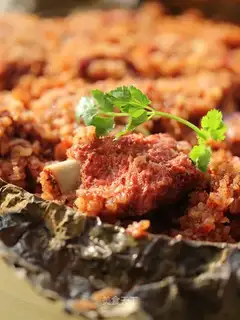
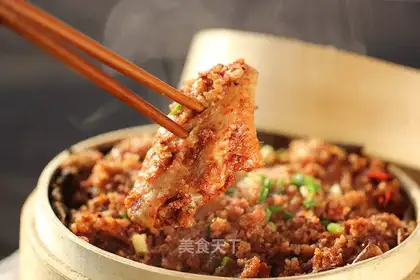
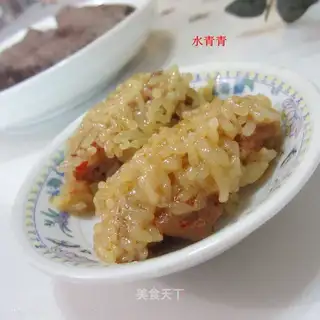
WHETHER IT'S NEW YEAR'S EVE OR THE USUAL HOSPITALITY, THE HUBEI FAMILY'S DINNERS DON'T HAVE ANY STEAMED DISHES. VEGETABLES ARE EASY TO MAKE. THEY ARE MADE EARLY, THEY ARE WELL CONTROLLED AND THEY DO NOT HAVE TO STARE AT THE FLAMES, BUT THEY ARE MADE DIRECTLY ON THE FIRE. ANOTHER IMPORTANT BENEFIT OF POWDERED VEGETABLES IS THAT THEY ARE FREE OF OIL AND SMOKE AND THAT THEY ARE BETTER ABLE TO MAINTAIN THE ORIGINAL TASTE OF FOOD AND ARE ONE OF THE HEALTHY COOKING METHODS THAT IS DESIRABLE FOR BOTH THE OLD AND THE YOUNG. IN THE NORTH OF THE LAKE, THERE ARE MANY VARIETIES OF STEAMED VEGETABLES, SUCH AS STEAMED MEAT, STEAMED FISH, STEAMED CHICKENS, AND SO ON, AS WELL AS RADISH AND SOYBEAN VEGETABLES, WHICH CAN BE STEAMED WITH RICE POWDER, IF YOU WANT, BUT MORE OFTEN WE HAVE POTATOES, TACOS, PUMPKINS, ETC. UNDER THE STEAMED VEGETABLES, SO THAT THEY CAN BE COMBINED WITH MORE FULL NUTRITION AND TASTE. TODAY, IN ORDER TO MAKE A BETTER TASTE OF THIS, I'M DOING DIY RICE POWDER, WHICH IS EASY TO BUY IN THE USUAL SUPERMARKETS, BUT HOME-MADE RICE POWDER, WHICH IS MADE OUT OF LARGE AMOUNTS OF RICE, EIGHT HORNS, IS THICKER, AND IS USED TO PICK UP THE RIBS. IN ORDER TO ENRICH MY TASTE, I PUT A TARO ON THE BOTTOM, WHICH ABSORBS THE FRESH SMELL OF MEAT, AND WHEN IT'S EVAPORATED, IT'S SOFT. IN THE END, OF COURSE, IT'S NOT LESS THAN THE VEGGIES OF THE LAKE WHO LOVE THE LEAVES THEY USE FOR THE BASE, SO THE VEGGIES HAVE THE FRAGRANCE OF THE LEAVES. WHILE SALTING TAKES LONGER, STEAMING TAKES LONGER, BUT WHEN YOU OPEN UP THE LEAF, WATCHING A SOFTLY COATED GRAIN OF RICE, WITH ITS FRAGRANCE, ITS SOFT ROOTS, AND IT'S ALL WORTH WAITING。