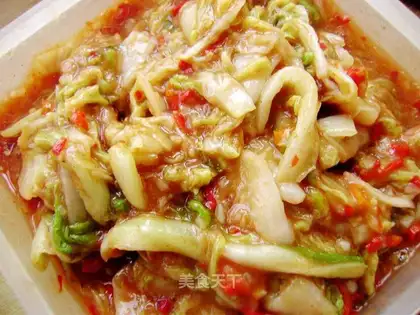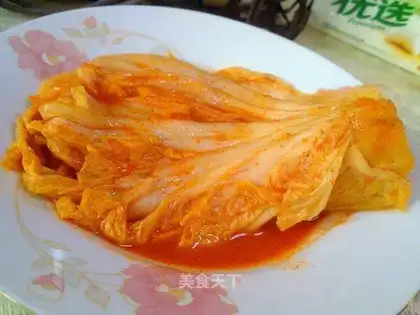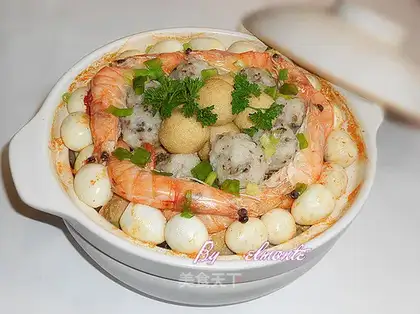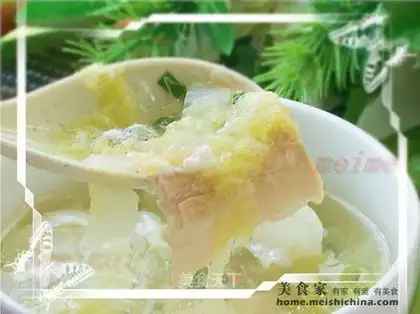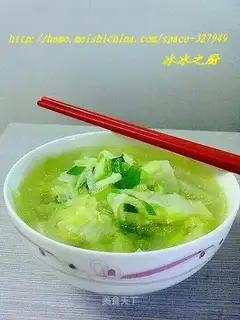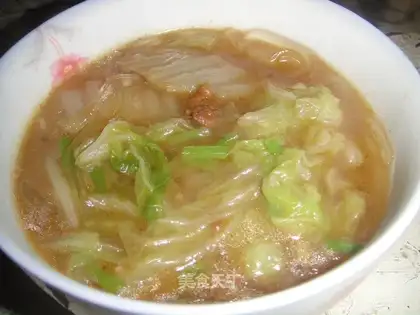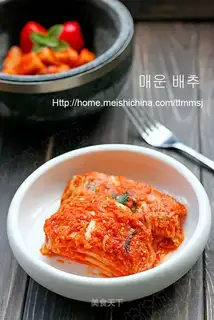
When it comes to Korean food, the most popular food is Korean kimchi, and the most famous of Korean kimchi is undoubtedly spicy cabbage. <br /><br />Spicy cabbage is a kind of food that has been passed down from generation to generation in North and South Korea. In Korean families, whether it is coarse tea or fine wine or delicacies, spicy cabbage is indispensable. Without this delicious side dish, one will always feel that there is some shortcoming. <br /><br />In recent years, due to the influence of Korean dramas, Korean cuisine has also begun to occupy a place in China. Hot cabbage, the food that appears most frequently in Korean dramas, has also begun to be widely accepted by the China public with the invasion of Korean culture. <br /><br />Other Korean delicacies may not be accepted by China due to differences in taste. However, spicy cabbage is of the same origin as Sichuan kimchi. It is pickled and fermented by vegetables. However, it has a richer taste because more auxiliary materials are added, so it is deeply loved by the majority of China people. <br />In northeastern China, it is easy to buy authentic spicy cabbage made by Yanbian people. However, in inland areas like Hubei, if you want to eat pure spicy cabbage, you can only do it yourself. But doing it yourself also requires a little courage. Because the preparation and production process is quite complicated, if you really want to do it once, you might as well make more at a time and put it in the refrigerator to eat slowly.
Jixi Yipin Pot, also known as Hu Shi Yipin Pot, is a farm dish, belonging to Anhui cuisine, and originated in Shangzhuang, Jixi County, Anhui Province. Taste: salty, fresh and slightly spicy, tender and delicious. Now Jixi Yipin Pot has become a representative dish of Anhui cuisine. What I made today is purely a copycat version, using existing materials at home. There is no small iron pot, so I can only use casserole instead. Don't slap bricks, it tastes very good.

Preparations:<br /><br /> 1. Soak rice cakes in cold water for 30 minutes<br /><br /> 2. Cut cabbage into strips<br /><br /> 3. Cut the ham sausage into sections (just slightly shorter than the rice cake, if it is too small, you will not be able to eat it)<br /><br /> 4. Slice the carrot, not too thin<br /><br /> 5. Cut onions into strips<br /><br /><br /><br /> Production process:<br /><br /> 1. Put a little oil in the pan and heat it up<br /><br /> 2. Add the tomato sauce and stir fry, and serve out for later use (it will be more fragrant)<br /><br /> 3. Add some oil and heat it up (not too little, because you need to cook)<br /><br /> 4. After heating the oil, add carrots and onions and stir-fry until semi-cooked.<br /><br /> 5. Add the cabbage and continue to stir-fry until the cabbage is about 7 minutes cooked<br /><br /> 6. Add cold water to slightly immerse all the materials in the pan<br /><br /> 7. After boiling the water, add rice cake, sauce and Korean spicy sauce (I put about 200g of spicy sauce in a box. The spicy sauce I bought has no taste, so I put more)<br /><br /> 8. Cover the pot, heat over medium heat, and wait for the water to slowly dry<br /><br /> 9. After collecting the water, stir fry and serve the pan<br /><br /><br /><br /> Attachment:<br /><br /> 1. Friends who like to eat sauces should put more water in it, and it will naturally become sticky when it is dried.<br /><br /> 2. Friends who like to eat dry should collect more water

Xinghua rice noodles and Putian rice noodles are as white as snow, as thin as silk, with a slight rice aroma and can be stored simply. It is a famous local specialty of Putian (known as Xinghua Army and Xinghua Prefecture in ancient times) and one of the earliest fast food in my country. It is cheap and cheap. It is famous at home and abroad, and is especially popular among overseas Chinese. People affectionately call it "Xinghua Rice Noodles". <br /><br />It is said that during the Zhiping period of the Song Dynasty, Li Zhen, the chief clerk of the Xinghua Army (now the jurisdiction of Putian City), was ordered by the court. In Xinghua to control water and build Mulanbei, curious right-hand assistant Qian Siniang died in Mulan River due to failure to build a slope. Li Zhen was fearless in the face of danger and personally presided over the project. In order to reward the people, Li Zhen made public the brown rice flour processing skills passed down from his ancestors, and also produced large quantities of rice noodles. <br />There are generally two ways to eat rice noodles in Putian: soup rice noodles and fried rice noodles. That is, the rice noodles are added to local meat or vegetarian seasonings (such as pork, chicken, eggs, mushrooms, shrimp meat, winter bamboo shoots, onions, leeks, kale, etc.), and cooked to make it fresh and tender.