salty and sweet Recipe
MyrlAufderhar
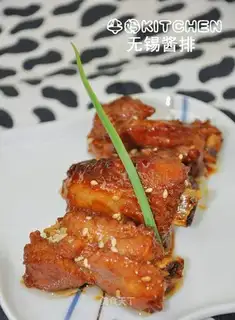
Legend has it that in the Song Dynasty more than 800 years ago, a very sloppy beggar monk Jigong, with a disheveled head and a dirty face, wearing a broken cassock, holding a bowl in one hand and knocking wooden fish in the other, and a broken cattail fan stuck at his waist. He went to Wuxi to beg for his fortune, from Wuxi's east street to west street, and from south street to north street. Everyone thought him dirty, and did not get a bowl of vegetarian rice. Later, he walked around a Lu Ji Cooked Meat Shop, turning around again and again, countless times. A little clerk at the counter saw it and guessed that he wanted to eat meat, so he asked deliberately: "You want to eat pork?" Ji Gong nodded and sent the bowl over. The little boy gave him a few pieces of pork. Ji Gong took it and finished it within a few steps. Ji Gong turned back again, and the little boy asked again: "Do you still want to eat?" Ji Gong nodded again and gave him a few more pieces of pork. Ji Gong finished eating again in three bites, but still refused to leave. Just as the little boy was about to give the meat to Jigong again, he heard footsteps behind him. Seeing that it was the boss, he said to Jigong,"Ask the boss for it!" Jigong asked the boss for it. The boss conveniently handed him a few bones. Ji Gong didn't want it, so the boss had to give him a few more pieces of pork and murmured: "I've eaten all the meat for you. Tell me to sell the bones tomorrow!" Ji Gong replied cheerfully: "Tomorrow, you can sell the bones!" The boss became angry and said,"You are a monk and eat hundreds of rice, so your words are easy. Bones can't sell for meat, why don't you tell my family to drink northwest wind?" Ji Gong said delightedly: "Boss, what you said is unreasonable. As the saying goes: Good gold grows in the sand, and good meat grows around the bones. Bones can be sold for meat." The boss thought for a long time, but couldn't think of a word to answer Ji Gong. Ji Gong taught his boss how to cook bones while eating meat. Later, he tore off a few cattail stalks from the broken cattail fan at his waist and handed them to the boss, telling him to cook them with the bones. After saying that, he disappeared. After Ji Gong left. The boss looked at the pile of meat bones on the counter and thought, What will I sell tomorrow? His mind suddenly lit up. Tomorrow, he would follow the old monk's instructions and cook the bones and sell them! The next day, the boss did the same, and the cooked meat bones were fragrant, and residents in the entire Wuxi City smelled the aroma and came to buy the meat bones. There is not much time to sell out. Everyone agreed to eat it. From then on, the reputation of Wuxi's meat bones spread.
BeulahOsinski
Su Shi, a great writer in the Song Dynasty in my country, was demoted because he offended the court by writing poems. He was sent to Huangzhou, Hubei Province. After arriving in Huangzhou, he called himself a "Dongpo Scholar". <br /><br />"Householder" is the name for Buddhists who live at home. The laymen believed in Buddhism, but they were not restricted by some Buddhist precepts. Therefore, although Su Shi, who called himself "Dongpo layman", had seen through the mortal world and entered Buddhism, he could still eat meat. <br /><br />Once a high official, he still loved delicious food, but he was not in the mood to go to restaurants, so he cooked it himself, thereby relieving loneliness and boredom. <br /><br />Su Dongpo, who was born as a literati, was a scholar who loved calligraphy and painting without hesitation. He not only cooked delicious food, but also wrote and painted. In order to take care of both, he adopted the method of stewing the meat with slow fire, so that he could write his articles or play with his paintbrush while taking care of the heat. <br /><br />After many practices, he summarized the best cooking plan, which made him enjoy endless fun. <br /><br />During his time in Huangzhou, Su Dongpo also wrote a poem about "Eating Pork", explaining his experience and mood at that time:<br /><br /> Huangzhou has good pork, but the price is like dung. <br />The rich refuse to eat, and the poor don't know how to cook. <br />Fire slowly, use less water, and when the heat is sufficient, it will be beautiful. <br />Get up and make a bowl every day, so you can't care about it. <br /><br />Due to the spread of "Su Dongpo"'s poem "Eating Pork-", his unique method of stewing meat has also been favored by people. People named it after him, and" Dongpo Pork "has been passed down. To this day, it is still loved by diners.
ConorSmith
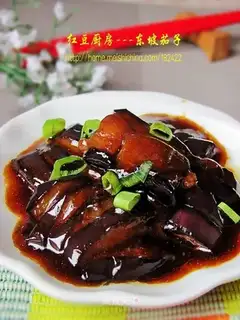
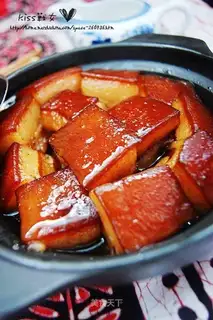
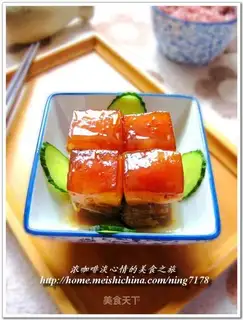
[Dongpo Pork] Hangzhou's famous dish is full of color, aroma and taste. Slow fire, no water and lots of wine are the keys to making this dish. The finished product is red and bright in color, crispy but not broken in shape. It is fragrant and non-greasy in the mouth, with the aroma of wine, and is very delicious. <br /><br />Su Dongpo of the Song Dynasty (1036-1101) was ranked among the eight greatest writers in the Tang and Song Dynasties in his composition; he was both unique in writing and Xin Qiji; calligraphy and painting were also unique. Even in the art of cooking, he has a knack. When he offended the emperor and was demoted to Huangzhou, he often cooked dishes himself and tasted them with his friends. Su Dongpo's cooking was best at braised pork. He once wrote a poem introducing his cooking experience: "Slow fire, use less water, and when the heat is high, it will be beautiful. "However, it is said that the" Dongpo Meat "named after him was an interesting incident when he returned to Hangzhou for the second time to serve as a local official. <br />At that time, most of the West Lake had been obliterated by turnip grass. After he took office, he mobilized tens of thousands of migrant workers to remove fields, dredge lake ports, build long embankments from dug mud piles, and build bridges to smooth the lake water, so that the beautiful appearance of the West Lake could be restored and water could be used to irrigate the fields. This piled long embankment improves the environment, not only brings water conservancy benefits to the people, but also adds to the scenery of the West Lake. Later, the "Su Causeway Chunxiao" was formed, which was listed as the first of the ten scenic spots in the West Lake. "<br />At that time, the common people praised Su Dongpo for doing this good thing for the local area. They heard that he liked to eat braised pork. During the Spring Festival, they all sent him pork at the same time to express their feelings. Su Dongpo received so much pork and felt that he should share it with tens of thousands of migrant workers who had dredged the West Lake. He asked his family to cut the meat into cubes, fire it using his cooking methods, and distribute it to every household, along with the wine, according to the migrant workers 'register. When cooking, his family understood "sending with wine" as "burning with wine", which resulted in the braised pork being made more fragrant, crispy and delicious. The eaters praised the unique and delicious meat roasting method sent by Su Dongpo. Everyone praised it, and anecdotes spread. Among the people who asked Su Dongpo for teachers at that time, not only those who came to learn calligraphy and writing, but also those who came to learn to cook "Dongpo meat."
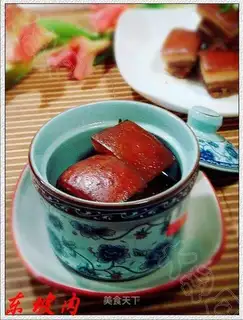
UnaKlein
"Dongpo Pork" is a famous traditional dish with a long history among "Zhejiang cuisine". It is said that during the Yuanyou period of the Song Dynasty, Su Dongpo was appointed governor of Hangzhou. As soon as he took office, he learned that the West Lake in his jurisdiction was constantly flooded. Through on-site inspections, he organized and mobilized local people to clear the West Lake. <br />After the completion of the project, a long embankment was added to the West Lake. This embankment brought water conservancy benefits to the people's future farming and mulberry, benefited future generations, and also added a beautiful scenery to the West Lake. In order to thank Mr. Dongpo for doing a good thing to benefit the people, and the local elders knew that Mr. Dongpo was a good official who cared for the poor and loved the people, so they gave him a lot of pork and rice wine. <br />However, Mr. Dongpo believed that although the sparse West Lake was his own plan, it was also the work of the people. Therefore, he ordered the chef to follow his unique experience in cooking meat, which he called the method of "slow the fire, add less wine, and when the heat is sufficient, it will be beautiful by itself". He used several large jars of Shaoxing wine to put the meat into it and braised it. This delicious dish, later known as "Dongpo Pork", was used to entertain and comfort migrant workers and local villagers. <br />Because this meat tasted very delicious, it quickly spread throughout Jiangsu and Zhejiang. "Dongpo Pork" has been passed down from generation to generation after thousands of years! It has long become a famous Hangzhou dish that is well-known at home and abroad! <br />Due to the unique method of cooking the meat, which is crispy but not rotten, oily but not greasy, and is extremely delicious,"Dongpo Pork" was a good story at that time and soon became a specialty delicacy in Hangzhou. Mr. Dongpo is not only a famous poet and literary hero, but also a famous gourmand in history. Wherever he has visited, he has left behind masterpieces of delicious food, such as Dongpo pork in Hangzhou and Dongpo pork knuckle in Sichuan. etc. <br />The method of "Dongpo Pork" is not difficult. The method is to cook a large piece of pork belly and then cut it into suitable cubes. Put the onions and ginger pieces into the casserole. Place the pork belly skin down on the onions and ginger. Add soy sauce, rock sugar, rice wine, onion knots, cover and boil with strong heat, then simmer with low heat for two hours. Then, put the meat into a pottery jar, cover and seal, and place it in the cage and steam thoroughly. <br />In order to commemorate Mr. Dongpo, Da Chao Shao will dedicate this famous "Dongpo Pork" to everyone today. The specific procedures are as follows;