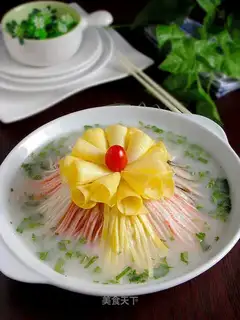
"Peony Yancai"-is the most famous dish in Luoyang water mats. Its unique feature is that ordinary white radish is carefully cooked through multiple layers of processes to create the flavor of bird's nest. It is characterized by beautiful shape, delicious soup, sour, spicy and fragrant, smooth and palatable, and rich cultural connotations. <br />"Peony Yancai" began in Luoyang and was once named "Luoyang Yancai". There is a long history about its origin. <br />Luoyang is located in the hinterland of the Central Plains and ranks among the world. It is a famous thousand-year-old capital. The ancient capital of the thirteen dynasties has a long history. It has lasted for 5,000 years from the Xia and Zhou Dynasties to the present. Luoyang is surrounded by mountains and rivers and has beautiful scenery. Luoyang's peonies are the best in the world. In April and May every year,"the flowers bloom and fall for twenty days, and everyone in the city is crazy." The peony flowers are graceful and luxurious and are well-deserved the king of flowers. In the Chinese catering industry, Luoyang Water Mats are a wonderful flower. Together with Longmen Grottoes and Luoyang Peony, they are called the "Three Wonders of Luoyang". <br />Luoyang Water Feast began in the Tang Dynasty and has a history of more than 1300 years. It is the oldest, most complete and oldest set of famous banquets preserved in my country so far. Due to its grand and elegant, unique style, extensive selection of materials, and careful preparation, delicious and diverse taste, comfortable and crisp taste, it has won deep praise from guests at home and abroad at all times. <br />Almost every dish in Luoyang Water Mats comes with soup, which is dry and thin in an orderly manner. The soup goes with the dish. Because there is too much soup, it will appear to be moist and moist, so it is named "Water Mats". The style of Luoyang Water Mats is different from that of the various cuisines in the north and south. When serving, it is served, it is served one by one, and then removed one plate is served on another plate. It is like flowing water. It is also called "Flowing Water Mats". Luoyang Water Mats are cold and hot, meat and vegetarian, sweet and salty, sour and spicy. The whole meal is divided into the first eight items, four tables, and eight middle pieces in order. There are four dishes in total. There are 8,844 dishes. It symbolizes the historical scenery of Wu Zetian's twenty-four years in power, with infinite scenery. Luoyang water mat is famous all over the world for its "hot, cold, soft, thin, thick and dry, and the meat and vegetables in the Haihe River are sweet, spicy and sour". <br />"Peony Yancai" is the first dish in Luoyang water mat. It was the first to appear. There is also a beautiful legend about its origin. It is said that when Wu Zetian proclaimed himself emperor, there was no war in China. In addition, he was skillful in promoting court affairs and rectifying the court principles. It can be said to be a peaceful and prosperous age. One year after autumn, an extremely large radish grew in the vegetable field of the Lower Garden of Dongguan, Luoyang. It was about three feet long, green on the top and white on the bottom, and weighed about twenty to thirty kilograms. Vegetable farmers regarded it as a strange thing and used it as a mascot to pay tribute to the court. The Queen was very happy when she saw it. Because the carrot symbolized good weather and peace of the country and the people, she ordered people to send it to the imperial kitchen and let the chefs cook. In order to show their superb skills, the chefs carefully processed it and mixed it with delicacies from mountains and seas. They cooked it into a soup and presented it to the Queen. After tasting it, the Queen felt that the taste was unique, tender and refreshing, with a flavor of bird's nest, so she gave it the name: From then on, whether princes and ministers, relatives of the royal family, or people at dawn, have chosen this dish in formal banquets, making it elegant and deeply loved by the public. Later, after evolution, a variety of raw materials were added to prepare it. It can be used not only precious delicacies from mountains and seas, but also ordinary shredded pork and eggs. Its taste is fresh, sour, spicy, and very delicious. With the changes of history, through the hard work of chefs of past generations, this dish has become increasingly perfect. Because it originated in Luoyang, it is called "Luoyang Yan Cuisine". <br />Until October 1973, when Canadian Prime Minister Trudeau visited China, accompanied by beloved Premier Zhou, he came to Luoyang to taste the Luoyang water mat. In order to make the two prime ministers happy, chefs were cooking Yan vegetables, specially placed a peony flower made of eggs in a conspicuous position. Make it more auspicious. As soon as it appeared, it attracted everyone's attention. A dazzling yellow peony flower floated on the soup noodles, with beautiful flowers and fragrant vegetables. Premier Zhou was very happy and said humorously: "Luoyang's peonies are the best in the world, and peony flowers can also be produced in vegetables." From then on,"Luoyang Yancai" was renamed "Peony Yancai".
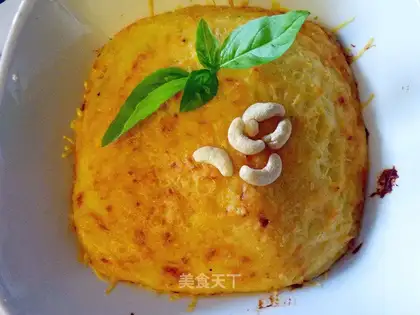
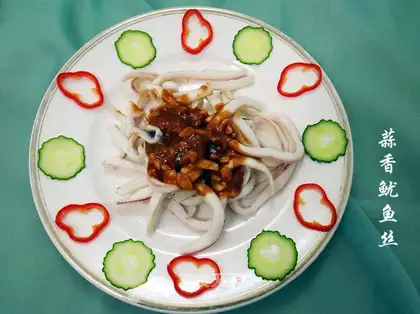
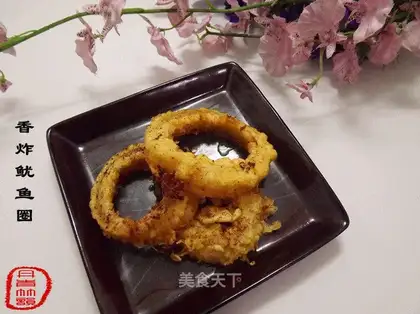
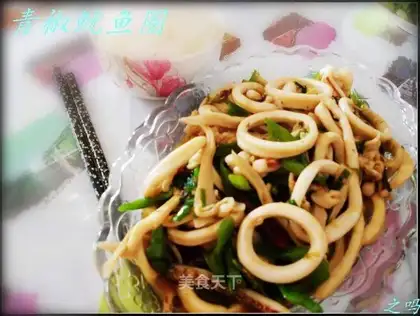
Ingredients: salt,butter,whipped cream,cheese,cashew,basil,squid,pepper,garlic,rosemary,potato
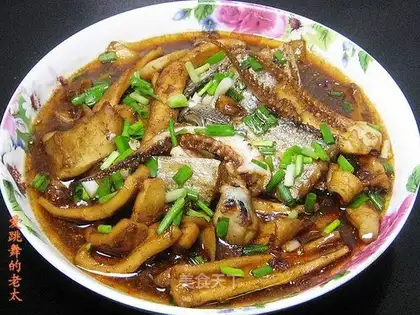
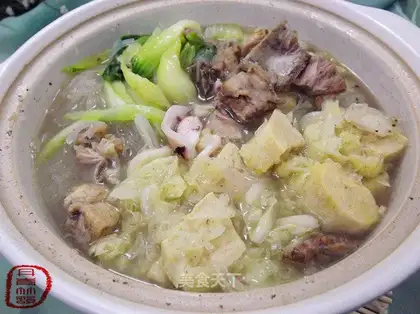
1. The fat content of hairtail is higher than that of ordinary fish, and most of them are unsaturated fatty acids. This fatty acid has a long carbon chain and has the effect of lowering cholesterol;<br /><br /> 2. The scales and silver-white oil layers of the whole body of the hairtail also contain an anti-cancer ingredient, 6-thioguanine, which is beneficial for the adjuvant treatment of leukemia, gastric cancer, lymphoma, etc.;<br /><br /> 3. Eating hairtail regularly has the effect of replenishing the five internal organs;<br /><br /> 4. Hairfish is rich in magnesium, which has a good protective effect on the cardiovascular system and is conducive to preventing cardiovascular diseases such as hypertension and myocardial infarction. Eating hairtail often also has the effect of nourishing the liver, nourishing the blood, moisturizing the skin, nourishing the hair and building body. <br /><br />1. Squid is rich in calcium, phosphorus and iron, which is conducive to bone development and hematopoiesis, and can effectively treat anemia;<br /> 2. In addition to being rich in protein and amino acids needed by the human body, squid also contains a large amount of taurine, which can inhibit cholesterol content in the blood and relieve fatigue.<br /> Restore vision and improve liver function;<br /> 3. The polypeptide and selenium contained in it have antiviral and anti-ray effects. <br />Relevant population: Can be eaten by the general population<br /> Patients with cardiovascular diseases and liver diseases such as spleen and stomach deficiency, hyperlipidemia, hypercholesterolemia, arteriosclerosis, and patients with diseases such as eczema and urticaria should not eat it. <br /><br />therapeutic effect<br /> Squid has a sour and gentle taste and is precious in nature; it can nourish qi and ambition, clear women's menstruation, enter the liver and replenish blood, and enter the kidney to nourish water and strengthen ambition. <br /><br />Boiling squid with hairtail is a specialty of our fishermen here.
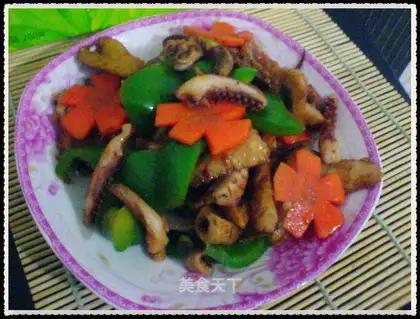
Squid, which has extremely high nutritional value, is rich in protein, calcium, phosphorus, iron, etc., and is very rich in trace elements such as selenium, iodine, manganese, and copper. It has the advantages of high protein, low fat, low calories, etc., and is rich in highly unsaturated fatty acids such as DHA and EPA, as well as a high content of taurine, which effectively reduces the accumulation of cholesterol in the blood vessel wall and is effective in preventing vascular hardening. The formation of gallstones is quite effective. <br />Squid is not only nutritious, but also tastes very elastic. I like it no matter how I eat it!