Fujian cuisine
HazelRohan
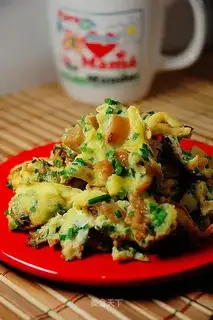
Preserved vegetable is "dried radish" in southern Fujian, and preserved vegetable egg is also "dried radish scrambled eggs". Don't underestimate this seemingly ordinary farmhouse flavor. In fact, this dish can be found on the dining tables of every household in Chaoshan, not only in Fujian, Taiwan, Hong Kong, Macau, and Guangdong. Many people also have it during New Year's Day celebrations. <br /><br />Chaoshan people describe preserved vegetables and eggs as "Pang Peijian", which means "frugality depends on others". The eggs are laid by domestic chickens, and the preserved vegetables are also dried at home. If you do it frugally, you can use two eggs and three preserved vegetables to make a large plate. The eggs only serve as adhesive and "flavor matching". To make it "rich", you can also put only a handful of preserved vegetables into four or five eggs. The preserved vegetables are only used to "enhance flavor". No matter how frugal, each has its own flavor. <br /><br />The truly original preserved vegetables and eggs do not need to be added with any seasoning, because the dried radish itself has a salty and sweet taste, and when chewed, it has a crispy taste. Coupled with the aroma and tenderness of the egg, it can be regarded as a very low-cost and simple and convenient dish, but it must be a delicious dish that adults and children compete to put down chopsticks at the dinner table.
CordieBaumbach
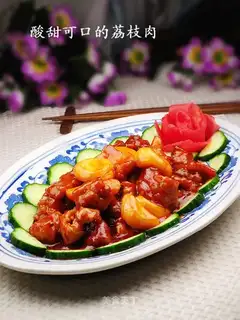
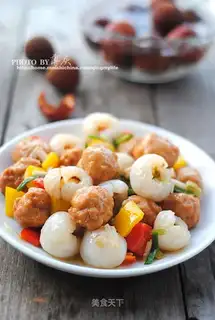
Since ancient times, many poems in China have involved lychee. <br /><br />In "Praise of Litchi", pomegranate is as red as fire, and fresh litchi is as red as dan. Who can be tired of eating it every day? I want to eat it today. <br /><br />For me, lychee is one of my favorite fruits. I am very happy to eat lychee as a meal, and I will never get tired of eating it every day. <br /><br />Putian is nicknamed "Licheng" because it is rich in lychee. Both Guangzhou and Fujian are rich in lychee. Litchi meat is a famous Fujian dish, but there is no lychee. It is just named after its color, shape and taste. The ingredients of my lychee chicken balls include lychee and red and yellow peppers. The color is very gratifying, and I feel in a good mood after reading it. In terms of taste, the chicken balls are tender and the lychee is also delicious. Compared with raw food, it has a different flavor. If you have never tried putting fruit into vegetables, you may feel that the taste is strange based on your imagination. In fact, it is not the case. You will know after tasting the soup. The taste is definitely not strange. It is another natural flavor. <br /><br />I like the round look of this dish. It's very cute. So I took a lot of photos. Coupled with my selectivity barrier, it is very serious every time I choose photos, so let's put a few more photos. I really can't bear to remove them. I like their smooth and smooth look, heh.
SonnyMoen
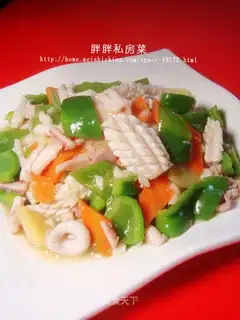
Cuttlefish not only tastes crisp and refreshing, has high protein content, has high nutritional value, but also has medicinal value. Cuttlefish is rich in protein, and its shell contains calcium carbonate, shell keratin, mucus, and a small amount of sodium chloride, calcium phosphate, magnesium salts, etc.; the ink in cuttlefish contains a mucopolysaccharide, which has been confirmed to have a certain anti-cancer effect in mice.
StanMetz
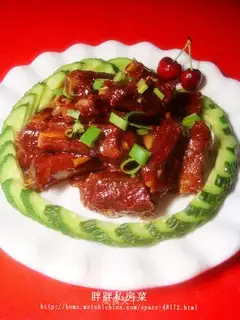
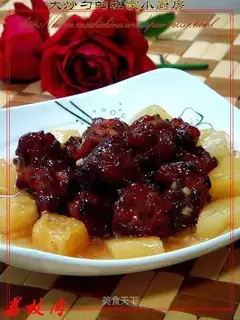
The "lychee meat" in "Fujian cuisine" is a long-standing traditional fried sauce, and its taste is sweet and sour. "Litchi Meat" was invented by a master named Wang Baoshan from Fuzhou in the late Qing Dynasty. He specialized in sweet and sour dishes and was very famous in Fuzhou and Xiamen. Later, after being recommended by Fujian Governor Xu Yingzhen, he was called into the palace in 1896. In the imperial dining room of the palace, sweet and sour dishes are specially made for emperors and queens. It is said that Empress Dowager Cixi greatly praised his dishes after tasting them, so Wang Baoshan was awarded the title of "Zhaochao King" by Cixi, and she immediately wrote the three words "Zhaochao King" in her own writing to show her reward. These are all recorded in the "Palace Dining House" preserved by the Qing Dynasty Internal Affairs Office. <br />Later, after the court abdicated and fell in the early years of the Republic of China, Wang Baoshan and others were dismissed and returned to their original hometown. They still made a living as chefs in Fuzhou and brought some of the court's cooking techniques back to their hometown, and soon became famous locally. After liberation, he was temporarily transferred to Beijing by relevant leaders of Beijing City to teach skills and died before the Cultural Revolution. <br />At that time, all sweet and sour dishes in the court were made by Wang Baoshan, and this skill has been passed down to this day. At present, the four major delicacies of sweet and sour taste in the court flavor,"fried tenderloin, fried kidney flower, fried prawns, and fried fish slices", were all created by Wang Baoshan after improvement. <br />Today, I will try this sweet and sour flavor of traditional Fujian cuisine stir-fried "lychee pork" to show my spare time study and practice. The main practices are as follows;