Fujian cuisine
LucasKuhlman
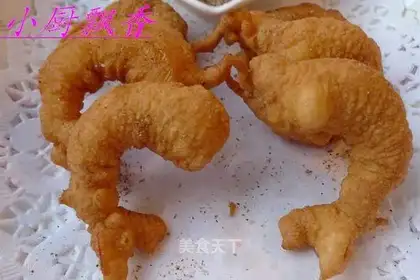
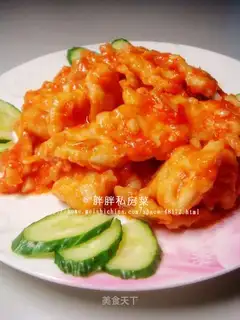
Ingredients: ketchup,soy sauce,water starch,MSG,pepper,white sugar,ginger,minced garlic,onion,yellow wine,peanut oil,baking soda
EfrainKautzer
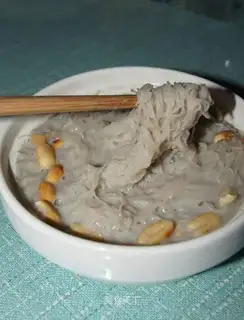
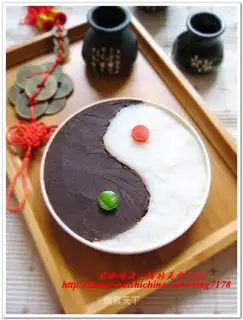
Must-eat Fujian cuisine list-[Tai Chi Taro Mashed]<br /> Taro has always been a delicacy on the plate. [Tai Chi Taro Mashed] is one of the traditional sweets of Fujian cuisine. It is often found at banquets during auspicious times in Fuzhou. There is an interesting anecdote to its fame: in the 19th year of the Daoguang reign of the Qing Dynasty (1839 AD), when Lin Zexu went to Guangzhou to ban smoking as an imperial envoy, consuls from Britain, Germany, the United States, Russia and other countries specially prepared Western-style sleeping mats to "entertain" Lin Zexu in an attempt to embarrass Lin Zexu while eating ice cream. Afterwards, Lin Zexu also held a sumptuous banquet to "repay" these consuls. After a few cold dishes, a plate was served with a dark gray and shiny color, dark brown and smooth, like two fish lying in it without steaming, just like a cold dish. A foreign consul picked up a spoon and scooped it into his mouth. His eyes were so hot that he couldn't even spit out. After hearing another "squeaking", he saw another consul's lips also burned out. A red "lace" was also formed, and the other guests were stunned. At this time, Lin Zexu stood up casually and introduced: "This is a famous dish in Fujian, China. It is called Taiji taro paste." From then on, this dish became famous far and wide. <br /><br />This dish is shaped like Tai Chi. The white taro paste and brown bean paste are curved and coiled to form an interesting contrast. The red and green cherries seem to make the pattern full of dynamic and festive colors, making it lovely. [Tai Chi Taro Mashed] is a festive beet with auspicious patterns and is very suitable for festive family banquets or wedding banquets. There are also practices to sprinkle dried fruits such as red dates, melon seeds, and winter melon strips on them to increase the festive effect. <br /><br />Taro is sweet and flat in nature, and has the effect of eliminating mala and resolving masses, replenishing qi and kidney, and replenishing deficiency and injury. It has a certain nourishing effect for people with weak constitutions. Lard is used more in vegetables, and it is not advisable for the elderly to eat more.
ElvieMurray
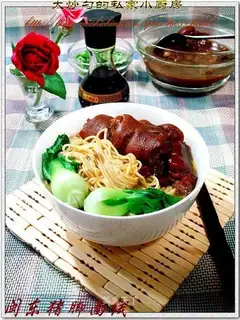
For Fujianese and Hakka people,"noodle line" is a kind of pasta that symbolizes longevity and good fortune. It also has the significance of using it to exorcise evil spirits, eliminate bad luck, ensure peace, and reunite the family. <br />Elderly people celebrate birthdays, children eat noodle thread on birthdays, noodle thread on festive days, men eat noodle thread after returning from fishing, wanderers return or distant relatives return to their hometowns, noodle thread after getting rid of bad luck, and so on. In short, since ancient times, the noodle line has been a kind of pasta that symbolizes good fortune, longevity, and peace in Fujian and Taiwan, and prays for relatives. <br />There are many ways to make "noodle line", including fish round noodle line, seafood noodle line, fried noodle line, etc., but these are just general ways to eat. The real thing to eat noodle line to pray for blessings is usually to eat "pig's foot noodle line", which is a custom inherited from Fujian and Taiwan. <br />Hakka people in Fujian are the most particular about this. Every time I go to Fujian on a business trip, I always have to stay at my distant great-aunt's house for two days, and my first meal every time is to eat noodles. Later, I heard my cousin say: "This is the old man praying for me, for my health, for my career, for my happiness, etc. She is praying for me from the bottom of her heart, and may everything be well for me in my life." Although grandma didn't say it out loud, all her good wishes were condensed into a bowl of exquisite flour. That time, after listening to my cousin's explanation, I was deeply grateful to the old man for his blessings. I am old, but I still have deep concern for my younger generation! I wish grandma health and longevity! <br />Today, make a bowl of noodles, pray for my family, distant relatives and all friends, and wish everyone health, peace and happiness! <br />The practice of "pig's foot flour thread" is as follows;
CrystalWiza
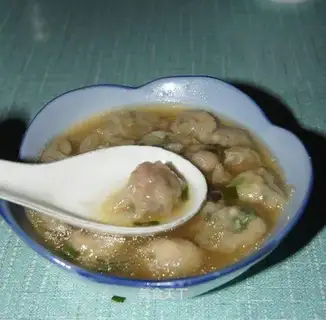
The characteristic of swallow skin is that the raw material is pure refined pork leg lean meat. The lean meat is manually mashed and chopped into meat paste, then mixed with refined sweet potato powder, and then manually rolled to make transparent thin slices, and then cut into small pieces with a knife., stacked together, and covered with gauze to prevent dryness for later use. Chop lean meat (recently changed to machine), mix with shrimp, onions, refined salt, five-spice, pepper, etc. as stuffing. The whole production is very precise, and the selection of leg meat is very particular. No fat meat can be mixed. Cutting and beating the swallow skin requires uniform texture and color, and must be kept tender and tender. Backing flat food is also a meticulous handicraft. It requires dexterity and cleanliness while ensuring high quality. In recent years, many customers have given Xitianwei flat food as a fashionable gift to relatives and friends, so they also pay attention to exquisite packaging. <br />Opposite "Bian Shi Zhao" is the "Ruichun" Jingguo Store. The owners are Hou Zhuo Zhumi and son-in-law Zhu Can. The two families have a friendly and close relationship. Zhu Can often go in and out from Azhao to learn the cooking techniques of flat food making. When he started with craftsmanship, he later opened a door and opened a flat food shop. After practice, Zhu Can made innovations based on Azhao's craftsmanship and became the first generation of descendants. Since then, Weng Youmei, who is close to Tinglin Village in Xitianwei, also learned to operate. Then several families such as Wujiu, Afu, and Jiubing stood out and learned from inside and outside the academy. And innovate in technology and learn from each other. Not only does it operate in Xitianwei Street, but it also goes to the village to serve as an audience spot for the acting venue. It is very popular and the business is getting more and more prosperous.