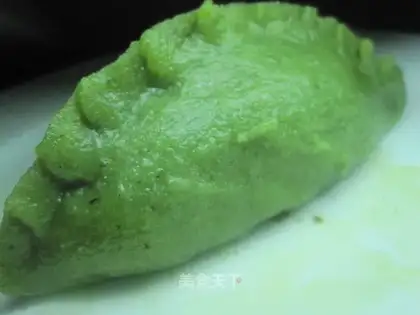
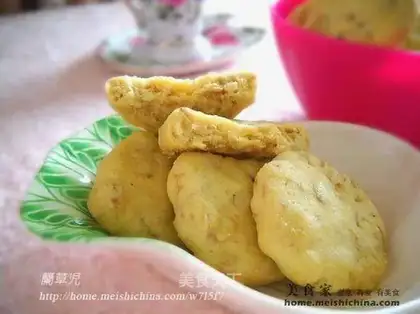
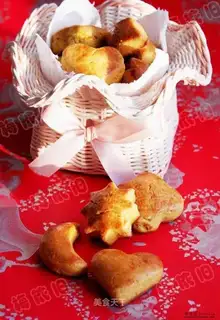
The Qingming Festival is coming again, and I went out for an outing with my boyfriend that day to pick up some mugwort, so I wanted to do some mugwort Qingming tours before the festival. <br /><br />I made three flavors: spring bamboo shoots, cabbage, tofu, dried minced meat, and pickled mustard tuber and shredded pork. Sesame stuffing. <br /><br />It was the first time I made pasta and it was a success. This time, at least let my boyfriend who hasn't eaten Qingming Fruit for more than ten years eat it. After getting married, I'm ready to work hard to learn all kinds of pasta food, hehe. <br /><br />I brought some to my friends, colleagues, and classmates. Everyone said it was very delicious, especially this stuffing. If you want to buy fruit that suits your taste in Hangzhou, it is not easy to buy.
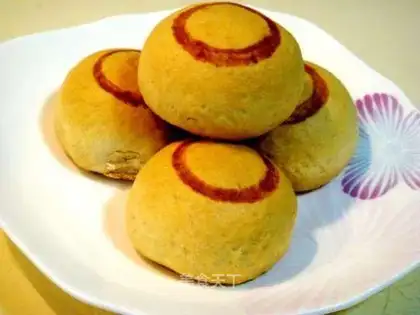
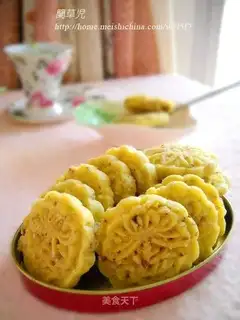
It is said that mooncakes appeared in the Tang Dynasty and became even more popular in the Song Dynasty. It is the most important item when worshipping the moon during the Mid-Autumn Festival. After the sacrifice, it is divided among the whole family. Because mooncakes symbolize reunion, they are called "reunion cakes" in some places. "Yanjing New Year's Moon Cake" records: "Moon cakes are available everywhere. The largest ones are more than a foot long, painted with the shape of the moon toad and rabbit. Some eat after the sacrifice, and some eat until New Year's Eve." Su Dongpo wrote in a poem: "Small cakes are like chewing the moon, with crispy and delicious food in them." Yang Guangfu's "Songnan Caifu" of the Qing Dynasty wrote: "The mooncakes are full of peach meat stuffing, and the ice cream is sweet with sugar cream." It seems that the mooncakes at that time are quite similar to those of today. <br />The traditional Mid-Autumn Festival is a Reunion Festival, so ancient poems include poems such as "Every festive season, I miss my relatives more often, and one less person is inserted everywhere." That is, when the Mid-Autumn Festival comes, everyone looks forward to reunion more. If someone in the family can come and reunite at home overseas or away, it will increase the feeling of missing her. This is a characteristic of China with the family as a social unit, and the Mid-Autumn Festival is a concentrated expression of this characteristic. <br />In China, the country was based on agriculture in the past dynasties. The Mid-Autumn Festival is the harvest season of spring and autumn. Therefore, there is a custom in rural areas to worship "taro kui". That is, the so-called eating sweet potatoes and taro during the Mid-Autumn Festival. These two root crops are huge and round, symbolizing the meaning of bumper harvest and perfection. Gifting mooncakes between relatives and friends also symbolizes perfection and reunion. <br />On the night of the Mid-Autumn Festival, the family sits around, with the bright moon in the sky, drinking wine against the moon, or tasting tea and eating mooncakes to help talk. It is also a pleasure in life. Therefore, mooncakes can be eaten without the Mid-Autumn Festival, but without mooncakes, there will be no Mid-Autumn Festival. Therefore, the Mid-Autumn Festival and mooncakes are closely connected and indispensable. <br />"Zilaihong" is a traditional Beijing-style dim sum. The mooncakes are white before being baked, but magically turn brownish red after being baked, and a deep red circle will appear on the mooncakes. This is also the origin of the name "Zilaihong". <br />The authentic way to make the round red circle on the mooncake is boiled with one part of water, one part of sugar and half part of alkali noodles. When this juice is covered on the mooncake preform, no red mark will be visible. The red circle will only appear after the mooncake is cooked. This is also the magic of self-made red mooncakes. Below, we will carry out the specific production of "Zilaihong mooncakes";