Korean cuisine

HilbertKirlin
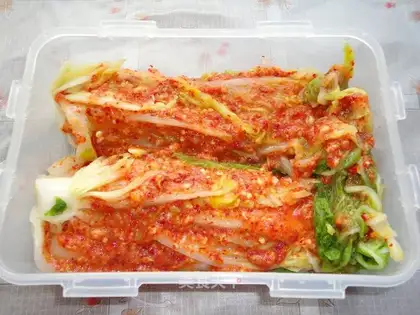
1. Remove the green leaves and claps on the outside of cabbage, cut a knife across the root, chop each claps off and wash them, spread 3-5 claps in a basin and evenly sprinkle with coarse salt. Then put 3-5 more on top and sprinkle with a layer of salt, stack it repeatedly, and finally sprinkle with 2 cups of water. (The total amount of crude salt used is 2 cups) The total marinating time is 3 hours, and then stir in the middle (1 and a half hours) to evenly marinate. <br />2. Pour 2 cups of water and 5 tablespoons of rice noodles into a small pot, and boil over medium heat to form a paste. Put material 2, boiled paste, fish sauce in the juicer and beat it into pulp. Then pour 2 cups of paprika powder, 1 and a half tablespoons of fine salt, and 1 tablespoon of sugar into the beaten paste and stir well-the seasoning sauce is complete! <br />3. Wash the cabbage that has been marinated for 3 hours with clean water 2-3 times, and put it into a leaking basket to drain the water (20 minutes). Wash the spring onions and cut them into 4cm pieces, and cut leeks into 4cm lengths. <br />4. Put the pickled cabbage soaked in water into a large basin, then add the prepared spring onions, leeks, and seasoning sauce into it and stir well. Take out the appropriate amount for temporary food, tear it with your hands (vertically), sprinkle with some sesame seeds, and place it in the refrigerator alone. Put the rest in an airtight container, leave it at room temperature for 1 day (for fermentation), and then place it in the refrigerator. <br />* The freshly cooked spicy cabbage leaves can be wrapped in cooked pork belly slices, and the wine will be stuffy...^_^ V<br /> * When spicy cabbage is too fermented and tastes too sour, you can stir-fry pork with five flowers or make delicious kimchi soup.